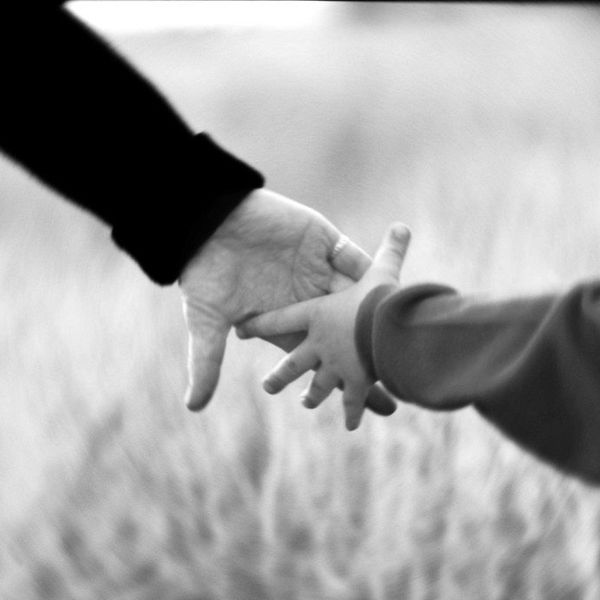
As I am entering my twenties and early adulthood my mind is racing with the plans that I have for my life. When I was younger I never thought I wanted children or to get married. I thought that I would be independent and “free” forever. Now I am not so sure. When I daydream, I think about how my children won’t have a relationship with their great great grandparents, the grandmothers, and fathers that I have already loss due to old age and disease. I pray that when the time comes my mother and father will be able to help me tell their stories as well as the stories of the grandparents before them. I hope that one day my children and grandchildren will be able to easily recall their ancestors’ names so that they know where they come from. With this information, they will know that there is an expectation generation old for them to hold themselves in a respectable, kind, tenacious, and courageous manner even in the face of the things they fear most.
I pray that I will be able to share with my children the messages and blessings of our ancestors before us, but I cannot lie: it haunts me that I don’t know who so many of them are both personally and historically. Reading Lalita Tademy’s family saga Cane River truly captured me because it was a work that combined history and family myth, fiction and fact giving rise to a story seldom told in my community today. “How far back can you go?” I ask many of my friends. Normally they can come up with only a fraction of their great grandparents and then their answers end in “yea that’s about it.” In the novel, Tademy describes a vision realized staged around a kitchen table in her ancestors’ home. At the table sat members of her maternal lineage with complexions going from “coffee, to cocoa, to cream, to milk, to lily” as their ages neared the single digits. Reading this made me think of my four generational home in which I lived in as a child in middle school. My Grandma, my Tricia, my mother, and I’s home in many ways could be the inspiration behind the “Cane River” written by my descendants in years to come. What haunts and excites me is this question: who was here before us?
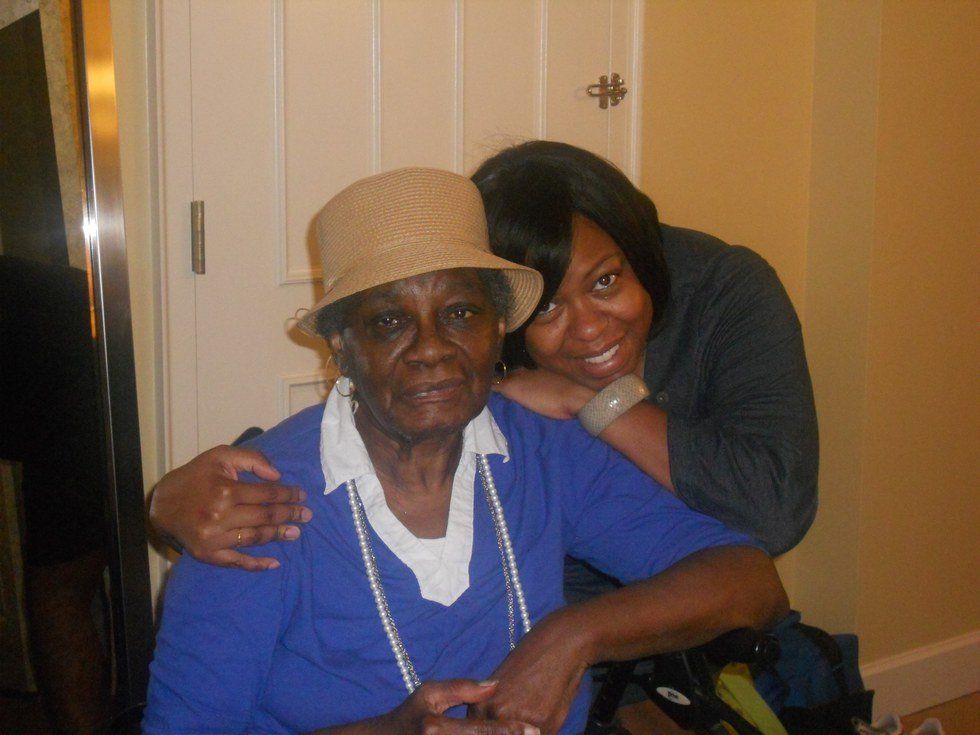
My maternal great grandmother’s name was Anita Elfreda (Bryant) Southerland. In her youth, she was a child of Jamaica. She had a relationship with her grandmother and ate fruit and peppers off of neighborhood trees. She even practiced piano to the point where she was asked to attend Julliard School in New York City where her family inevitably relocated before she was a teenager. My Grandma was born in 1926, and I in 1996. Our bond and conversations were strong despite the decades’ difference in our age; this was evident in our love for reading and of course, Harry Potter novels and films. Since both my Grandma and her daughter, my maternal grandmother, Tricia have passed I’ve been thinking to myself “where are my people on that tropical island?” With study abroad on the brain, I wish to immerse myself in a culture that is, without doubt, a part of my own history: in the West Indies or the continent of Africa. It is a long shot, but how amazing would it be to brush shoulders with a cousin in Ghana or Jamaica or St. Lucia, or South Africa that I never knew existed? To converse with a distant relative that knew of my grandmothers or grandfathers in a place I never considered would be a dream come true. Or better yet, a miracle. A family myth alone would get me excited for it would bring me closer to knowing who I am from this standpoint and who I want to be for my community, and my family, and my descendants to come.
So now the question is, what should be the first step to take? Should I go to Ancestry.com or 23andMe for the story behind my genes? Then what? Fly to every continent near and far to seek the villages, towns, and cities that these companies have identified where my roots lie? What about the language barriers? What about the money? What about the time? What if these people that my DNA calls family doesn't accept me because I am not of immediate kinship because I am American? The questions are endless, the doubts and obstacles tremendous, but if I am to find the ties that bind me to my personal narrative and the narratives of those who came before me, I’ll have to be patient. And willing to seek the truth, my truth. Some say you shouldn’t ask questions about what you don’t want answers to, but the surprises that I could uncover might very well be blessings in disguise. With modern day technology, it shouldn’t be too hard a process, right?






 man running in forestPhoto by