
Content warning: sexual assault.
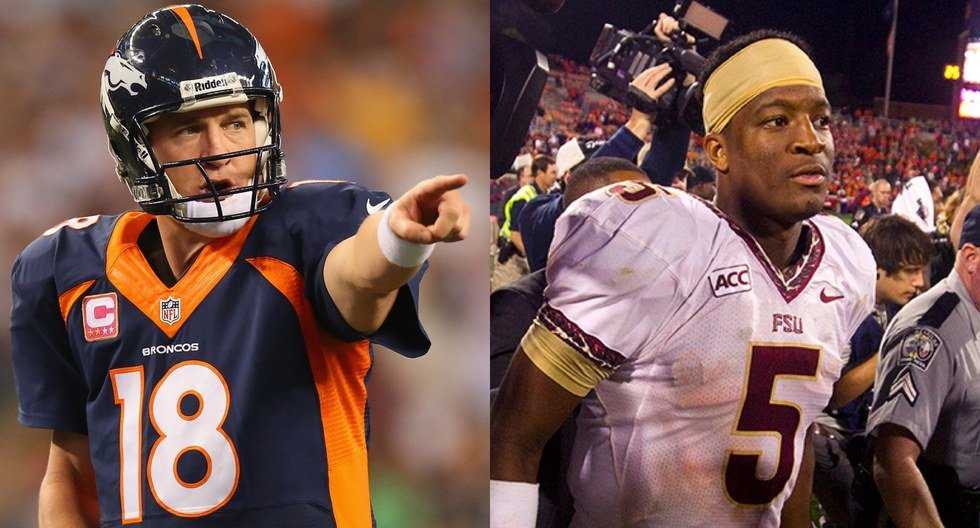
On Sunday, Feb. 7, 2016, I watched the Super Bowl, like so many other Americans. Peyton Manning seemed like a lanky, somewhat awkward, but humble and sweet guy—a reputation he’s been praised for throughout the better half of his professional career. However, when news broke saying that he had sexually assaulted a woman while in college at the University of Tennessee, I somehow wasn’t surprised. The media has characterized this news as “earth-shattering” and “shocking,” but my earth wasn’t shattered, and I wasn’t very shocked. I’ve heard this same story so many times before. Change the details and the names of those involved, and the story is always the same: America cares more about football than victims of sexual violence.
Florida State University
Football is a profit-based industry. It’s unsurprising that team officials would feel compelled to cover up and dissipate any news of a valuable player committing a crime. If a player, for example, shoplifts crab legs from a Publix (a low-level crime), a team is likely to overlook that and allow that player to continue with his career as a student athlete (understandably). What is not understandable or excusable, however, is how team officials could keep that same player around after he takes an incapacitated woman home from a bar and rapes her.
In December 2012, Florida State University’s rising star and starter quarter back, Jameis Winston, did exactly that. The night of her assault, freshman Erica Kinsman went to the hospital, where her bruised body was examined and where she had a rape kit done. An already negligent and indifferent police department that failed to investigate properly in the weeks after the assault became even more negligent when Kinsman positively identified Winston as the man who had raped her. When she went to the FSU police detective on her case with Winston’s name, the detective’s response paved the way for Kinsman’s nightmarish years to come. “This is a huge football town. You really should think long and hard about whether you want to press charges or not.”
The police refused to run Winston’s DNA against Kinsman’s rape kit, and for nearly a year, her rape kit sat untested. An examination conducted by The New York Times found that there was virtually no investigation into Kinsman’s case by either the police or the university. Video evidence of the assault, filmed by one of Winston’s teammates, disappeared while in police custody. The detective waited two months to write a report before almost immediately closing the case without obtaining video surveillance from the bar where Winston and Kinsman had met, contacting the cab driver who drove them to Winston’s apartment that night, or testing Winston’s DNA.
Kinsman’s name became public around November 2013, and the response from the community was brutal. Threats were issued against Kinsman, her family, and her sorority. She was labeled as a liar and a whore. Eventually, her rape kit was tested against Jameis Winston’s DNA, and the DNA matched. This match didn’t stop the harassment or the public humiliation endured by Kinsman.
William Smith College
In September 2013, a freshman at William Smith College in central New York was raped by three football players just two weeks into her first semester. Anna attended a fraternity party, where she became heavily intoxicated and was led upstairs by a senior football player and raped by him and two of his teammates in a locked room. Later in the evening, after disappearing, her friend found her in a dance hall, bent over a pool table and being raped by one of the players while several people watched and laughed. At around 2 a.m., Anna’s friends called the police, and she was brought to the hospital to have a rape kit done.
Before the results of the rape kit were known, however, the school had started and finished a hearing, clearing all three players of all accounts. In the hearing, the three panelists interrupted Anna’s answers and misrepresented evidence. By the time of the hearing, only one of the three panelists had even been informed that Anna’s medical records from the night in question showed internal abrasions and heavy inflammation, indicating sexual trauma. Throughout the course of the investigation and hearing, the three accused students drastically changed their stories from “I wasn’t there at all that night” to “no sexual contact occurred” to “sexual contact occurred but it was consensual," but they were never confronted on these inconsistent testimonies.
Steubenville, Ohio
This sort of strategic silencing of victims in favor of football stars is not limited to college level football. In August, 2012 in Steubenville, OH, a 16-year-old girl was repeatedly and publicly sexually assaulted by multiple high school football stars while she was incapacitated by alcohol. Several teammates took photos as Trent Mays and Ma’lik Richmond raped her, peed on her, and carried her unconscious body from party to party, later posting those photos and videos to Instagram, Twitter, and YouTube.
Steubenville High School’s “Big Red” football team is as important to the small Ohio town as Dillon High School’s football team is in the television show “Friday Night Lights." So when local news picked up the story of a 16-year-old raped by Big Red players and rumors spread around town, the victim’s family received multiple threats by local football fans. The victim became infamous as the girl who ruined Big Red, and was blamed, vilified, and harassed on Twitter. Richmond’s defense attorney used the victim’s social media to assert that she was provocative and sexually active in an attempt to discredit her.
Coach Saccoccia, the head of a 19 coach staff, determined that the players involved in the online posting of the crime, but not the assault itself, shouldn't be punished, because they didn’t think they had done anything wrong. Several school and team officials were later indicted for obstruction of evidence and for failing to comply with state law by not reporting the rape.
Which brings us back to Peyton Manning and the pending Title IX lawsuit against the University of Tennessee. Six former female students of the University of Tennessee have filed a lawsuit against the university, arguing that the athletic department condones and harbors a hostile sexual environment. Manning’s name is just one on the list of male student athletes accused of sexual assault.
In the Spring of 1996, when Manning was a Sophomore and an already promising player, Dr. Jamie Naughright was examining Manning’s foot when he scooted his body down, placing his genitals onto her face, and wouldn’t move until she pushed him off. Within hours, Dr. Naughright reported the sexual assault to a crisis center in Knoxville. It didn’t take long for Naughright’s supervisor to refute the claim by saying Manning was “mooning” a teammate who was present when the assault occurred. This teammate, however, would not back these claims.
Dr. Naughright paints a picture of a work environment where she was regularly sexually harassed by coworkers and athletes. The school asked her to change her story, absolving Manning of any wrongdoing, and instead, claimed a black student athlete had violated her.
While news of these allegations against an iconic football star whose squeaky-clean image had gone unscathed thus far may seem shocking to some, the story is consistent with what has happened at so many other schools, and is part of a larger cultural issue. Schools and teams systematically sweep rape cases under the rug and vilify victims for the sake of keeping a player on the field. What's worse is our compliance with the injustice. This problem isn't just team officials who benefit financially from pretending their rapist players are innocent; it's fellow students, fans, police departments, and university deans. The problem is sports announcers who respond to rape allegations against Jameis Winston with “I thought how terribly, terribly unfair it is to this young man." The problem is the media when it says it was "incredibly difficult to watch what happened as these two young men that had such promising futures as they believed their lives fell apart” while in Steubenville. The problem is when we focus on the victim’s actions, private sex lives, and alcohol consumption rather than the unbiased facts of the case.
These sorts of responses that are strong pillars of rape culture are widespread, but are undoubtedly strengthened when it comes to football. News that the University of Tennessee covered up a sexual assault allegation against Peyton Manning isn’t a groundbreaking or unheard of tale. It happens time and time again in all levels of competitive football all around the country. It’s time America has a candid conversation about our response to sexual assault allegations against football stars. I don’t care if your net worth is $8 billion or $0.50—sexual assault and violence against women is unacceptable, and America needs to stop accepting it.