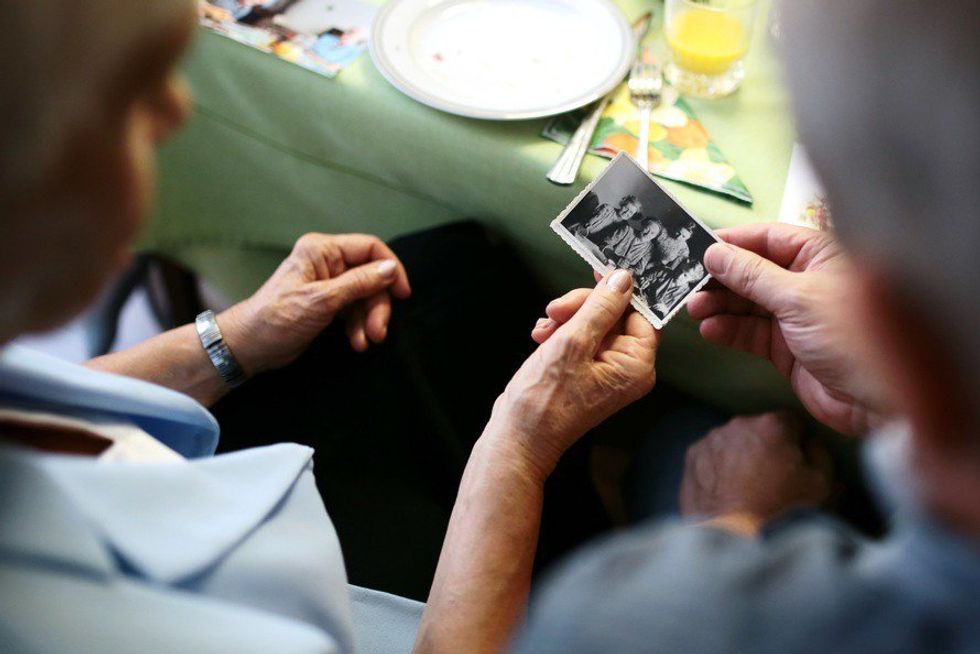
It’s hard to imagine—knowing someone your entire life and having your memories slowly drift away from that person. It’s not something that you can adequately put into words until you have experienced it for yourself. Sure, people will try to empathize with you to make you feel a little better about it—but that only helps to an extent, and sometimes not at all.
So, what is Alzheimer’s really like through a caretaker’s eyes? Well, let’s start from the beginning. Dictionary.com describes Alzheimer’s disease as "a common form of dementia believed to be caused by changes in the brain, usually beginning in late middle age and characterized by memory lapses, confusion, emotional instability and progressive loss of mental ability." Isn’t that quite the mouthful? Rightfully so, the effects of the disease on the family and friends surrounding their loved one are just as strenuous. As any caretaker knows, there is no cure for the disease, and as the sixth leading cause of death in those 65 and older, it is also the only one of those six without some form of a cure.
It all starts with little things like forgetting birthdays and holidays, then grows to larger things like wandering off while driving. These are things that people could claim as "aging," blowing off the actual reason why their loved one is forgetting everything. Casually, their memories of people in their lives start to fade away as well, and it is truly difficult to wrap your head around the idea of it.
Picture it this way, you and your best friend of 50 or so years go out to dinner every Thursday night. One week she forgets about it, and then a little further down the line, she forgets that you even go on these dinner dates together. Give it a year or two and the memories that you two had growing up and going on trips and adventures together become something that she can’t reminisce with anymore. These are the kinds of effects that this disease has. Might I add that she might ask you the same few questions about your children or grandchildren repetitively through your conversation.
The initial steps of caring for someone with Alzheimer’s are usually the most difficult. You start going through denial about what is happening, followed by anger and fear. The way i see it, there are two paths you can take, with the first being pessimism. Pessimism will only lead to more anger, fear and resentment. It will cause you to feel as though visiting your loved one is a chore, which is truly something that is out of their control. The second path you can take is optimism, which in my mind is ideal.
Thinking about the positive experiences that I have had with my loved one make it easier to cope with what is happening now. I constantly find myself thinking, “At least she still remembers me,” or realizing the big smile I have on my face when she remembers old memories, even if it is only in little bits and pieces. Sure, taking extra time out of your day to drive them places that they used to be able to take themselves can get a bit irritating at times, especially if you’re someone like me who is constantly pressed for time, but someone has to do it and when it’s all said and done you should take pride in the fact that you were the one who got to extend your helping hand and help someone.
I give the highest sense of gratitude to anyone who is a caretaker for this disease. The amount of patients and time that people are willing to invest in their loved one to make sure they are receiving the proper care that they deserve is amazing. Although the disease is something that I would never wish upon anyone, it does teach you many interesting and amazing lessons about life. It gives you insight on what truly matters within the relationships with people in your life. The selflessness of those who choose to spend their time helping to benefit someone else's life is something remarkable.
I’m not going to lie, it is often a difficult and not ideal situation, but if you have a good outlook on things then it’s going to be a lot less strenuous on your mind. I like to think that there is always a bit of light in every dull situation, leaving me to try to find the good things in all the bad things in my life. Although it’s not ideal, we can’t control our fate. All we can do is choose whether we want to come out on top or suffer within our own miseries.