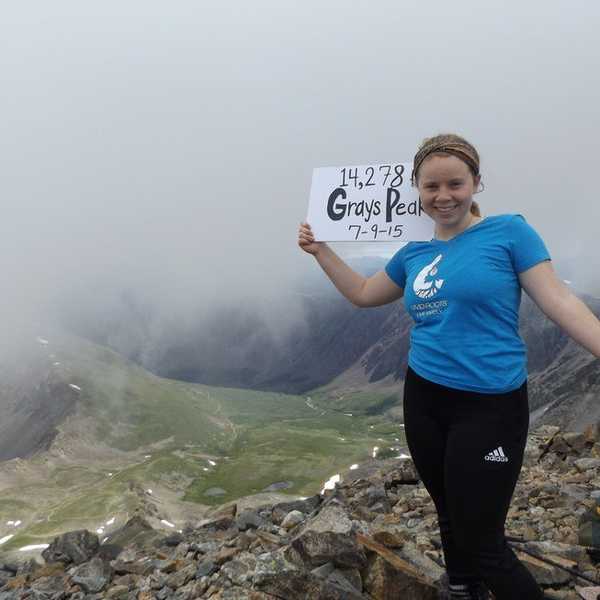

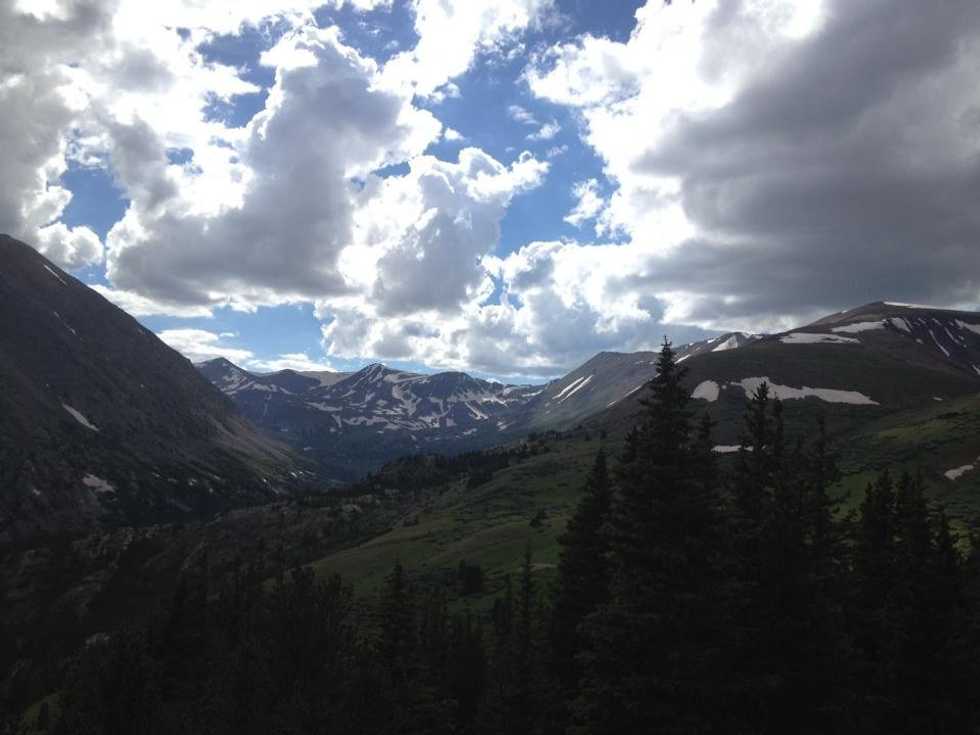
Whether you're a native of the Rockies or somewhere else with gorgeous peaks (and no, anything below 6,000 feet doesn't count), you should know that there are right and wrong ways to visit the mountains. Most of the right ways involve respecting nature, and understanding that the conservation of this place is more important than your desire to get a little bit closer.
1. Never, ever, EVER walk out onto the tundra.
This is number one because it's almost certainly the most important one. When you stray off the roads or marked paths, every single step you take is doing long-term damage. By long-term, I mean a century. A full 100 years, minimum. When you crush the extremely delicate flowers and other vegetation underfoot, that's how long it will take to grow back. Do you really want to be responsible for that kind of devastation?
2. Don't. Carve. Into. The. Trees.
This one is particularly popular with lovers and younger people, and every time I see it, it makes me cringe. Though you may think it's romantic that your initials will be on that tree forever, most people don't really think about the effect they're having on the tree. You are SCARRING a living thing for the rest of its life, permanently affecting its growth, ability to heal, and more. Aspens are the most common victim because their bark is softer and the mark you leave can be more visible than on other trees. But did you know that Quaking Aspens are the largest living organism on Earth? When you see a full forest of aspens, you're actually looking at one tree; they're all connected as one. You basically just stabbed a forest, people. And no, that's not cool.
3. For the love of god, don't forget to wear sunscreen.
It's been proven that higher altitudes increase the risk of getting a sunburn. No wonder Colorado is the number one state in the country for skin cancer.
4. There is such a thing as a "safe distance" when it comes to animals. Don't test its limits.
Just because an animal is peacefully grazing when you come across them doesn't mean that they're docile. I've seen people inch up to a buffalo until they were only about five feet away (despite signs and warnings from other people around), and the buffalo charged them. Buffalo, moose, elk... the list goes on. Moutain lions, wolves, and bears aren't the only dangerous animals in the mountains. It's always safer to give animals their space, period.
5. Don't go backcountry skiing unprepared for an avalanche.
Though it's currently summer and the only snow left is icy patches at the highest elevations, this advice is extremely important. Most people who head into the back country during the winter know their stuff, but every year someone DIES because they're unprepared. Last year, 27 people were killed by avalanches nationally. Please, please, please take an avalanche safety course before you go, and bring an avalanche kit in the event that you or something else triggers one. There are a ton of ways to cause an avalanche, including being loud and skiing off snow-laden cornices. Tip: if you don't know what the word "cornice" means, you probably shouldn't be skiing the backcountry.
6. Don't expect the weather or temperature to be similar to what it's like in town.
The mountains are generally cooler, day and night. Most summer days this just means remembering to pack a light jacket and layers, but if you're camping overnight and forget warmer gear, expect to freeze your butt off.
7. Don't expect to drive the same way as you would on flat ground.
I have literally seen a truck bounce off a retaining wall and spin out on Berthoud Pass. And no, trucks aren't supposed to bounce. Why did it happen? Because they were going too fast around a curve. Those 15mph signs for switchbacks may technically be suggestions (fun fact in case you've forgotten driver's ed: white speed signs are hard limits, yellow ones are more like firm suggestions), but obey them. Riding your brakes too hard down a hill and pushing your car too hard up one can also spell disaster, so please, be careful.
8. Don't disobey fire bans and fire danger warnings.
You might think that it's totally safe to make a fire as long as you're careful, right? Wrong. The largest wildfire in Colorado history was started by a forestry technician burning a letter, and she burned it in a campfire ring—a theoretically safe place. Approximately $80 million dollars in fire suppression costs and private damages later, over 100 had been homes burned, over 5,000 people had been forced to evacuate, and the lives of one civilian and five firefighters were lost. She faced years in prison, along with other punishments.
One missed spark or forgotten coal, and that could be you.
9. In general, don't disrespect the forest service.
They know their stuff, and they generally have a lot more information about what's going on in the ecosystem and general area than you do. Trust that, and trust them.
10. Don't forget to enjoy how beautiful it is.
The mountains are gorgeous and an incredible privilege to enjoy. Take it all in.