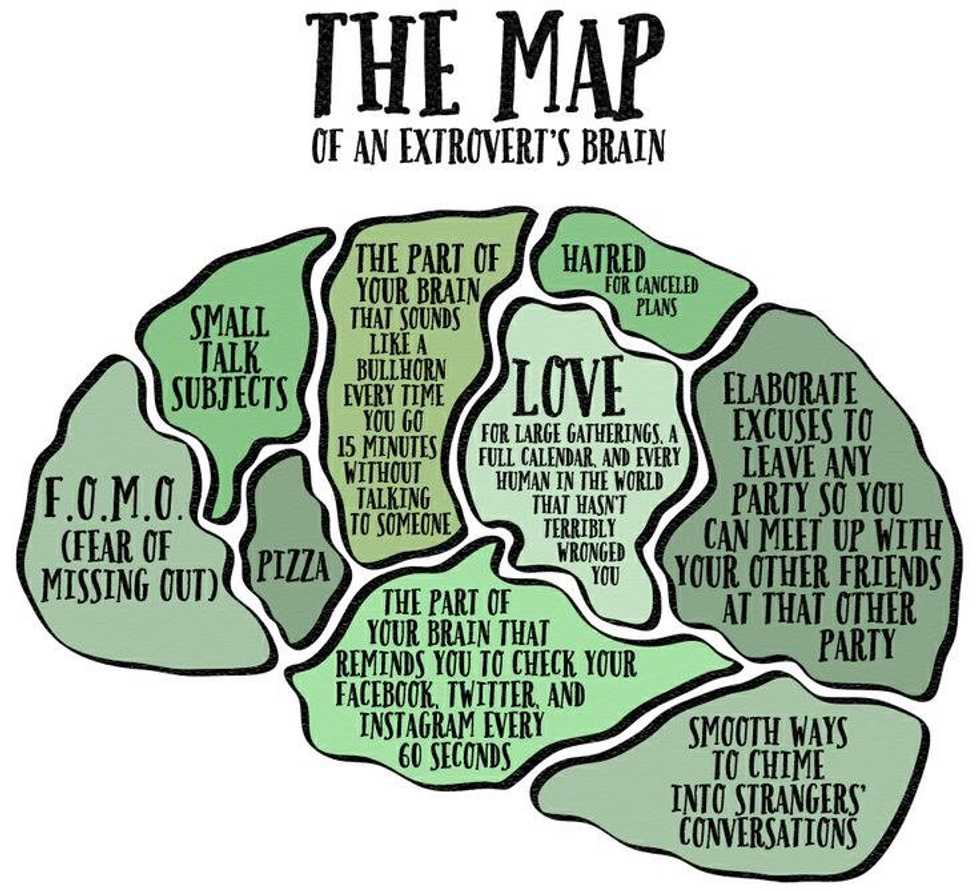
"Extrovert (noun): an outgoing, overtly expressive person"
When you’re an extrovert, people aren’t guessing to understand how you feel. Your feelings are generally put out in the open, whether you vocalize them or show them with body language, you’re not trying to hide anything. If you’re an extrovert, you may be a tad confrontational as well- because why let things fester when you can just address it and get it over with?
You can be extroverted in a lot of different ways, but all of us extroverts know that sometimes, it’s just hard to understand everyone else. Why would you not tell people how you’re feeling and what you’re thinking? Why would you not want to solve issues by communicating openly? Why isn’t it so easy for everyone else to just walk up to somebody and have a conversation? Sometimes, this lack of understanding between extroverts and the more introverted can lead to conflicts.
Disaster can strike when you are an extrovert with a misunderstanding of the rest of the population, combined with an internalized social anxiety.
Something happens, you bicker with someone, they roll their eyes at you, you know they’re upset but don’t know why, they’re ignoring your texts- whatever it is, you think that the best way to solve it is to confront them. This conflict eats at you all day, maybe even for the next week. All you want to do is have a conversation and resolve the issue, but things are never that easy. Humans are messy- emotions are not always two-way streets and everybody has a different path of thought.
If you are like me- extroverted, open, and confrontational but sensitive and often socially anxious and worried in the slightest confrontations- there are a few things you have to remember to remind yourself of in these situations:
- Not Everybody Likes to Talk About Their Feelings - Even though you are someone who puts it all on the table, you have to remember that not everyone is like you. Some people just function better by internalizing things and do not benefit from “just getting it all out.” You can’t expect everyone to be willing or able to explain themselves to you, and you also can’t expect them to be able or willing to understand you when you explain yourselves to them.
- Don’t Read Too Much Into Things - Don’t let yourself get to you. Whatever is happening between you and another may be just a construction of your own anxiety. Don’t overthink and overanalyze. Take everything for face value, and don’t create these movie-drama situations in your head. Just because someone seems like they don’t feel like talking to you does not mean they are upset with you or dislike you. You are only making yourself more anxious in thinking this way. You’re not a mindreader, so don’t act like you know what everyone else is thinking or why they’re doing what they’re doing. Take a breath, keep yourself busy for a day, and then come back and reanalyze what may be happening.
- Not Everyone Has A Thick Skin Like You - If you value feedback and confronting problems, it would make sense that giving those things back to others will help solve a lot of problems. This is entirely wrong. Not everyone takes bluntness and honesty with the same grain of salt you do. Note: It’s not that they are sensitive, it’s the way us extroverts tend to present these things. They can often seem harsh when we’re trying to be honest. Don’t feel guilty about sugar coating things or letting someone down lightly- it’s not fake, it’s considerate.
- Don’t Forget to Reflect Upon Yourself- You can’t blame all of the problems in your relationships on the other’s introvertedness. Do some self-examining, and think about what you and your forwardness may be doing to affect the relationship. Is it helping or hurting the other person(s)? Though confrontation might make you feel better, it does not do the same for all others. You are always willing to talk things out and address an issue, but that doesn’t always solve a problem either.
- Confrontation Does Not Solve All - Let some things go. Believe it or not, not all feelings are valid. People overreact, misunderstand, and forget to take things at face value. When you encounter a conflict, remember to think before you confront. Not everything needs to be addressed in a confrontational manner. Feelings pass, especially the bad ones. Something as insignificant a little bickering and disagreement that leads to some tension for the day does not need to be addressed, especially with someone who doesn’t enjoy confrontation as much as you do. Let someone know how you’re feeling if they can’t already tell, but don’t pick a fight where there’s nothing to be fought about.
- Say Sorry When You Need To - When you’re open an extroverted, it’s hard to hide what you’re feeling, and sometimes it just comes out the wrong way. If you were rude to someone, said something hurtful, or handled a situation poorly, say sorry. Be able to admit when you were wrong as much as you’re able to call others out for being wrong.
Whether you’re a confrontational extrovert or an internalized introvert, these are some things to remember. As polar as you might be, you need to be able to understand the thought process of the other side to be able to solve any conflicts. This is not something that is automatic, it’s hard to reason with yourself why the other person doesn’t do things the way you do. Make a conscious effort to understand others and fall somewhere in the middle of us and them in conflicts, and you will find that your relationships run a lot smoother.