From coin flips to suspended campaigns, the Iowa Caucus on Monday, Feb. 1, 2016, provided several important moments that will shape the 2016 Presidential Election. Here are the five things we learned from the Iowa Caucus:
1. Iowa weeds out the weak campaigns

After the results of the Iowa Caucus, Republican candidate Mike Huckabee and Democratic candidate Martin O’Malley suspended their 2016 campaigns. Huckabee, the former Arkansas governor, tweeted “I am officially suspending my campaign. Thank you for all your loyal support.” Although Huckabee won the 2008 Iowa Caucus, he failed to gain the support of the Evangelical voters. Also, he lost in grabbing headlines like other Republican candidates like Donald Trump or Ted Cruz.
After only pulling in about one percent of voters' support in Iowa, O’Malley suspended his 2016 campaign. In a Democratic race that is dominated by Hillary Clinton and Sen. Bernie Sanders, O’Malley struggled to find traction. With the surge of Sanders, there could be only one underdog in the Democratic race.
Other Republican 2016 campaigns that only gained 2 percent support, like Huckabee, were: John Kasich, Carly Fiorina and Chris Christie. One can only imagine their campaign suspensions are soon to come.
2. Trump's gamble does not pay off
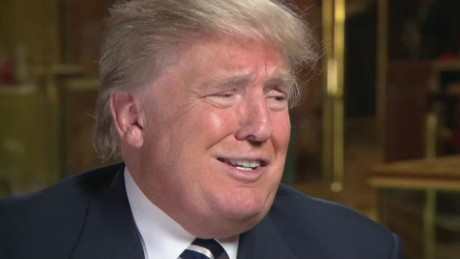
Whether it's skipping out on Fox’s latest debate or flaunting traditional Iowa rules, Trump’s gamble with the Iowa voters did not pay off. Relying on his media coverage and the support of his “Evangelical” voters, Trump believed that he would have enough traction to win in Iowa; however, he placed second, behind Cruz. His absence in Iowa actually hurt him. It allowed other candidates, like Cruz and Marco Rubio, to gain support in Iowa.
I believe his decision to exit the debate was solely due to the fact he did not want to take punches from other candidates so close to caucus time. The moderators feast on Trump’s inconsistent comments. They continually pull his comments from previous interviews or videos and use it against him, and rightfully so. This man constantly contradicts himself (see Colbert Trump vs. Trump video). There was more of a risk with him being on the debate stage.
3. The Republican race is closer now

In Trump’s absence, the focus was mainly on Rubio and Cruz. The surge of Rubio and his ability to capture the Evangelical voters placed him just behind Trump. Astonishing, considering Rubio was around 15 percent in the latest poll. At the end, the results in Iowa showed a three-way contest. Cruz led the way with 27.6 percent, Trump followed at 24.3 percent and Rubio at 23.1 percent. The other candidates failed to break 10 percent. One can imagine these will be the three frontrunners for the 2016 Republican candidacy; meanwhile, the other candidates like Ben Carson will eventually lose traction (if they have not already).
4. Heads or Tails?

In as many as six areas of Iowa, ties were decided by a coin flip. Clinton won every single coin toss. For the mathematicians out there, that’s less than two percent. If her presidential campaign does not work out, perhaps the Secretary of State should try her luck in Vegas. The six areas totaled the amount of four delegates, which in hindsight was almost how much the tie virtually was.
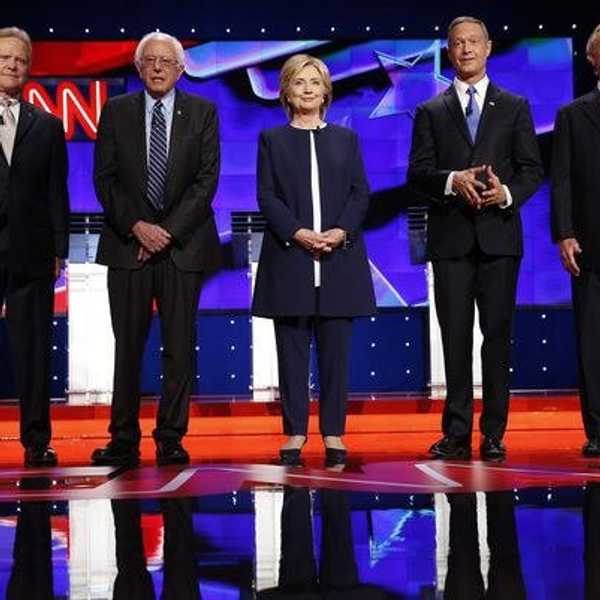
The results after the caucus showed Clinton winning at 49.9 percent and Sanders following close by at 49.6 percent. Clinton also secured 23 delegates compared to Sanders' 21. Now, one can see the importance of a simple 50-50 coin flip. Although Clinton did not win Iowa entirely on coin flips, it did provide the extra support of those areas' delegates.
5. "A Virtual Tie"

Despite losing to Clinton in Iowa, Sanders believes the “virtual tie” is a great achievement and a bigger statement for his campaign. Considering how Sanders began the race far behind Clinton, one can see why Sanders' campaign was not disappointed by the loss. After watching Sanders’ speech following the results of the caucus, the cheering and applause did not resemble an atmosphere of someone that had just lost. Sanders was proud of what he accomplished.
In a clear jab at his lack of media exposure compared to candidates like Clinton or Trump, Sanders said to his supporters, “I think the people of Iowa have sent a very profound message to the political establishment, to the economic establishment and, by the way, to the media establishment”. With chants of “Feel the Bern!” arising afterwards, Sanders will surely carry momentum into New Hampshire, where he is already leading in polls.