
The month of September is supposed to show some of the lowest CO2 levels of the year. Unfortunately, that number this time is 400 parts per million (ppm). This amount is not likely to drop to safe levels in our lifetimes, according to scientists. This data was recorded over the entire month of September and marks the first time that the global levels of CO2 have been consistently over 400ppm.
350ppm has been described as the "healthy" level of CO2. The goal of reaching 350 is described by organizations such as 350.org. Worldwide initiatives aim to reduce our dependence on fossil fuels and to invest in clean, renewable energy sources. The consensus is that yes, although climate change does occur naturally, the rate of warming has been greatly sped up through human activity and our reliance on burning fossil fuels.
What is ppm and why is this a cause for concern?
Parts per million (ppm) is a measurement used in chemistry to quantify concentrations in a solution. It is also used to describe the impact of pollutants and environmental health risks. Essentially, 400 ppm of CO2 is 400 parts of carbon dioxide for every million parts of the air that we breathe. Pictured below is a view of New York City's daily CO2 emissions.

When discussing the 400 number, we are talking about an environment that has passed an ominous threshold as the seas continue to rise and acidify, as record-breaking extreme weather events occur worldwide, and as the arctic ice continues to shrink while the global mean temperature increases.
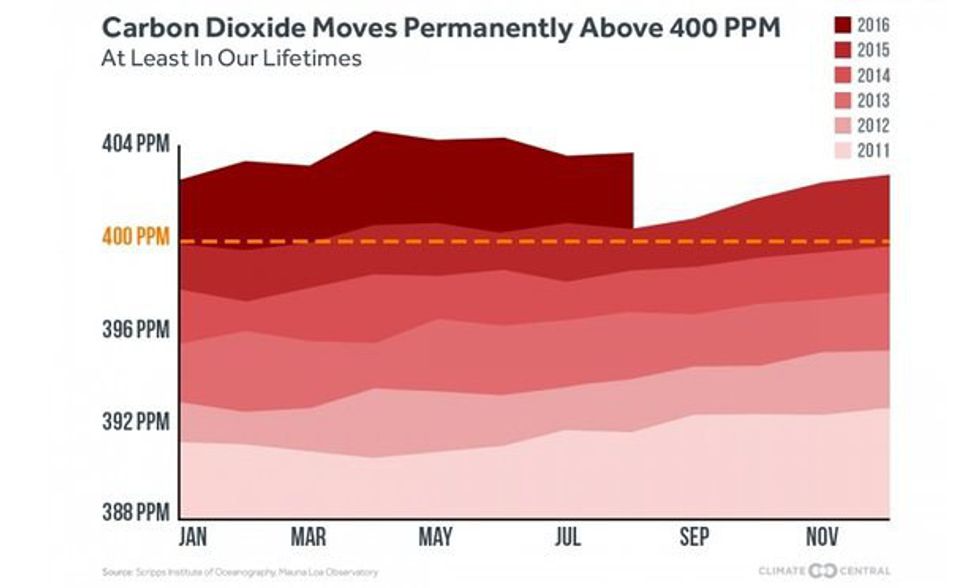
As we can see in the graph pictured at the beginning of this article, the year 2014 showed our CO2 levels below 400ppm. In 2015 we started to break the threshold. Throughout nearly the entire year of 2016, we are above 400 and climbing.
A "permanent" condition
According to the latest Climate Central report, scientists assert that atmospheric CO2 will never consistently drop below 400 ppm in our lifetimes. Don't let this turn you into a pessimist, however, as we should still do everything possible as human ingenuity allows in order to mitigate further emissions growth.
The downside to this is that none of us living today will see a safe concentration of CO2 in our atmosphere. We will not hit that magic 350ppm number in our lifetimes. Of course, we do have the power to lay the framework for 350ppm.Though our leaders did not listen or act fast enough over the last several decades, the decisions that are made right now will determine how much worse the situation will become. It is no longer an option, and there is no time, to deny and hide from the challenges we face.
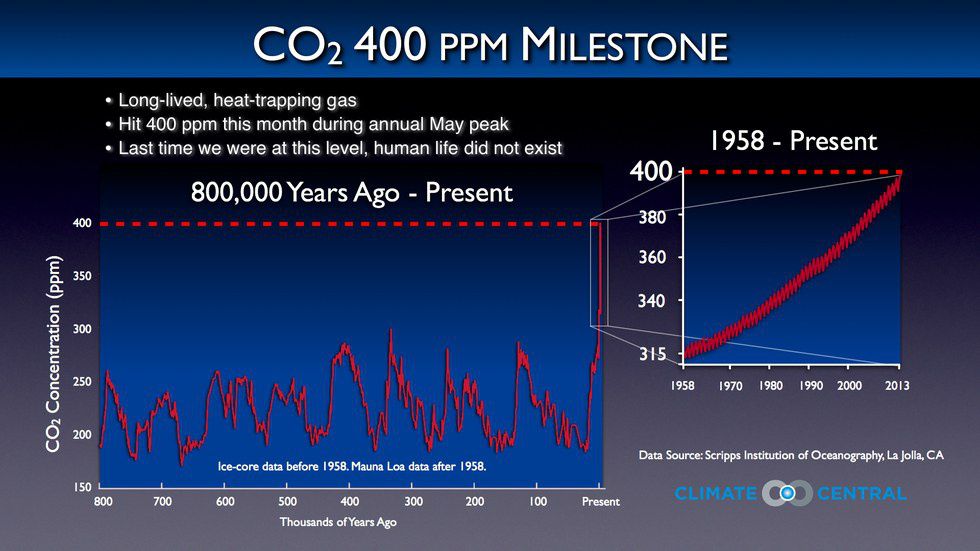
Carbon dioxide is persistent. It is not removed from the atmosphere in numbers that would dramatically lower the global average. The CO2 expelled into our atmosphere today will likely still be around from anywhere between 5 and 200 years from now. If not in the atmosphere, it will have dissolved into the oceans to escalate ocean acidification and destruction of marine ecosystems.
The positives
It is indeed true that climate leaders have set a record number of renewable energy investments in the year 2015. To continue the fight against the 3.6°F of warming that we are expected to experience in the next few decades, we will need to continue this worldwide coalition toward increasing our renewable energy infrastructure. A secure energy infrastructure utilizes energy from a variety of sources. It is a march toward energy independence, energy security, and energy variety that will do less to contribute to our carbon footprint.
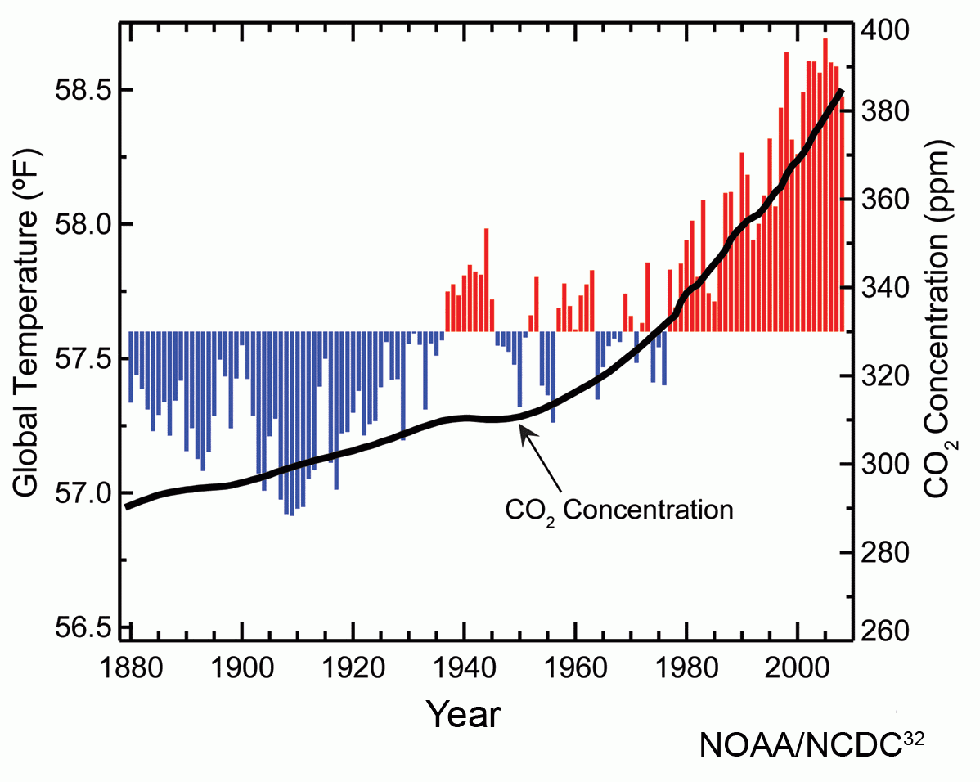
The next tragic milestone would be to cross the 3.6°F threshold, expected to occur within the next 15 years. We do not have to be uncertain, afraid, or pessimistic. It is much too late for that. This is a time for us to become more active than ever to get involved in public policy, clean energy, community organizing, and make some important choices in our lives to decrease our carbon output.