Any gymnast would tell you that the sport of gymnastics is an uphill climb – and a very steep, sometimes near impossible one at that (with boulders thrown your away and avalanche threats on the regular). You spend your entire life training to qualify for competitions, exceed level after level and win titles, all while trying not to get run down in the process. Out of the thousands of gymnasts in the country, only a rare few make it to the Elite level. Programs like TOPs put you on the Olympic track from a young age. Even if you're a world-class gymnast, to get to the Olympics, you have to be the right age at the right time with enough artistry and strength to impress Béla and Márta Károlyi.
If you are lucky enough to reach this glorified peak of the Olympic Games that comes only once every 4 years, you have endured more physical and mental burden than most. Like Haley Graham says in "Stick It," "Elite gymnastics is like Navy SEALs, only harder. There are like, 2,000 Navy SEALs, but there are only like, 200 elite gymnasts...The things gymnasts do make Navy SEALs look like wusses. And we do them without a gun!"
Once you've had your Olympic run, you usually decline. Fast. And making a comeback is no easy feat – almost everyone knows that. We've seen it with gymnasts like Shawn Johnson, who retired from the sport in 2012, and Alicia Sacramone whose impressive comeback seemed promising but failed to solidify her a spot on the 2012 Olympic team. It's not easy to retrain your body and mind for the strenuous Olympic-bound journey. Sometimes you've just had enough.
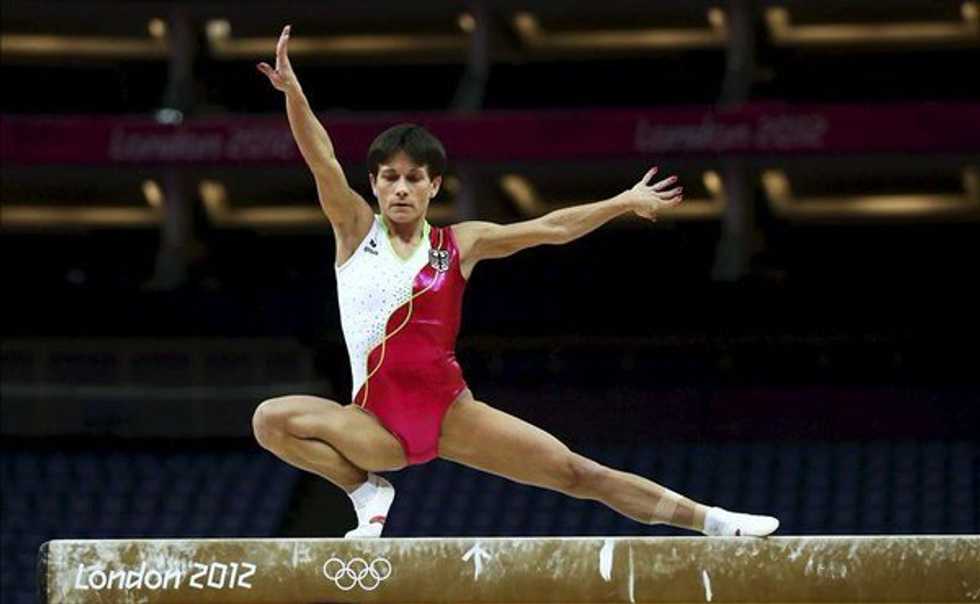
Against all odds, Uzbekistan gymnast, Oksana Chusovitina, qualified for her 7th Olympic games last week. Yep, you read that right – her 7th Olympics.
Chusovitina began gymnastics in 1982,15+ years before most of the gymnasts projected to compete in Rio were even born. In the 1992 Barcelona Games – her first Olympics – she won team gold with the former United Team. Although Chusovitina has spent most of her career representing Uzbekistan, from 2006 to 2012 she competed for Germany after her son received treated for (and was cured of) leukemia in Cologne. She has since then returned to Uzbekistan.
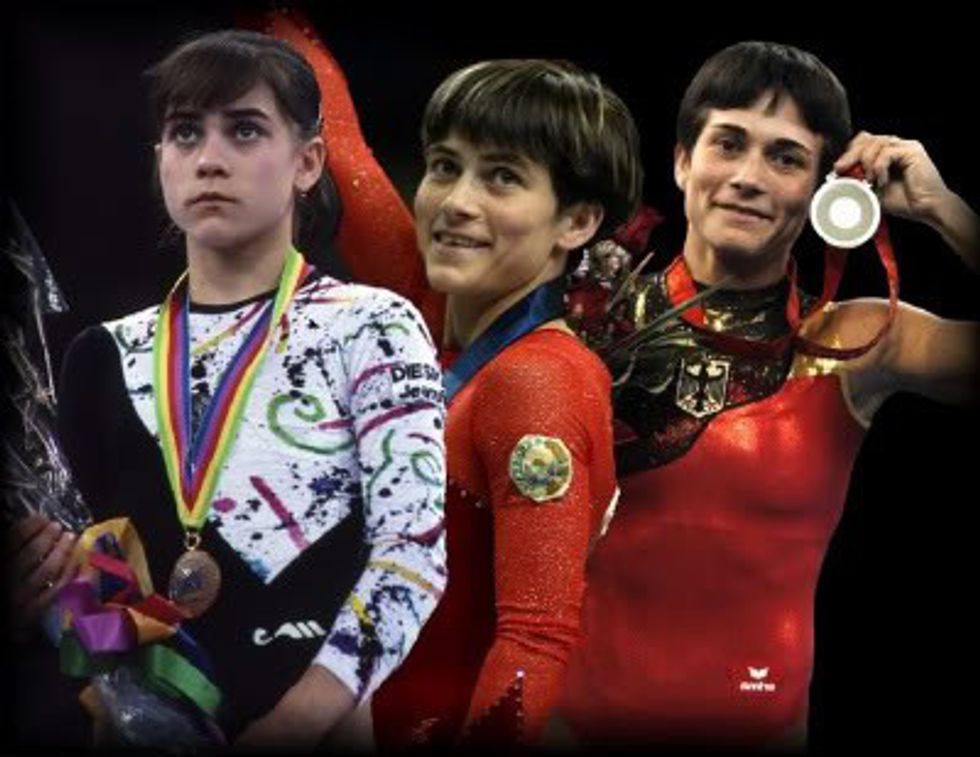
In a 2011 documentary, Chusovitina admitted that after her first Olympic Games, she wasn't sure whether she was going to continue or not. "And then after a long enough break, my body felt like, yes, Oksana, I want to do gymnastics," she said. "I began all over again and never stopped."
She is a 3-time World Champion, has won a total of 11 Worlds medals, and received 2nd on vault in the 2008 Beijing Games, which she dedicated to her son.
"Am I old? I don’t feel old," the 5-foot, 40-year-old told the New York Times before the London Olympics, where she received 5th on vault, her specialty.
This August in Rio, Chusovitina will be 41 and is set to be the oldest female Olympic gymnast of all time. So, her gymnastics career is twice as long as that of most women in the sport. Chusovitina isn't "exceptional for her age," she's exceptional – period. The fact that she's survived this long in a sport so demanding, so unforgiving at times, is a testament to her incredible drive and raw talent. Most of us just gawk at olympians from our living room sofas, enthralled by the excitement of it all. And Chusovitina, well she's lived it more times than she can count on one hand.