
The ocean has been around for a long time, and with all the advancements we've made as a species, our knowledge of the ocean is astonishingly lacking. In fact, we've mapped the surface of our moon in greater detail than the sea floor. The ocean takes up nearly three-quarters of the surface of the earth, so it comes as no surprise that we're constantly making new discoveries. However, that doesn't help explain away the fact that some of these discoveries are just plain weird.
1. Blue Holes
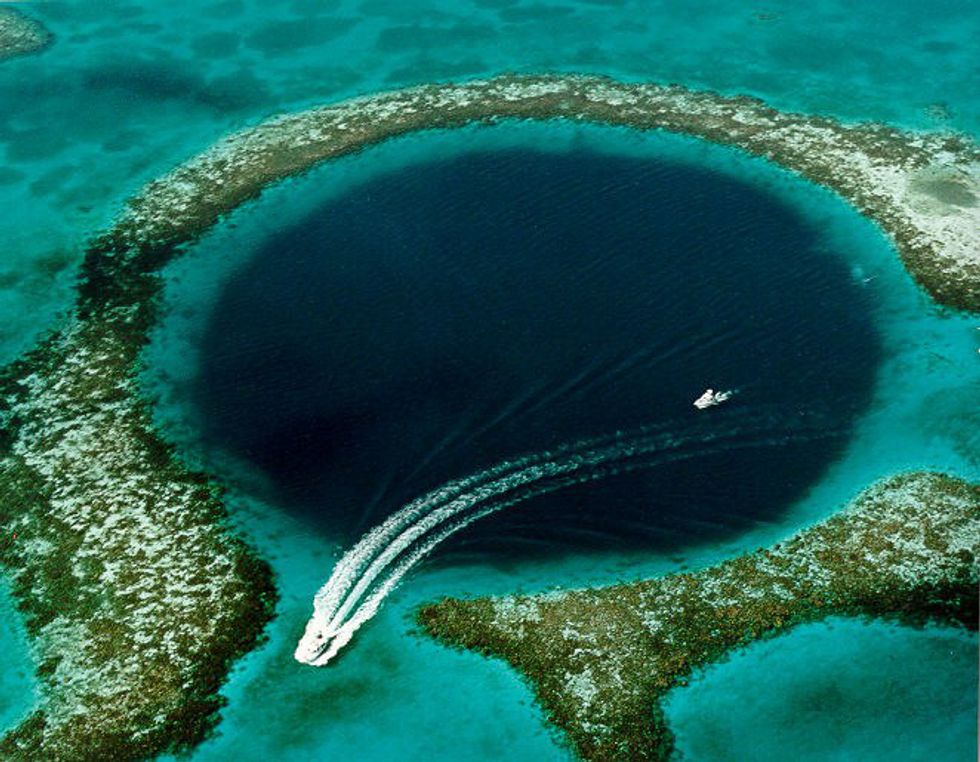
While starting off with the disadvantage of sounding like an early 2000s alt-rock band, blue holes are actually one of the most visually stunning features we have in our ocean. The formation occurs when a sinkhole opens in the marine floor and a bank or reef forms around the rim. The stark contrast in water color is due to the sharp drop-off from the shallow water surrounding the cavern, which rapidly switches to the deep blue that the formation is named for. The dimensions of these holes vary, the deepest saltwater blue hole is found in Clarence Town, on the coast of the Bahamas. Known as Dean's Blue Hole, the depth has been measured at an astounding 202 meters. To put that into perspective, you could fit the Statue of Liberty in twice, with room to spare. The widest of these is known as the Great Blue Hole, pictured above. Found about 60 miles off the coast of Belize, this incredible sight measures over 300 meters across. Underneath the surfaces of these holes, are many other passages that form beneath sea level, each branching off hundreds of meters away from the source.
You won't find many new species in this area of the ocean, however. The water in the blue hole quickly becomes anoxic (lacking in dissolved oxygen) as you travel deeper, restricting organic life to only the most adaptive forms of bacteria.
2. Brinicles
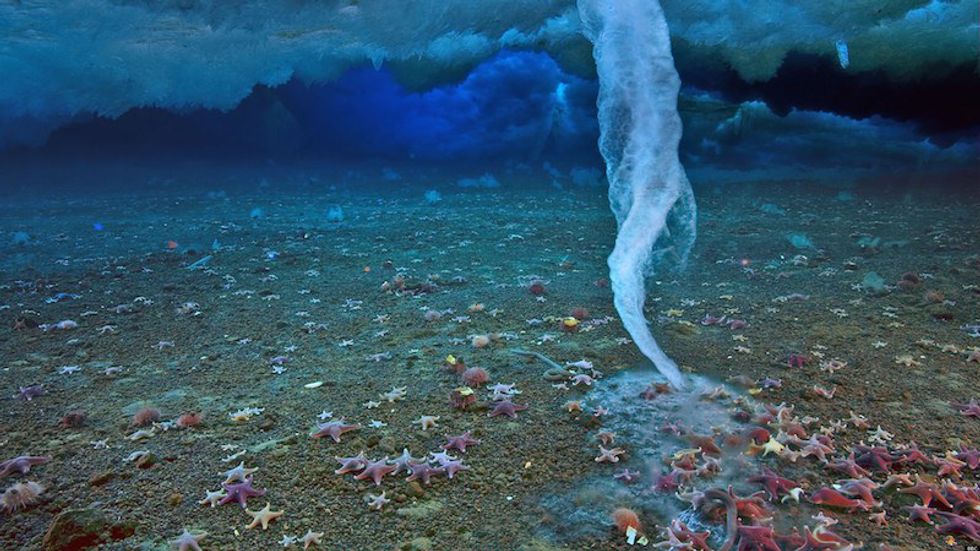
A portmanteau of brine and icicle, this phenomenon does not stray far from its description. Brinicles are created when a channel of super-cooled saline water begins to descend through its surroundings. Since the saline water has a lower freezing point than the less-salty water around it, the saline will freeze the water around it as it descends. This column of ice is what eventually become the brinicle. As the ice grows, it becomes less fragile and actually begins to take in more of the surrounding water to freeze and add to the expanding icicle. With a great enough supply of saline and a shallow depth to travel, the brinicle can sometimes reach the ocean floor.
If the brinicle does reach the surface, it will begin to spread out, as seen in the above photo, freezing any sea-life unfortunate enough to get in the way.
3. Tardigrade
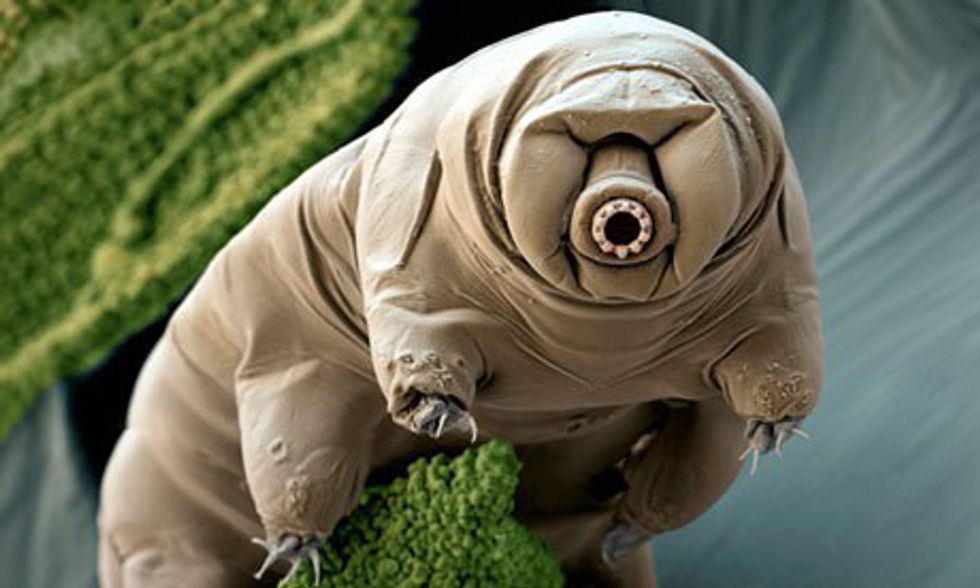
It's time to turn our focus from natural formations to sea creatures. And I'm using creatures in the loosest sense of the term. Tardigrades, also known as water bears, are a species straight out of science fiction. I say this because as far as we know, Tardigrades are essentially nature's closest answer to creating something that cannot be killed. These animals are usually found in water, near hydrothermal vents, where temperatures can reach over 600 K, but have also been reported to be found in the middle of the desert, as well in solid ice.
This seeming juxtaposition can be attributed to the Tardigrade's unusual method of survival. When put into a position of danger, the Tardigrade will enter a state of desiccation, shedding 97 percent of the water in their body and slowing their metabolism to an incredible 0.01 percent of their normal speed. This can extend their survival time in hostile environments to spans of decades, even when Tardigrades themselves only live for a few months at a time in normal conditions. This ability to survive temperature swings and extreme dryness is only piled on with the additional fact that this little organism can also survive the vacuum of space. Not only is this creature dealing with the extreme temperatures and vacuum found in space, it also somehow survives the incredible amount of ionizing radiation found outside of our atmosphere.
The above image gives a fantastic example of why scientists should not always be put in charge of naming new animals. That picture above resembles more of a beanbag than a bear. However, another interesting fact about the Tardigrade sheds some light on just why it is such a hard animal to pin down. While most species on this planet contain just around one percent of foreign DNA in their genome, Tardigrades contain an incredible 17.5 percent foreign DNA. In other words, only 82.5 percent of this animal's DNA is passed down through reproduction, the remainder is cobbled together primarily from genomes passed from other animals through bacteria. Other sources include plants, fungi, and Archaea.These foreign genomes might be the key to unlocking to secret as to how these improbable creatures continue to survive long after other species perish.
4. Underwater River
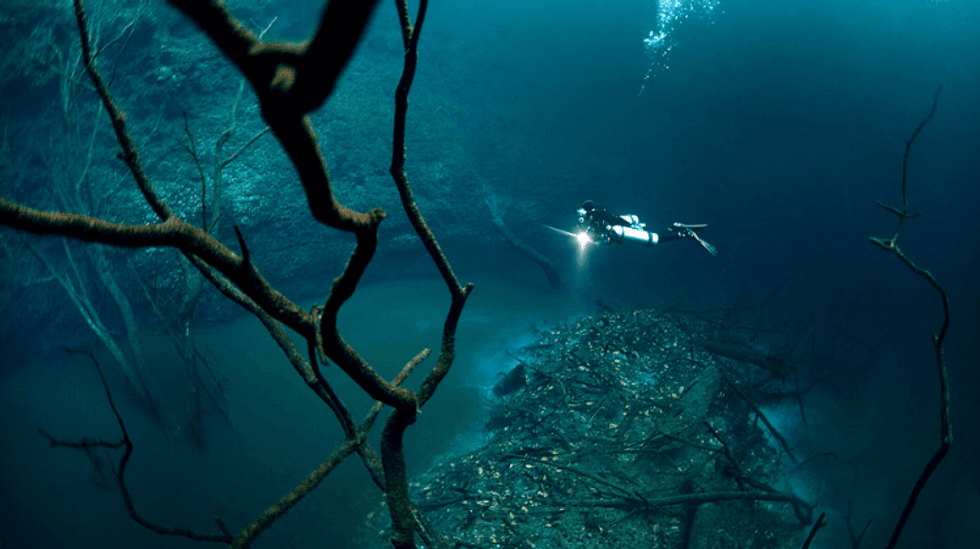
(While this topic technically is not found in the ocean, it seemed to be enough of an oddity to include it in this article)
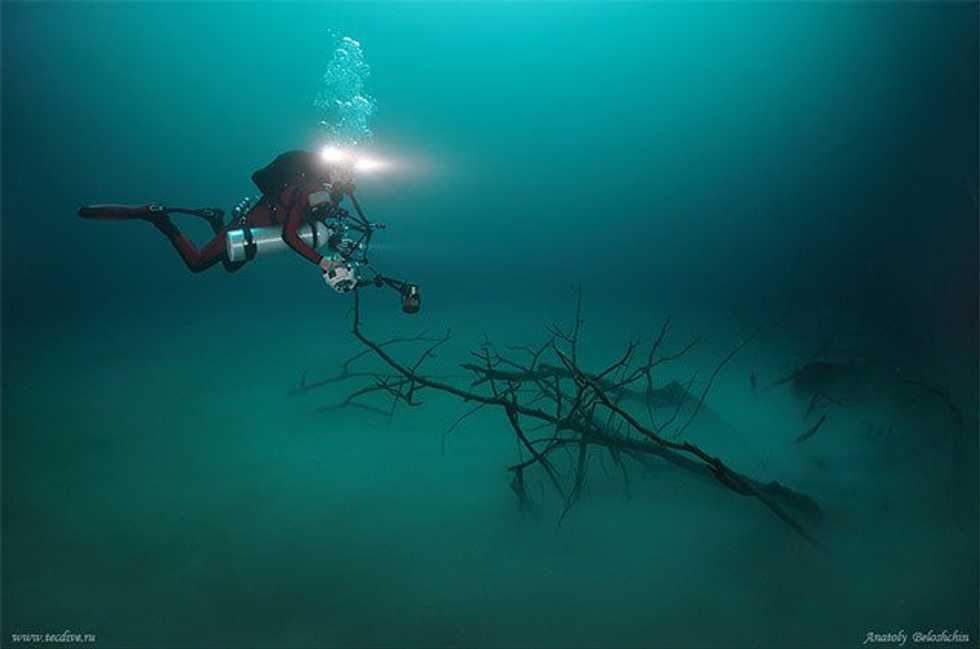
Right off the bat, this topic sounds impossible. Something silly that an attention-starved scientist would claim to keep their grant money flowing in. This is no farce, however, and must be seen to be believed.
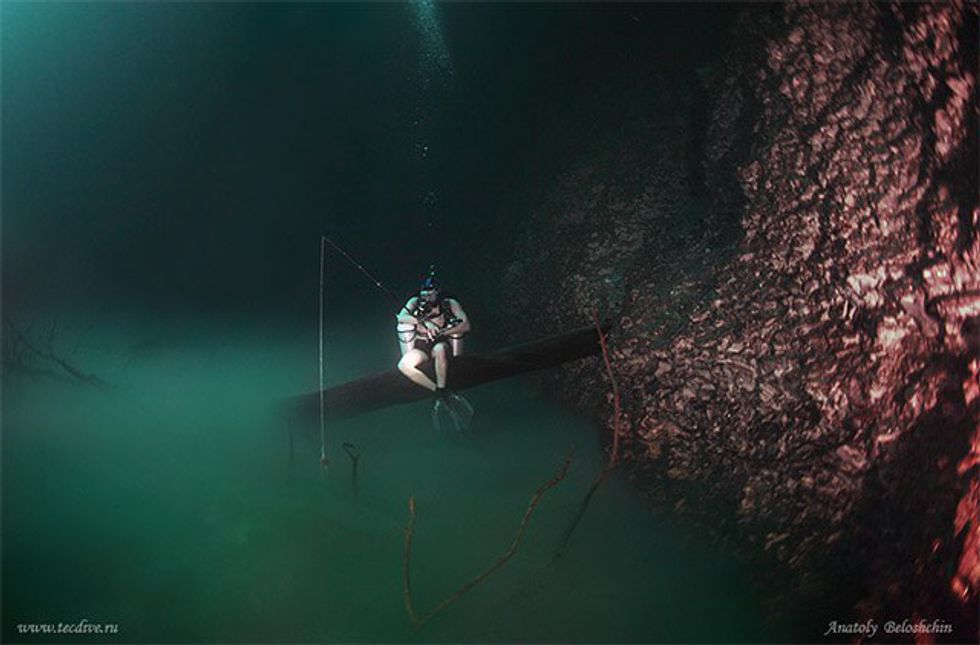
This river is found in a cenote, a deep sinkhole in bedrock which leads to groundwater. The river you're looking at is caused by the intersection of normal freshwater with a denser section of saltwater, with a one-meter layer of hydrogen sulfide in between. The freshwater is not always there, but heavy rains can bring in the top layer, which rests perfectly on the saltwater already found in the cavern. Before you ask, no, there's no chance that we could sit on the banks of the river and cast out a line to try and catch some alien species found deep under the surface of the earth.
But that's not to say it wasn't tried.
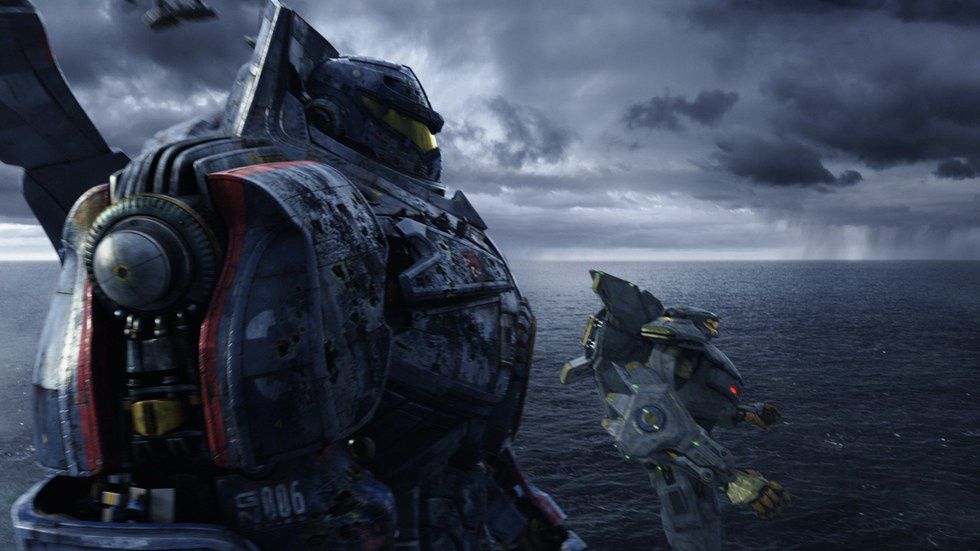
The ocean is a weird place already, and there's a much larger portion that we haven't discovered yet. It's intimidating to be sure, but also fascinating. We live in an interesting time for exploration, and who knows what might turn up when we delve deeper into our oceans. We've always been inclined to explore, even when we have no idea what's waiting for us on the other side. Plus, if we're really lucky, we might find some terrible undersea species of monster, and Pacific Rim will finally become the documentary it deserves to be remembered for.
100% Pure Non-Fictional Truth