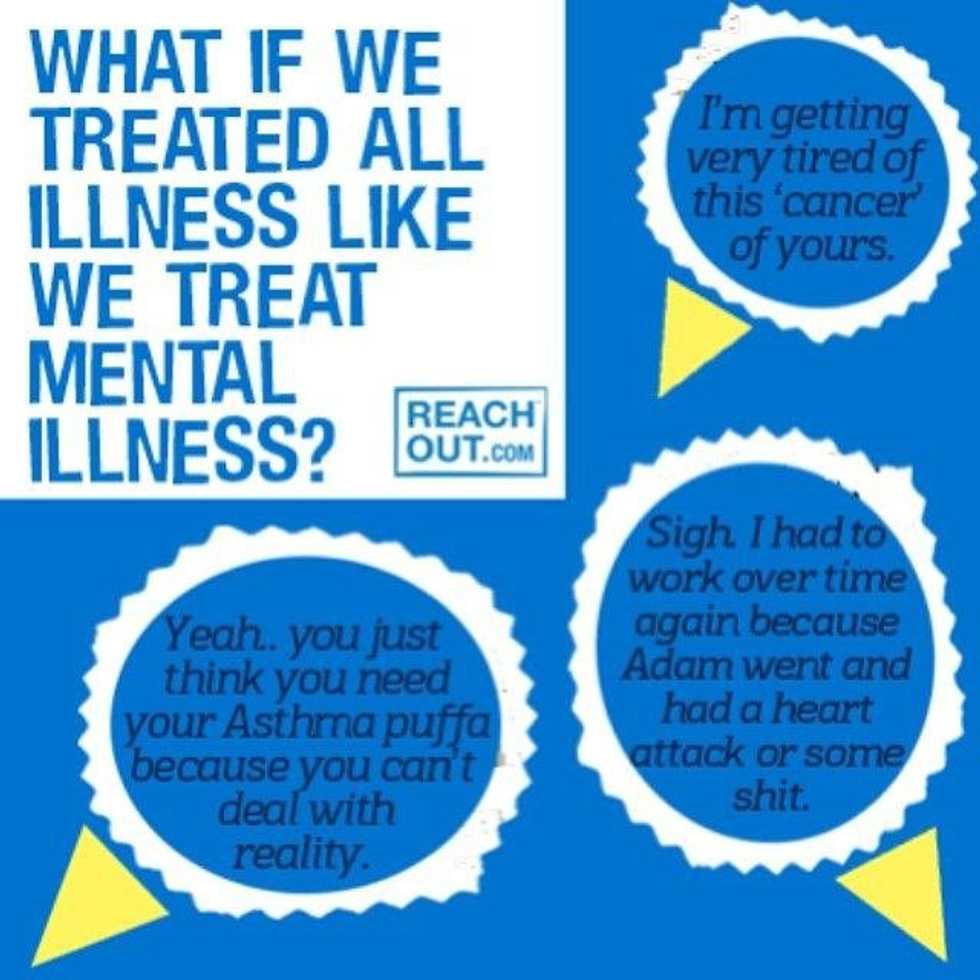
Having struggled with major depression and anxiety disorders for the greater part of my life, there were years where I was so ashamed of my condition, what it took away from me, and the fact that people only saw me as my mental illness rather than who I really am. May is Mental Health Awareness Month, and I am choosing to take a stand with the other 61.5 million Americans who experience mental illness in a given year.
Those who suffer from a mental illness are not just characters in movies, TV shows, or books, and we are far from damaged. We are real people and the truth is, you might be hurting someone you love dearly by spreading such hurtful rhetoric: we are siblings, someone's son or daughter, teachers, your friend or significant other.
Every day this month, and every day after, I urge my friends with mental illness to choose joy, growth, and radical self-love over shame, and here's what you can do to support us:
1. Support me instead of pitying me.
You don't have to "help" or "save" me. I've already read the article on how essential oils, hot yoga, or that new medication can "change my life" - please don't send it to me. I don't want you to check in with me ten times a day or make suggestions on what you think I should do. What I want, and what I need the most, is your love, support, acceptance and understanding.
2. Don't compare your short-term experience with my long-term reality.
I feel your nervousness before your speech in communications class, your first date, and the holiday when you had to break uncomfortable news to your relatives. I know all about the sad days you've spent in bed after a breakup, eating ice cream and watching Netflix. School got busy last semester, you were working two jobs, and saving up for a car at the same time - you were having a really rough time. I get it; you've struggled, too. While you may have had experience with your idea of what I'm going through, only 4.2% of people over the age of 18 suffer from a long-term mental illness. This is not to say that you haven't struggled, but the point here is that your experience was not the same as that of someone who lives with a long-term mental illness that affects every aspect of their life. Your short-term experience going to therapy, taking an anti-depressant, or what I struggle with on a daily basis should allow you to feel empathy, but please don't think you know how to "fix" your neuroatypical friends now, because we're not broken.
3. Ask what we need, and then listen.
Whatever the answer is, whether we say we don't need anything or that we need everything, please believe us. Asking how you can support someone leaves the door open for when that person is ready to share, ready to ask for help, and ready to be supported. The most important thing you can remember when someone you know, love, or care for is struggling with mental illness is that it's not about you.
Mental illness is nothing to be ashamed of – but the stigma and bias against it shame us all. Let us strive to ensure people living with mental illness know that they are not alone, that hope exists, and that the possibility of healing and thriving is real. Together, we can help everyone get the support they need to recover as they continue along the journey to get well. The best thing that you can do this month, and every month after, is to extend this helping and loving hand to everyone, not just those with mental illness. It's 2016, it's cool to care about the people around you.
If you or someone you know is suffering or in crisis, please visit the National Suicide Prevention Lifeline. You can also reach the Crisis Text Line by texting “START” to 741-741. Head here for a list of crisis centers around the world.