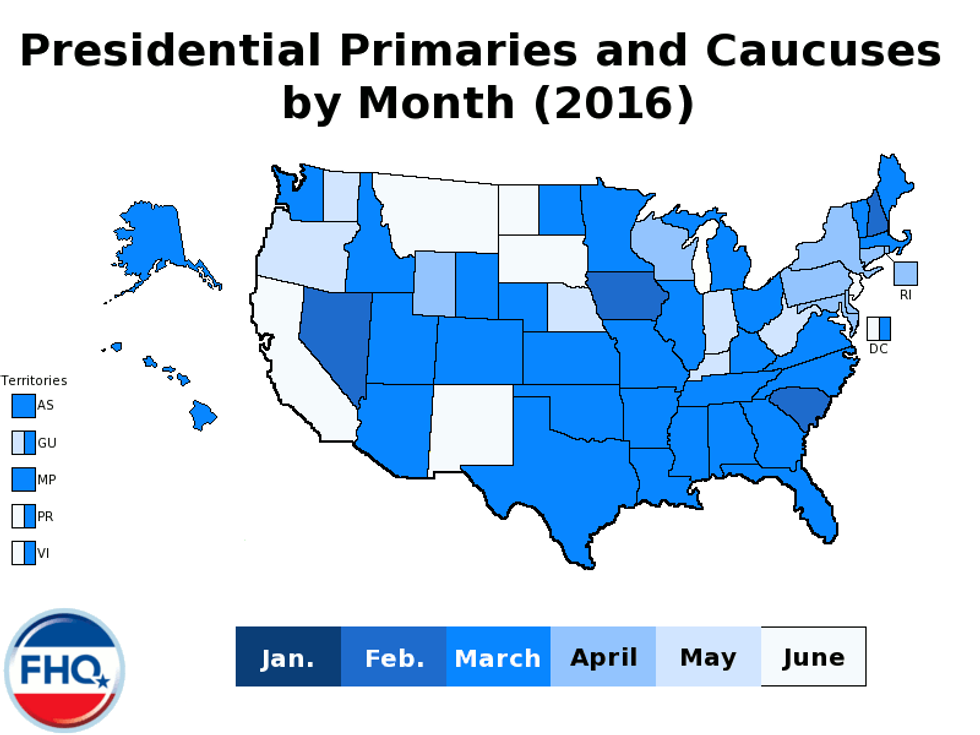
If you’re like many people, you’re probably getting pretty overwhelmed by the 2016 primary elections. Things have been hectic and ever-changing, which can get confusing to the casual observer. So, here’s a fast low-down of where we’ve been, where we are, and what will happen moving forward.
Republicans
On the Republican side, we've come a long way in narrowing down the running. Before the first elections in Iowa and New Hampshire, there were an overwhelming 12 candidates still in the race. As of today, we're down to three — Donald Trump, Texas senator Ted Cruz and Ohio governor John Kasich.
The way the Republicans elect their nominee is rather simple. Each state is assigned a number of delegates based on population. In some states, the winner gets all the delegates for that state, while in others, they're awarded proportionally based on the vote. When all the delegates have been assigned, they all get together at the Republican National Convention (held July 18-21 in Cleveland, Ohio) and formally vote on their nominee. Donald Trump still has an overwhelming lead with 743 delegates to the RNC, compared to runner-up Ted Cruz's 517. Kasich is bringing up the rear with only 153 delegates to his name at this time.
Donald Trump has been criticized for his racist and sexist views, blunt opinions, and lack of clarity on policy. Cruz's policies have also been criticized as racist and many dislike the fact that although he holds similar views to Trump, he's also an "establishment" politician. Meanwhile, Kasich is fairly quiet in the background, with a small but ardent base that think his experience as governor makes him the best choice for president. Going forward, it seems likely that Kasich will want to stay in the race, but unless there are some massive momentum shifts, it seems the real contest is between Trump and Cruz.
In the coming weeks we'll likely be seeing more endorsements for the candidates, which might shake things up. Trump has also still refused to release his tax returns as of yet, which may become relevant going forward. There's also a good chance that the amount of controversy surrounding the candidates will ramp up as we count down to the convention.
Democrats
For the Democrats, the race was always pretty small. With fringe candidate Lester Lessig and more prominent contender Martin O'Malley both having dropped out, the field has narrowed to two major candidates. Hillary Clinton has been the assumed nominee since her strong run against Barack Obama in 2008. However, Senator Bernie Sanders is currently giving her quite a run for her money with his strong grassroots support movement.
Democratic primaries are a little bit more complicated than they are on the Republican side. All states are given delegates to the Democratic National Convention (held July 25-28 in Philadelphia, Pennsylvania) based on population. These delegates (called pledged delegates) are then awarded proportionately based on the state's election. The caveat comes from superdelegate system. Superdelegates get to choose their vote at the convention and aren't required to follow the popular vote. They can support a candidate at any time, but can also withdraw that support at any time. Historically, most superdelegates vote based who has won most of the pledged delegates. Currently the race is fairly close — Hillary has 1,280 pledged delegates to Bernie's 1,030. On the superdelegate side of things (which can still change until the actual vote at the convention), Hillary has 469 to Bernie's 31.
Hillary and Bernie have both been through the wringer this election. Hillary has been criticized for being the establishment candidate, as well as taking money from Wall Street. Bernie's campaign has faced charges of sexism and his some of his supporters have been called out for their "Bernie or Bust" mentality, which some worry could lead to a Republican win in the general election. The coming states are sure to be close, with most of the pro-Hillary states having voted already.
Beyond the closeness of delegate count, there's also likely to be quite a bit of progress in Hillary's email investigation. As more of the Panama Paper leaks (which detail tax evasion through offshore bank accounts) are investigated, we might also see more of the connections between those close to Hillary and those implicated in the papers. Another big event to be on the lookout for is the announcement of who liberal favorite Elizabeth Warren chooses to endorse.
On both sides we're likely to be seeing a lot more news in the coming weeks as the races come down to the wire. If you’re interested in keeping up with the political game, look for my weekly “This Week in Politics” articles, starting the week of April 17.