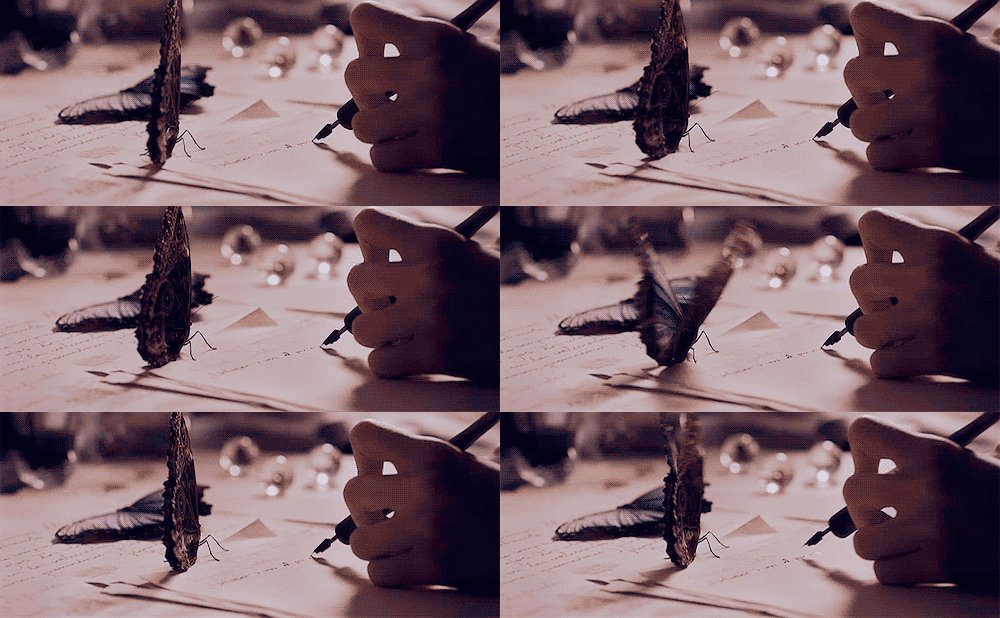


When I was thinking of summer, I was dreaming up all sorts of adventures. Little did I know that I’d be having a lot of these adventures through books and writing. As I prepare for my senior year as a Creative Writing major, I’ve spent my summer working on my Capstone (read: novel).
The past 3 months have been filled with loads of reading and writing in preparation for my big project, and here are a few of the things I’ve learned through this process:
1. Let your characters surprise you.
Many times as writers, we want to control the story. We know where we want it to go, how it ends, and exactly who our characters are. Once in a while, I’ve let my characters have a bit more freedom and as I immerse myself in their story, things happen to them that I didn’t plan, or I discover things I didn’t know about them. I find myself surprised as the plot unfolds differently than I imagined, but I definitely enjoy the ride.
2. Just sit down and write.
OK so this is something every Creative Writing professor will tell you in class, but even though you’re probably going like, “Well, duh!” sitting down to write is not as easy as it sounds. You’ll get distracted, you’ll procrastinate, you’ll say you’re having a bad day so you’ll wait until tomorrow when you’re in a better mood. You’ll write ½ a page and “reward yourself” by watching 3 hours of TV or scrolling through Tumblr or having a marathon of your favorite YouTube videos. In short, there are a million distractions, but even on those “lazy days” you have to force yourself to sit down and write in order to reach your goal.
3. Reading is your friend.
Since my novel is a historical fiction novel, I’ve had to do a lot of reading in order to help place my characters in the time frame they’re in and in order to tell the story as truthfully as possible. However, I’ve also read 7 books not related to my novel, and even those have helped. They give you ideas, help expand your vocabulary, and even provide you with imagery and metaphors you might’ve not thought of before. The best part is that then you can incorporate these bits and pieces of your favorite books into your own work as a nod of respect toward other writers.
4. Photographic memory.
Draw from old memories and capture them through detailed descriptions. See how well you can remember a place, a moment – a face. If, like me, your memory is a little wonky, pictures are a great way to really capture a moment. When you’re not writing, search for images of places, scenarios, or even people, and pull them up the next time you sit down to write. As you look at them, you can recreate the picture with your words giving you some detailed moments for your story!
5. Art inspired.
In one of the many image searches that I’ve done, I stumbled upon a painting related to my novel’s topic. This image sparked a million little light bulbs in my head, and suddenly it became a key scene in my book. Look for inspiration everywhere; you never know if that painting or that photograph will be the key to a great scene.
6. Balance.
Confession time: I have "struggle bussed" with balance in my novel. It’s so hard to find the perfect balance between the actual events (historical) and your own story (fiction). Many times, I’ve allowed the history to be in the forefront, so I find myself taking my characters “out of the history” and placing them by themselves so I can explore their world independently from the historical event they’re living through.
7. Synonym.com
Synonym.com is literally my best friend when it comes to writing! You know how sometimes you get stuck repeating the same word or how sometimes you’re fishing for the right word, yet all that comes to mind is the next best thing? This site will provide you with loads of synonyms that can help not only expand your vocabulary, but also find the perfect words.
8. Back up your backups.
Story time: I’d learned a long time ago to never save important things on my computer because it will die, and I will lose everything. I’d been keeping my Capstone in a USB, and everything was great until one horrible day: my USB decided it was time to die! I had an older back up of my Capstone in an email, and luckily I’d saved most of my latest work on my computer too, but I was devastated! I’d lost some really good work I’d done, but I learned my lesson. Save everything about a million times: email it, save it on a USB and always use an online Drive, which will hopefully never let you down.
9. Stay in the moment.
I didn’t really learn that this summer, yet it was something my professor was drilling in our heads last semester that I’ve found myself doing more of. I really enjoy description and detailing, but sometimes I find myself hurrying through my story because I’m so excited for what comes next. On the other hand, sometimes I find myself needing to fill my page quota, and I’ve run out of ideas. In both of these scenarios, staying in the moment saves the day. It helps you to slow down, but it also helps fill out any page length requirement. Just think of your 5 senses and say as many things about the moment as you can, and you’ll see your story come to life.
10. Third person.
I have pros and cons for this point of view, but here are only 1 of each. A great pro is that if you love being descriptive like I do, third person allows you to get to the nitty gritty of setting or appearance without feeling like your character is dwelling on it for too long. While it may seem like a pro to have the ability to get in different minds, it becomes a con when you struggle to decide if you want to limit this ability. Also, when jumping from head to head, it might get a little tricky to identify who is telling the story.
11. Proofreading temptation.
I’ve wanted to go back a million times and review what I’ve written, especially since about a 1/3 of my novel was written about a year before I sat down to continue it. My voice has changed and so have my ideas, but getting bogged down by proofreading will only delay your work. When you get the itch to proofread or edit, just push through. Yes, there will be some weird things when you go back – I confess I have a chapter that looks like a tornado passed through it with how all over the place it is – but I’ve got something down, and I’ve moved the story along.
12. Writer love.
You know, there are days when I’ve questioned if being a writer is really for me. I’ve thought myself awful on those days when ideas don’t flow and dialogue is shoddy at best. Yet, by forcing myself to push through those messy parts, I’ve discovered a lot about my process and about coming back and killing it after writers block or mediocrity try to dissuade me. I’ve learned that I can take great things from bad writing days and that as long as I push through all the bad, I’ll remember why I love what I do.
All in all, I’ve enjoyed the adventures my characters have taken me on this summer, and I look forward to seeing what else they have to teach me. Inspiration is everywhere: just go out there, find it, and then sit down and write. Push through those bad days, try your hardest to ignore the distractions and love your work.