
In May, I had the opportunity to travel to Panama with Global Business Brigades and 30 other Aggies to help the Ipeti Embera, an indigenous community in Eastern Panama, by providing savings and interest lessons, as well as small-business consultations. After a week of this, I explored Panama City with seven other Brigaders. Here are some of the things that this incredible trip taught me.
Be patient with others.
The math skills we learned in elementary school
aren’t really taught in rural Panama, where education is not mandatory. We were
teaching multiplication to grown women, and we had to be patient with them,
especially when they didn’t understand. It took effort on my part because in my
mind I was thinking about how simple it was, but to them, it was new and
difficult, just like calculus is to me. I would have learned nothing if my
teachers were not patient with me, so it only makes sense to extend the same
courtesy to them.
Almost every day, we arrived at the large community house before most of the women in the caja rural (community bank). I wondered why it often took them a while to trickle in and why we took such a long break for lunch. When I asked, the director of our brigade told us that in the mornings, the women have to make breakfast, get their kids ready for the day, make sure their families have clean clothes to wear, and do a lot of their daily duties as wives and mothers before they can take the time to participate in our charlas (workshops). Once the charlas were done, the women have to go back and make food for their families to eat before they can come back for the business consultations. We had to be patient and realize that we are the exception, not the rule, when it came to how they spend their days.
There is strength in humility.
On the very first day we went to Ipeti Embera, we met Secairo, the only male member of the Caja rural. He thanked us for traveling so far to teach them how to make their lives better and told us that his community truly thinks of Brigaders as family. He smiled when he spoke about how excited they were to learn new things that would help their businesses and their families. I realized then just how humble Secairo was and just how prideful I can be. I will struggle and struggle with something and never want to accept help because “I can do it myself.” But if I could only admit that I don’t know everything, I can learn so much from others. It takes incredible strength and humility to say that you need help, and even more strength to be able to accept it.
We are more similar than we are different.
I expected to find a wide chasm of difference between the Aggies on the trip and the members of Ipeti Embera. Wow, was I wrong! We have so much more in common than what first meets the eye. Even though they barely wear shoes and don’t have air conditioning, these beautiful people still laugh and poke fun at each other. They dream of being able to send their kids to college and love eating sweets. They care for their families and teach their children to love the Lord. They watch their favorite soccer teams play on TV, and I have no idea how they learned to, but some of the women in the Caja rural can frat snap like there is no tomorrow.
The biggest difference I saw was that of gender roles: almost all the men work in the fields, and almost all the women cook and make artisanal crafts. There is not really any overlap in jobs. The idea of machismo, or extreme male dominance and pride, is still apparent. There are women who won’t answer a question without looking to their husbands first, and even then their husbands may answer instead.
Always try the food.
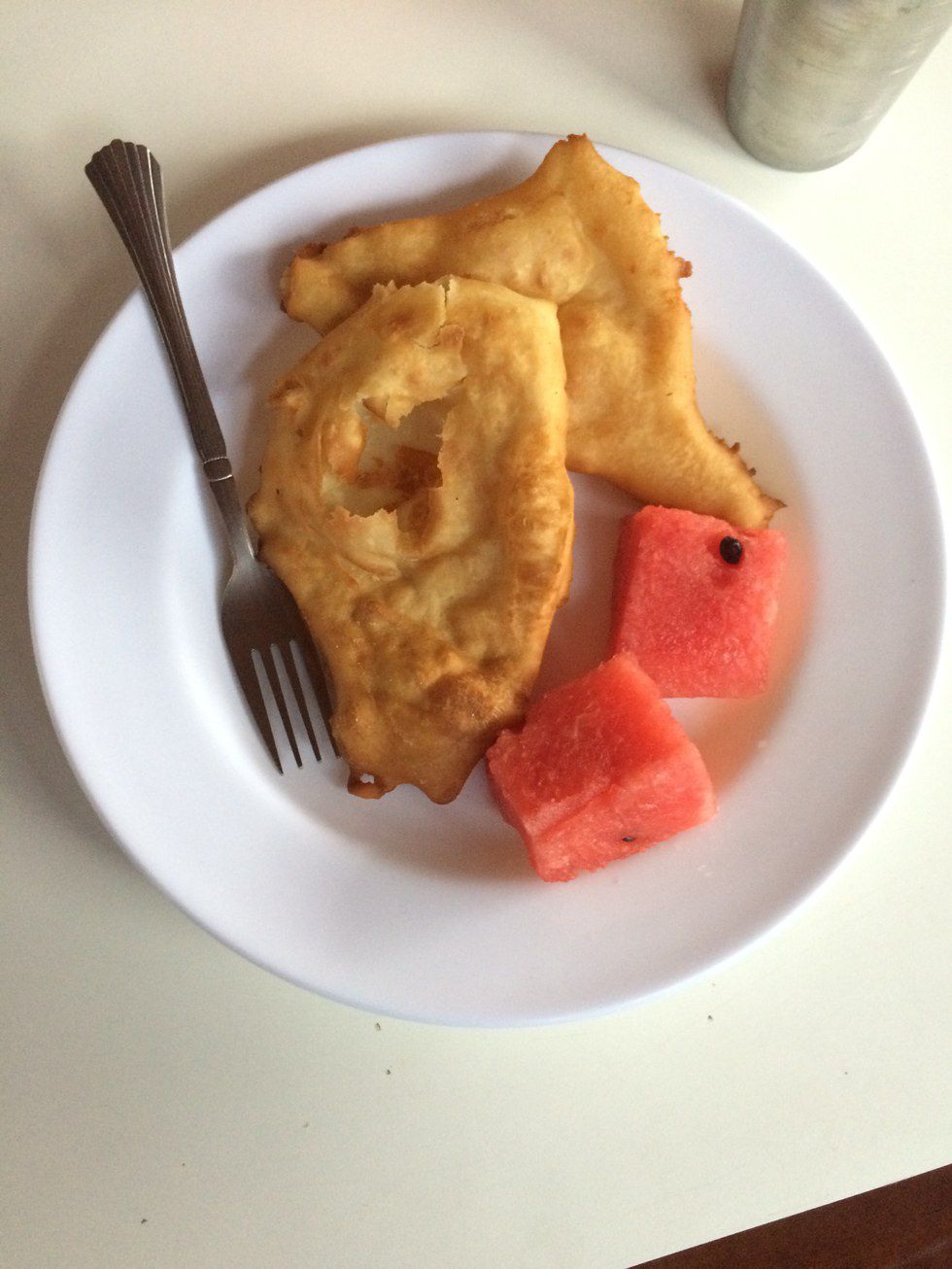
It is absolutely okay to not gobble up everything on your plate, but do not be the person who turns up her nose at anything that is remotely different from typical American cuisine. I had the best bread, empanadas, sopapillas, chicken, and rice all while I was in Panama. I also had a literal corn dog—corn paste crammed into the shape of a hot dog wiener. I thought it was gross, but I tried it and I’m glad I did.
Put down your phone.
Oh my goodness, it is so rude to be doing anything on your phone (besides occasionally taking a few pictures) when you’re giving a presentation or working with others. Chances are you don’t have service or Wi-Fi so actually be present with the people around you and learn from them and teach them. Your parents did not pay a ton of money for you to travel to another country and play Candy Crush all day long. For the seven days that we were in Eastern Panama, I had no cell service and no Wi-Fi. Being unplugged freed me to talk to other Brigaders, look around me, and admire the beauty of Panama.
Not everything goes according to plan—roll with it.
On my Brigade, I quickly found out that even if there was a plan for anything—the day, how long we were going to spend at the bakery, who we were going to meet—it would usually change one or two times because of school meetings, torrential rains, or some other unforeseen factor. As a Type-A person who loves itineraries, plans, and structure, it was difficult to adjust to the constant fluctuations in plans, but it was helpful to me because I was able to loosen up and roll with whatever came my way.
Air conditioning is not a prerequisite for life.
It is hot and humid. You will survive. It will be okay. No, you will not melt.
Look around.
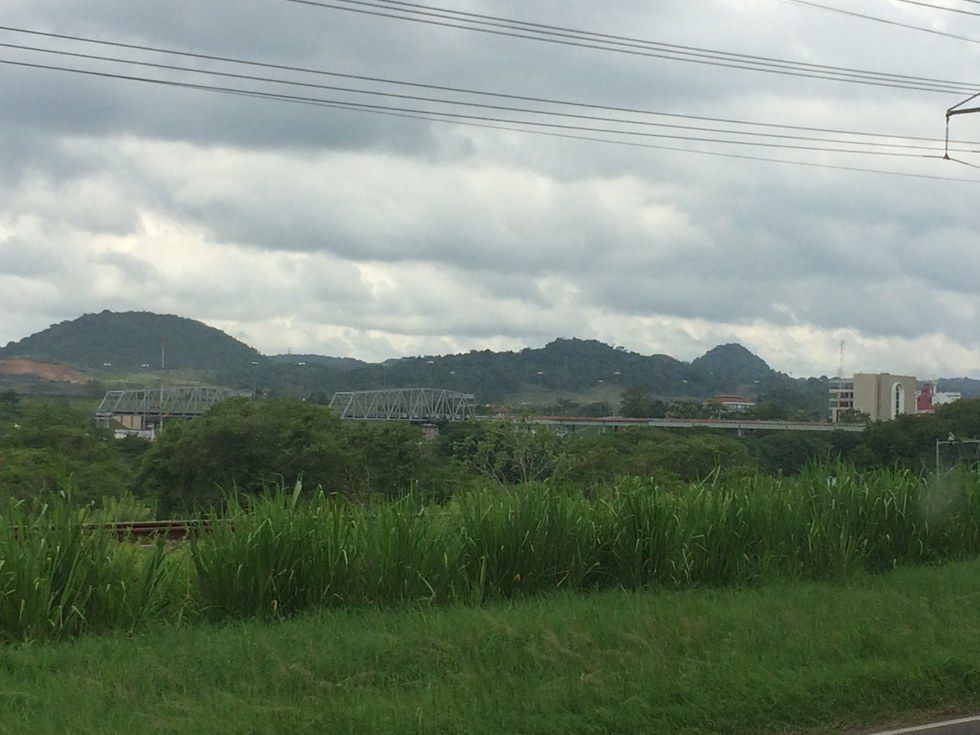
I remember looking out the bus window on the drive back from our brigade compound to Panama City and thinking about just how much my eyes were seeing. I was looking firsthand at life for rural Panamanians, and all I could think about was just taking it all in. There is a good chance I will never go back there, and I want to remember everything.
Everyone should stay in a hostel at least once.
They are very interesting and more homey than a hotel. Ours only had A/C at night, and the eight of us shared a room with four random guys. We slept in bunk beds and hung out by the pool. We met people from all over the world—Canada, Austria, Ireland, and Australia, to name a few.
Don’t get on a public bus unless you know exactly where it’s going.
After chasing down a bus that we thought (keyword being “thought”) was heading back to the stop near our hostel, we quickly realized that we were heading away from the shiny, new, tall skyscrapers and toward the old, run down, dimly lit part of Panama City. Three hours and four buses later, we were back in familiar territory.
The beauty of the Lord is everywhere.
I did not go to Panama expecting it to be ugly, by any means, but nearly everything I saw took my breath away. I saw the Lord’s divine handiwork in mist rolling down mountains, in the way that light shone through the giant hibiscus, in the skyscrapers that shone black against unbelievable sunsets, and in the massive Panama Canal, positioned so perfectly on the isthmus to disrupt the least amount of wildlife. While in Panama, the Lord reminded me just how big He is and how much He loves every single one of His children, no matter what flag flies overhead.