


Classes that delve into the realm of science can be dreadful. After all, they usually involve lots of memorization, endless nights of studying concepts and fundamental ideas, and the application of these ideas to more advanced topics. However, a science class can still be worth taking. Here's a list of 11 reasons why.
1. Classes in the sciences are very applicable to everyday life.

Yes, economics, international studies, and language studies are great fields that are certainly pertinent, but science is a distinct subject that's especially relevant in daily life. Here are a few examples of how science is everywhere: the maintenance of homeostasis of our bodies, the leaves changing colors during the fall, our posture and balance, the spread of a disease, and much more. Although organic chemistry and electricity may be harder topics to apply to our daily lives, we can still make sense out of them and integrate them into what we already know.
2. Science is an ever-changing field.

Science embodies the accumulation of discoveries over decades and centuries. What makes science even more fascinating is that the flow of new information and advancements will never stop. Thus, science classes in different years or even semesters won't be the same, which makes them all the more fun.
3. Science is never just about memorization.

Rather than engraving facts and formulas into your brain, science is more about understanding concepts, which leads to a firmer grasp on memory-based information. No science class will ever solely be about remembering the formula for work, the process of protein synthesis, or Newton's laws.
4. There are myriad possibilities.

Science classes will immerse you in a lot of factual and conceptual information, but it will also undoubtedly make you become curious. There is just so much we can do with science, whether it's research in an astrophysics lab, research on the cures for certain diseases, or research involving cognitive science.
5. There's no hypothesis that's too radical.

In science, the most grandiose discoveries can stem from non-contemporaneous ideas. What's better, in science classes, students are encouraged to have these thoughts, and they are allowed to ask questions that can further their intellectual curiosity.
6. Science is explorational.
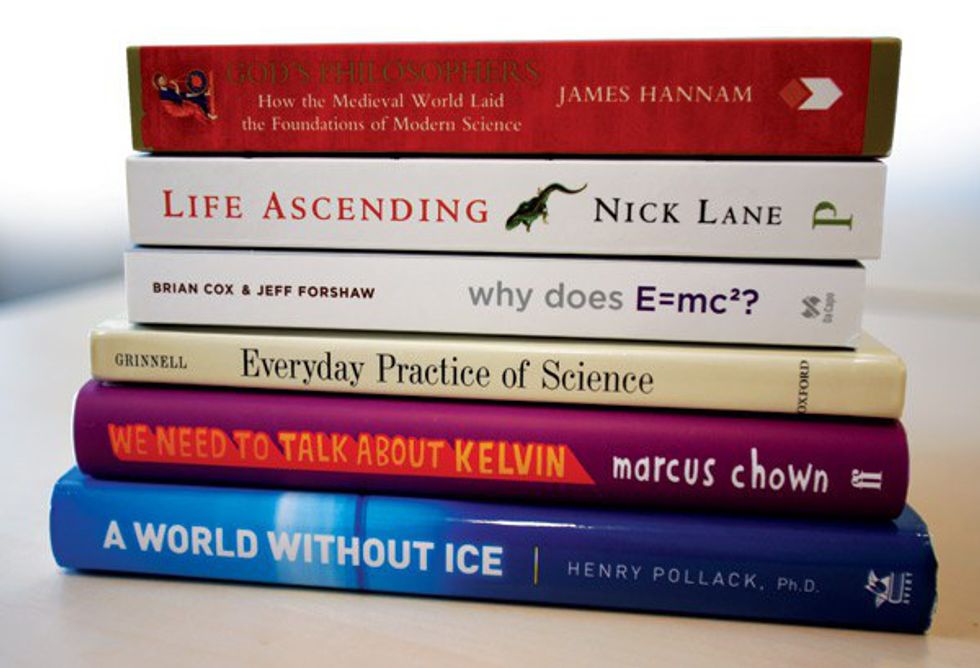
Science is about making discoveries, more specifically in a broad range of fields, which students are free to explore. At Hopkins, there is an endless amount of science courses, and each course offers a unique spin on research, advancements, and relevant technologies involved with the class' topic.
7. Science is a gigantic subject.
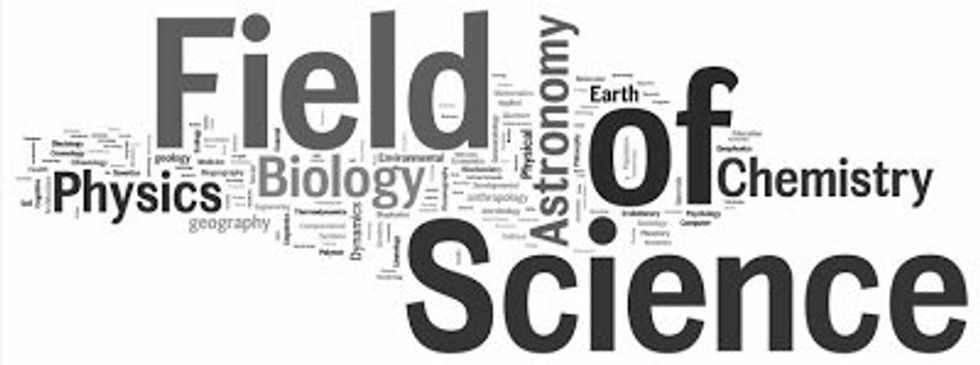
Science includes multitudes of fields, so if you're interested in it, you're bound to be able to pinpoint what exactly you're passionate about, whether it's geography, chemistry, or zoology.
8. Science is a major game changer in today's society.

Yes, science dictates the quotidian components of life, such as homeostasis, metabolic processes, and chemical reactions. On the other hand, science can also dictate the major you decide on in college. Indeed, it's not uncommon to hear of a student switching from a humanities major to a natural science major after taking a science course!
9. Understanding science is satisfying.

Of course studying can get tedious, but science often involves an interactive thinking process, which can lead to a more rewarding study session.
10. Science is fun.

Yes, there are many facts and concepts out there to learn. However, it's important to keep in mind that science isn't something that's just on paper. In fact, science is all around you, so it can be a much more engaging topic than others.
11. Science is awesome!

It is a subject that will truly never cease to be fascinating. To understand how amazing science truly is, just look at how popular these science-based YouTube channels are: AsapSCIENCE, SciShow, and The Science Channel.