As a student, it is often near impossible to get enough sleep or to feel well-rested. Our sleep habits change how we feel physically, mentally, emotionally, how we interact with people, and how we perform. In college, I have heard, "Well, of course you're tired. You're a college student," more often than I'm comfortable with. I think it is unfair to expect me to put all bodily needs aside to get my work done. My work is first taking care of myself, then I will be fully functioning and able to do my other work.
I will now smoothly transition into a list of sleep facts:
- Circadian rhythm is the term for the 24-hour body clock present in all of the cells of the body. The organism responds mainly to light and darkness in the environment; when there is less light, the body creates melatonin to make the body drowsy. Most living things have a circadian rhythm: animals, plants, and even tiny microbes follow their circadian rhythms. Chronobiology is the study of circadian rhythms. (Oxford, National Institute)
- A cool video about the circadian rhythm.
- Adults (16-64) need between seven and nine hours of sleep a night. See a sleep chart here.
- Caffeine does not equal sleep. It is found naturally in coffee bean, kola nut, tea leaf, and cacao pod. (Sleep Foundation)
- Three (8 oz.) cups of coffee a day is considered a moderate amount of coffee. Six or more is considered excessive. Caffeine withdrawal includes headache, fatigue and muscle pain.
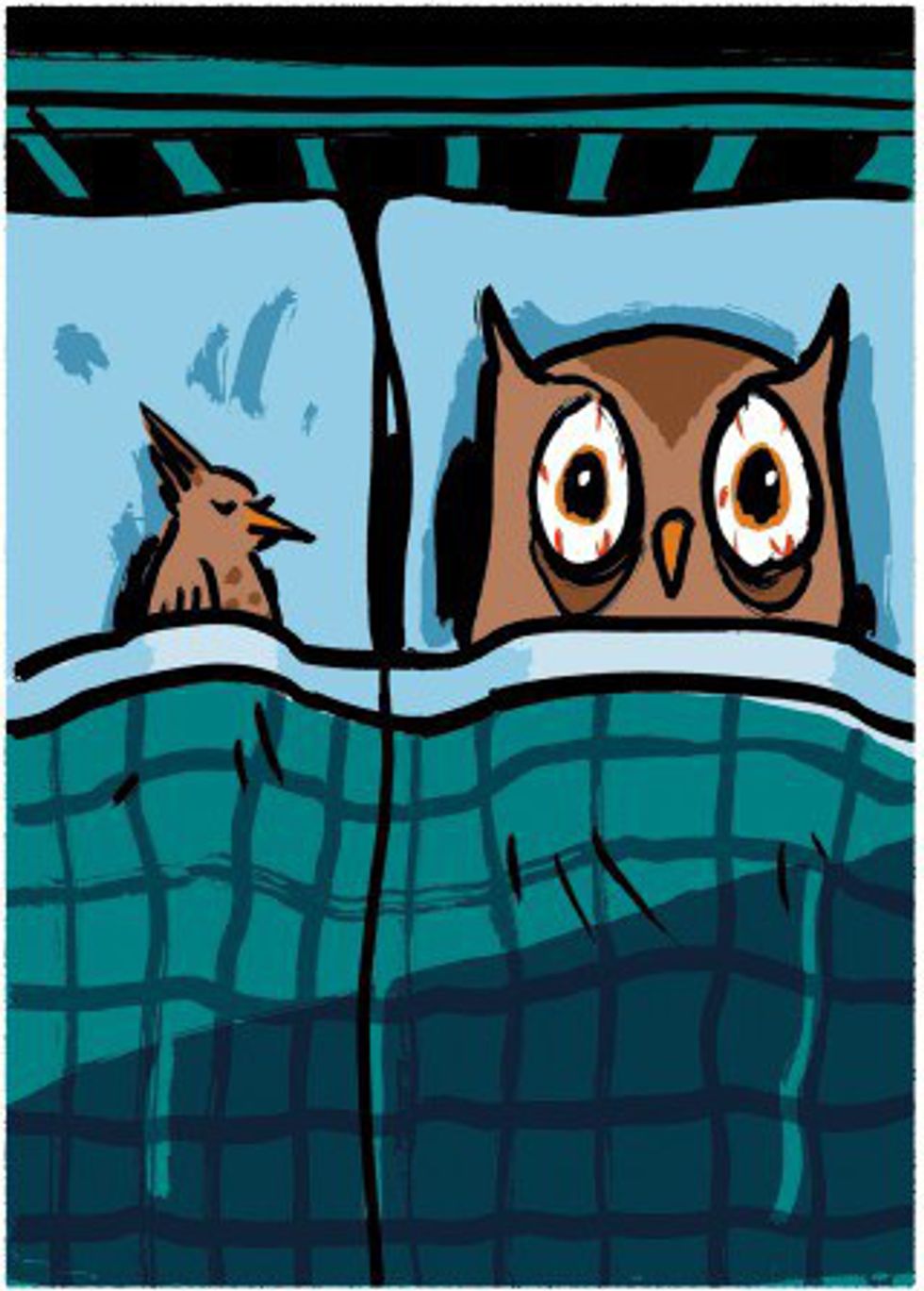
- There is scientific research on the early bird/night owl duality. It’s called your chronotype. I like to think of it as your sleep personality—each of our internal clocks, our circadian rhythms that guide when our body wants to be asleep and awake. According to Till Roenneberg, author of “Internal Time: Chronotypes, Social Jet Lag, and Why You’re So Tired,” either we want to go to bed early and wake up early like a “lark,” or go to bed late and get up late like an “owl.” Are chronotypes genetic? Sort of. Roennenberg notes that although it seems to be inherited, age also plays in a role in when your body wants to sleep. (New Yorker)
- Sleep scientist Nathaniel Kleitman kept several young men awake for days at a time and “ran them through a battery of physical and psychological tests.” He often used himself as a subject. Once, he stayed awake for a 115 hours and was caught declaring, “It is because they are against the system” to no one in particular.
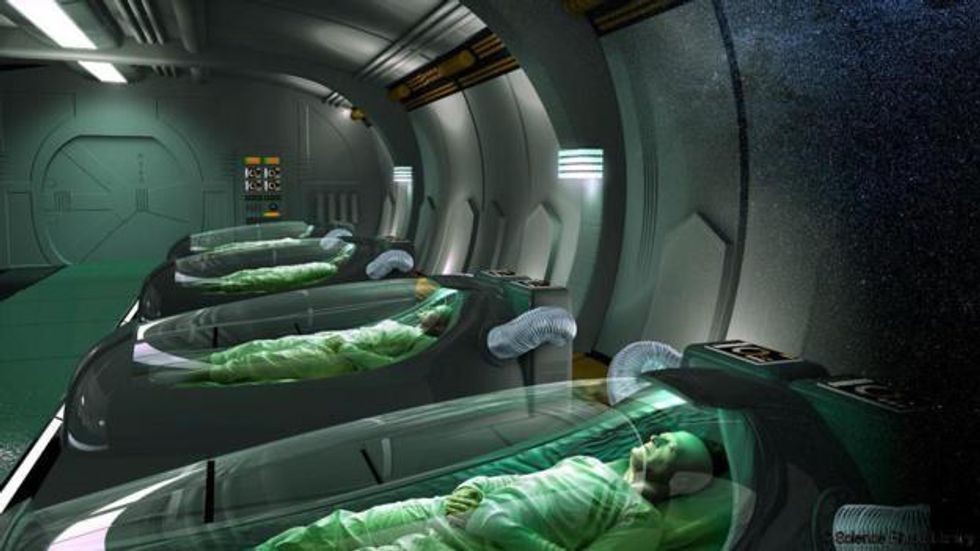
- During the space race, the U.S. poured money into NASA to test whether there was a way to send people in artificial preservation into space. BBC reporter Frank Swain says, “Sleeping your way to the stars also meant carrying far less food, water, and oxygen, making the ultimate long-haul flight more practical.” Interested in learning more about human hibernation? (BBC)
- Matthew Wolf-Meyer reports, before the creation of the modern workday, Americans and others around the world used to sleep in an “unconsolidated fashion,” meaning, sleeping two or more times a day. “They went to bed not long after the sun went down. Four or five hours later, they woke from their ‘first sleep’ and rattled around—praying, chatting, smoking, or making love. Eventually, they went back to bed for their ‘second sleep.’” Wolf-Meyer also says that Benjamin Franklin reportedly spent this time reading naked in a chair.
- A 2011 poll states “more than half of Americans between the ages of 13 and 64 experience a sleep problem almost every night, and nearly two-thirds complain that they are not getting enough rest during the week.”
- The National Academy of Sciences estimates that 50 to 70 million Americans suffer from a “chronic disorder of sleep and wakefulness.”
- If you aren’t getting enough sleep, extra stress is put on your body, increasing your risk of developing serious diseases and conditions like cancer, heart diseases, type II diabetes and depression, as well as impairing how you think. Other research says that unregulated circadian rhythms also increase risk of obesity, bipolar disorder, and seasonal affective disorder.
I’m with sleep researcher, Allen Rechtschaffen, when he said, “if sleep doesn’t serve an absolutely vital function, it is the greatest mistake evolution ever made."