People are always asking me how I manage our iPads because I've had so much success with implementing them and producing kids with great tech skills. So here they are without further ado, my top ten tips for one-on-one management success with all kinds of devices.
1. Tools NOT toys.
The devices you have in your room are just tools for learning, just like notebooks, crayons, pencils etc. They are not toys. I say it with my class over and over again, "iPads are," and then they reply, "Tools not toys!" They know it, they live it, they repeat it constantly.
2. Work NOT play.
If you want your one-on-one program to fail, make sure you use the word play a lot. If I had a dollar for every person who has told me that their class loves to play on the iPads, but they have trouble managing it, I would be rich. If you tell them that they can play on their iPads when they finish their work, they will only see them as toys, and not a useful tool that can help them learn. We repeat that over and over again too, I say, "Never say," then they reply, "Play on the iPad." They are instructed to correct any adult who tells them to play on the iPad, and they do. The adults may not like it very much, but I don't care. That one little phrase can sink the ship of a one-on-one program faster than you can say "tag."
3. Don't teach them, let them explore.
Whenever we get a new app or bookmark for our iPads, I give the kids a couple free explore periods with it. I don't really show them how to do much on the iPads. I make them figure it out themselves. Because of that, they figure out more than I ever could, and they won't need my help later when they need to work with the app or bookmark in a more serious manner.
4. Apps are like food—there's junk apps and healthy apps.
You wouldn't feed your class cookies, candy and cupcakes every day for snack, so don't do that to their devices. Go for quality not quantity by looking for apps or bookmarks attached to more powerful websites such as Kids A to Z, Dream Box, Vocabulary Spelling City or Zern. Ditch the free junk apps. Five quality apps that have been carefully chosen are better than 50 horrible ones. Only allow them to add apps and bookmarks that you choose.
5. Routine, routine, routine.
Post your device expectations and repeat them out loud over and over and over again until you're saying them in your sleep.
6. Set high expectations and stick to them.
My school sends out iPad regulations that all the students and their parents have to sign before they can have their iPads. Mine are a bit more strict, and they work. Feel free to make a copy and modify them for use in your own classroom. I really do stick to these, and it saves me a ton of problems.
7. Create your own tech support squad.
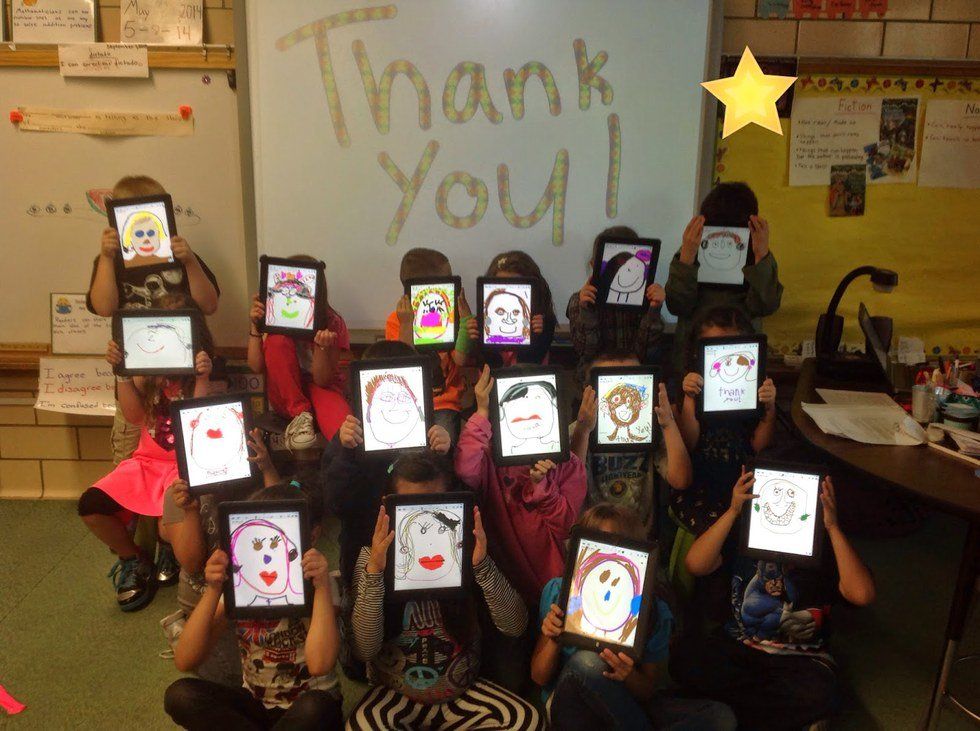
I have turned my class of 2nd graders into what I call "pipgeeks." They can fix almost any issue that goes on with the iPads because I don't rescue them. I make them try and fail multiple times before I come to the rescue. As a result, they have been able to go and help in other classrooms when needed. Teachers bring their iPads to my classroom for help and my kids can take care of it.
8. Don't be afraid to explore the devices yourself.
Kids have no fear when it comes to devices, they push buttons just to see what happens. People always assume I've had tons more training with the iPads than they have, but I haven't. I just mess around with them and push random buttons in various places all the time. Don't be afraid to explore on your own.
9. Destroy the novelty of the devices.
We use our iPads in every subject, every day, and all the apps and bookmarks on them are very useful (not always so much fun). Since they work on them all the time, and everything on them is my choice, the novelty wears off fast, and they become just another tool in the classroom.
10. Work beyond the substitution phase of the SAMR model or you'll all get bored fast.
Learn about the SAMR model, and go beyond substitution for most of your device related activities. To learn more click here view or this video.
Enjoy life in your one-on-one environment. I know you and your students will do great things.