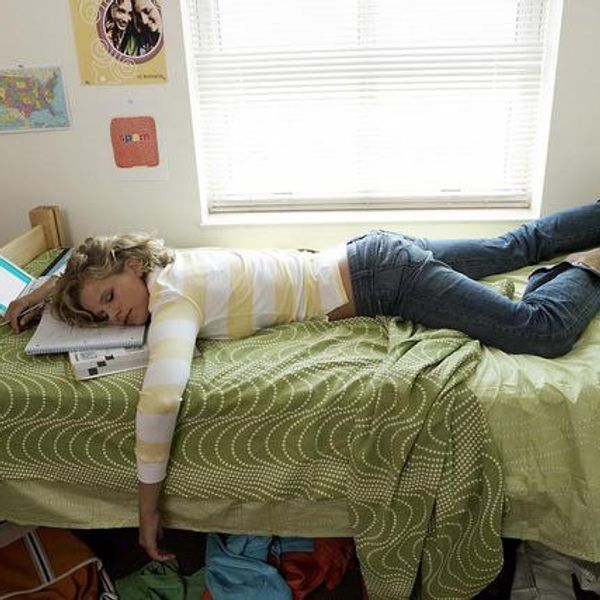

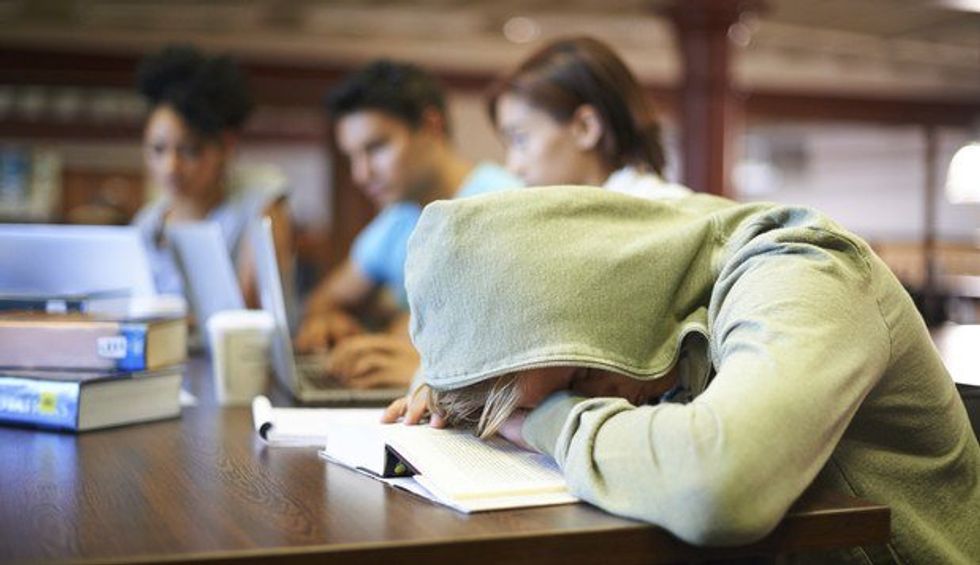
As college students, we are always remarkably and undeniably tired. We are always fighting the constant urge to sleep. Whether it be in class, the library, work, or just hanging out... there is a continuous struggle to keep our eyes open. We, as college students, are always tired.
While it's common knowledge that college students are inherently sleep-deprived; it's just become an accepted component of being a student. But this mindset and almost defeat is an overlooking of a huge health problem. Could these habits be harming not only our health but our GPA?
We stay up for hours cramming, pulling all-nighters, trying to pack in any little bit of information before a test that we trade our sleep in for the good grade. But this logic that we so often practice may be doing more harm than good.
There is a direct correlation between lack of sleep and the impairment of thinking and learning. Cognitive processes such as alertness, concentration, reasoning, and problem solving are highly reliant on sleep. So when there is a lack of sleep, there is an impairment of these abilities and therefore a reduction in our ability to learn. In addition, there are certain sleep patterns that solidify memories. Without sleep, these memories will be lost. In other words... all those late nights of cramming for that A (or maybe just to pass), are actually just hurting our chancing of boosting our GPA.
Lack of sleep (or sleep disorders) can also lead to various health problems such as heart disease, heart attack, heart failure, irregular heartbeat, high blood pressure, stroke, and diabetes. These may sound as likely as a list of side effects on the back of a prescription drug, but it is highly likely that a lack of sleep will cause your immune system to weaken. Sleep reduces stress, and stress also weakens the immune system. So the combination of lack of sleep and therefore an increase of stress leads to an immune system prone to colds and flu and other such illnesses. As a college student, this is highly undesirable and can also ultimately lead to harming our performance in school.
But the problem is, there's just not enough time to get for sleep. As students we go to class, workout, study, go to work, and maintain a social life, which leaves an average of maybe six or seven hours of sleep per night... if we're lucky. And yes, maybe you could decide to not go out or work out in order to study, but that's also not going to happen. It's important to do things that make you happy in order to keep stress levels low.
But there are small steps you can make to get more sleep. If you try to study or get work done the moment it is taught or assigned, you reduce the need to have those late-night study sessions and all-nighters. It's also important to eat earlier in the night and refrain from snacking later, which will in turn keep you up later. And maybe, just maybe, give up that late-night Netflix binge.
We, as college students, are always tired. And we've just come to accept the reality that is falling asleep in class and pulling all-nighters. But further we feed into this defeat, the more we prolong the cycle of no sleep and worsened health and grades. At some point, we need to realize that this is actually a problem and maybe it's time we all started to get a little shut-eye.