

My Intro to Media professor recently told everyone a story about his adopted son named Jackson who was a victim to racism for the first time. He was sitting in the playground with his friend when a girl came and asked Jackson’s friend if he wanted to play. When Jackson asked if he could play too, she told him no because of the color of his skin. Jackson is six years old.
“If you think racism is dead, you need to open your eyes. If you think racism was just in your parents’ generation, you need to open your eyes.” This is how my professor opened up the discussion about our personal experiences with racism and discrimination; the results were shocking. It turns out, very few of my classmates have been exposed to racism because they’ve been sheltered their entire lives. But that’s not the shocking part. The ones who spoke up and told the class their experiences were people who witnessed a racist or prejudice act and were too scared to say anything.
One girl, who I’m going to call ‘Sally,’ told us a story about the treatment her African American friend received at a 7/11; I’m going to call him Sam. Sally, her husband and Sam were on a road trip and stopped at a 7/11 for some quick snacks. When Sam walked to the cash register to buy his snacks, the employee refused to ring him up because of the color of his skin and told him to get out. Sally saw the entire scene play out and she chose to stay quiet. She had no idea what to say or do. Even after they left 7/11, Sally said they just sat in silence for the rest of the road trip.
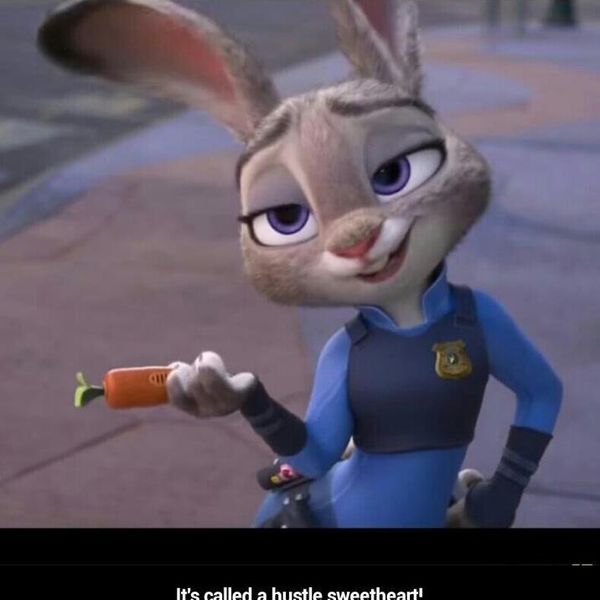
This is identical to the scene in "Zootopia" where an elephant refused to sell a fox (Nick) some ice cream because of the animals' history of being a predator. In the movie, Judy (the rabbit) witnessed this and stood up for Nick and demanded the elephant to sell Nick ice cream and said he had no right in picking on a fox like that.
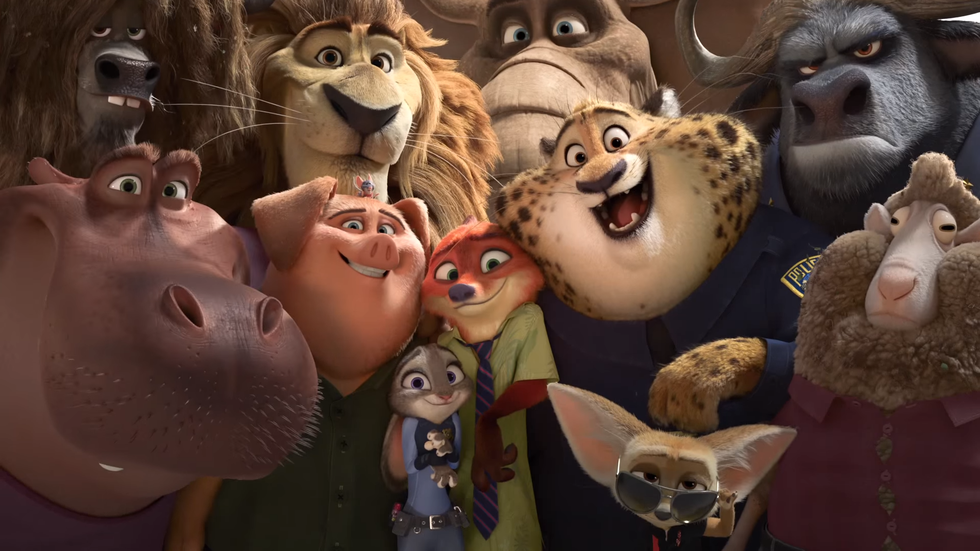
"Zootopia" is a city filled with all kinds of animals with different regions like: the tundra, rainforest, desert, rodent city, and more. One would say it is the perfect place to live in because all the animals get along with each other. "Zootopia" is known to be the land of opportunity. A place where you could go for a new start. A place where you could be whoever you want to be; very similar to what people think of the United States. But there is a flaw in "Zootopia." Foxes are the minority, and they are discriminated against the entire time because they were predators before all the animals unified. This is similar to how African Americans have been victims to racism in the United States ever since they were forced into slavery in the 1600s. The irony that "Zootopia" portrays is that 10 percent of the animals in the city are predators. Among all the predatory animals, foxes are the only ones that are singled out to be predators.
What the film "Zootopia" is, is a call to reform. It’s Disney saying that our world needs to change. The writers chose a rabbit named Judy to serve as a representation of change and leadership. She was spoken down to the entire film and received simple assignments as a police officer just because she was a rabbit, even after graduating at the top of her class in police academy. She forcefully volunteered herself to search for a missing otter (Mr. Otterton) after all the detectives were rejecting Mrs. Otterton for lack of information and evidence. Judy later discovered that Mr. Otterton’s disappearance was a result of predatory animals turning wild due to an unknown cause.
Judy naively making an announcement to the media that the likelihood of a predator becoming wild is in their DNA is very similar to a politician or public figure pointing out the criminal acts that people do and directly correlating it with their nationality. The way all the animals in the city reacted to this false accusation and discriminated against the predators is parallel to the way society will act against the minority after a public figure or politician shows prejudice against a particular group of people. Take what happened when Donald Trump announced his presidency as an example; he calls himself a unifier yet he’s caused a great divide in our country by stereotyping Muslims, Mexicans, African Americans, etc. –– Not only is there a major dispute between republicans and democrats but in the Republican Party itself; people for and against Donald Trump.
What's important to note here is that racism is already bad enough in itself. A politician or public figure who points out the "flaws" or "wrongdoings" of a specific group of people causes a catastrophic mess. Words have great power. Donald Trump has power over the weak-minded and the fearful, and Judy accidentally took power over the fearful as well.
Judy the rabbit realized how much power her words had. She neglected to take into account that her fox friend (Nick) was verbally and physically abused when he was young just because he was a fox. When she made the announcement that predators going wild could be part of their DNA, this brought back bad memories to Nick and automatically made all the animals go ballistic because a police officer said this. Think about the events that took place after Trump called Mexicans rapists and drug dealers and Muslims terrorists...any authority figure could have an influence on the weak-minded, this is why words can be so dangerous. Even a first grader had an effect on a six-year-old. Now Jackson has to live with the fact that he may be a victim to racism because of the color of his skin. But he shouldn't have to.
Judy left the city and gave up her badge at one point because all she wanted to do was make the world a better place. But she learned that her words did the opposite. Later, she ended up going back and risked her life to solve the case by trying to save all the animals going wild and prevent the predatory animals from losing their jobs.
The difference between Judy and Donald Trump (and other greedy politicians) is that Judy recognized that what she said was wrong. She realized that the reaction she induced was causing harm and she worked harder than anyone to undo and fix it. She had compassion. She had sympathy and empathy. She put others before herself. She was a leader.
The fact that Judy is a rabbit is significant because rabbits are at the bottom of the food chain. Therefore, they're the animals with less importance in "Zootopia." This is symbolic because it suggests that anyone can make a change. Being an animal with little to no caliber in society, Judy stood up for what was right. She fought for justice. By doing this, she gained recognition and caused animals to realize that their predatory and prey history did not matter. What mattered was that they were all unified.
Judy said: “Life's a little bit messy, we all make mistakes, no matter what type of animal you are, change starts with you.” Change starts with you. Don’t be like Sally, the girl who chose to stay quiet. Be like Judy, the rabbit who became a hero. A leader.

















