


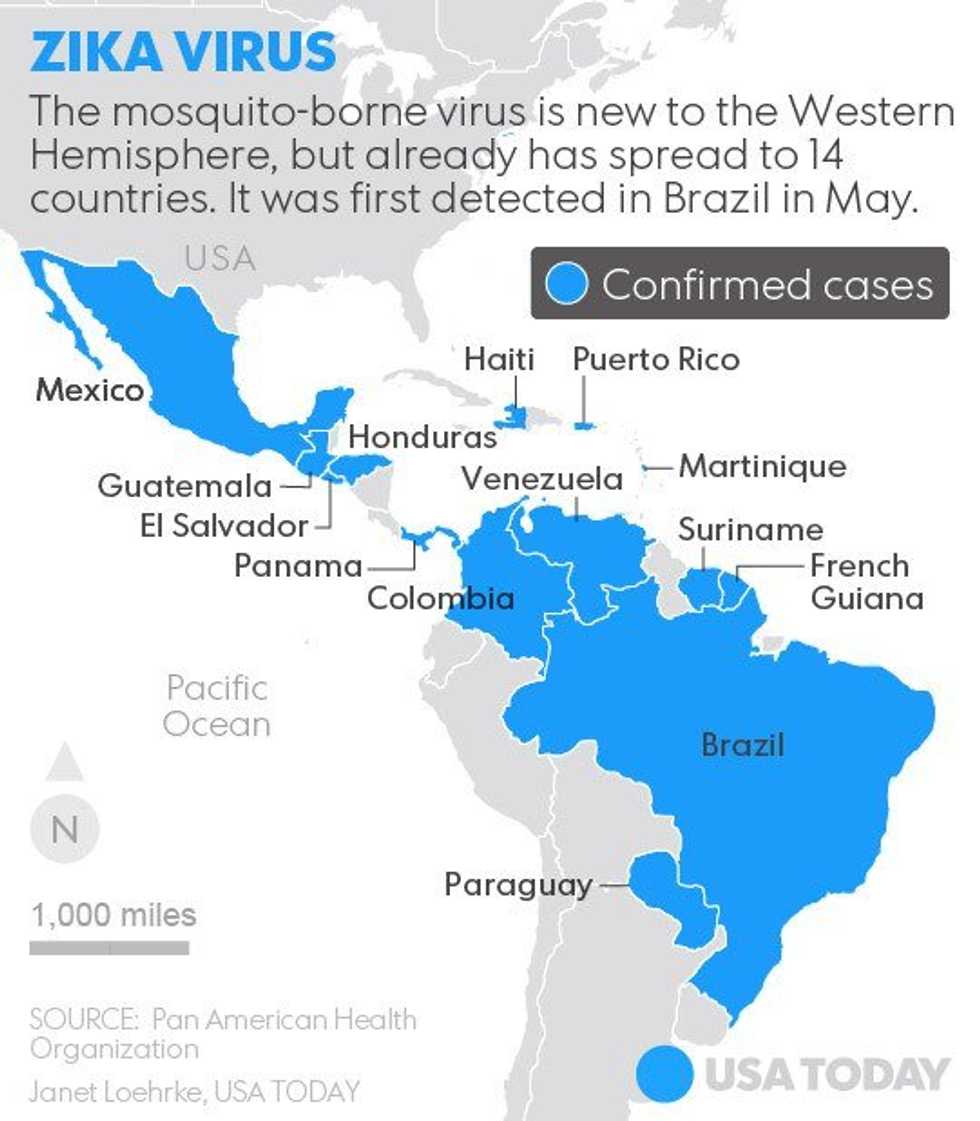
The Zika virus is a term that is buzzing around our television screens. But what exactly is it and what does this mean for us? Zika virus is a mosquito-borne virus that was first discovered during 1947 in Uganda. It was first discovered in rhesus monkeys and was first identified in humans in 1952. Zika virus is transmitted to humans through bites from Aedes mosquitoes and in rare cases it could be transmitted through blood transfusion, perinatal transmission and sexual transmission. Symptoms include a mild fever, skin rash and conjunctivitis. These symptoms last for 2-7 days and there is currently no specific treatment or vaccine available. Although symptoms are mild in most people, it's important to be aware of our surroundings and understanding where Zika is present.
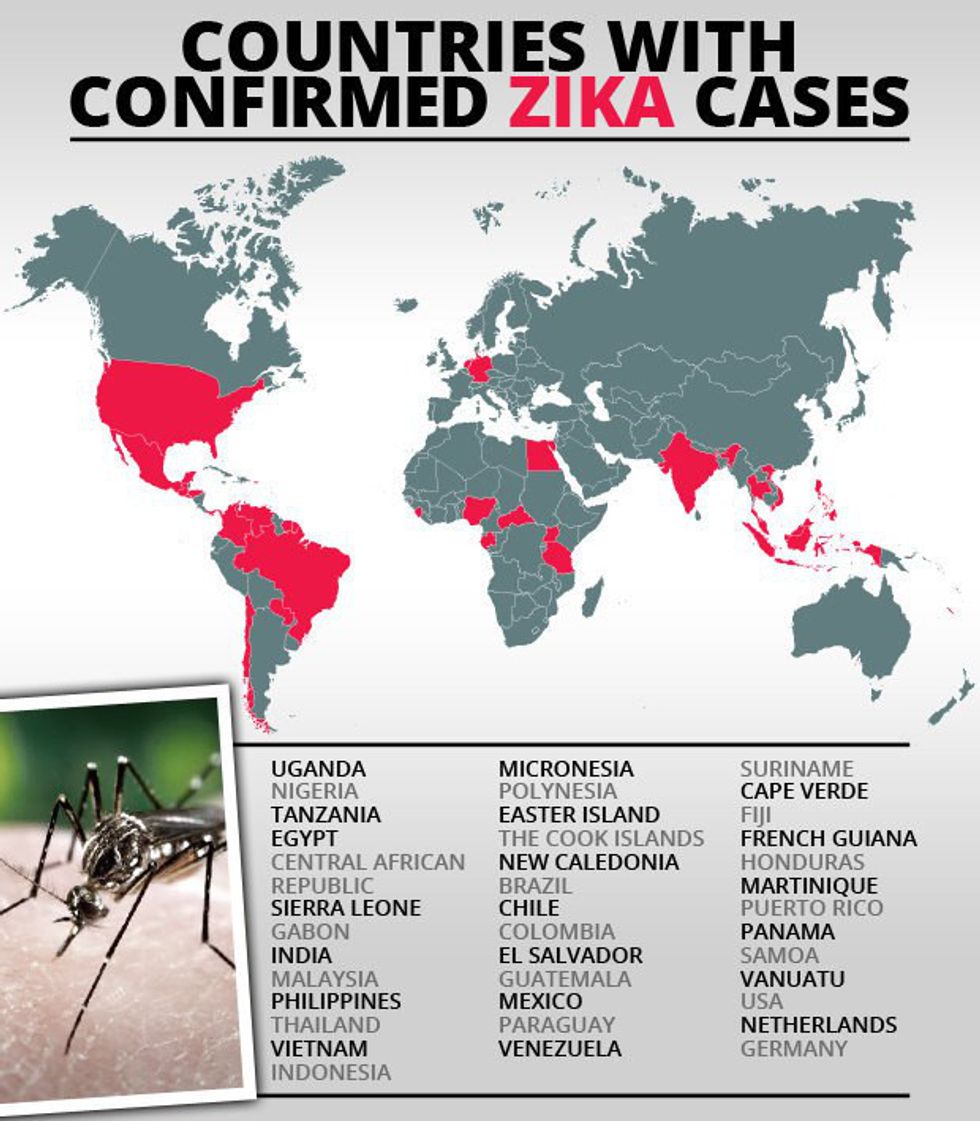
Here's a photo that identifies countries with confirmed Zika cases:
Although, travelers need to be careful there are some precautions to take to avoid getting a mosquito bite. Wearing long pants and long-sleeve shirts, applying bug spray and insect repellent and keeping all windows closed when sleeping indoors are helpful ways to avoid being infected.
Being college students, spring break is right around the corner. If you're planning on traveling for spring break visit The Center for Disease Control (CDC) website to receive up-to-date information.