

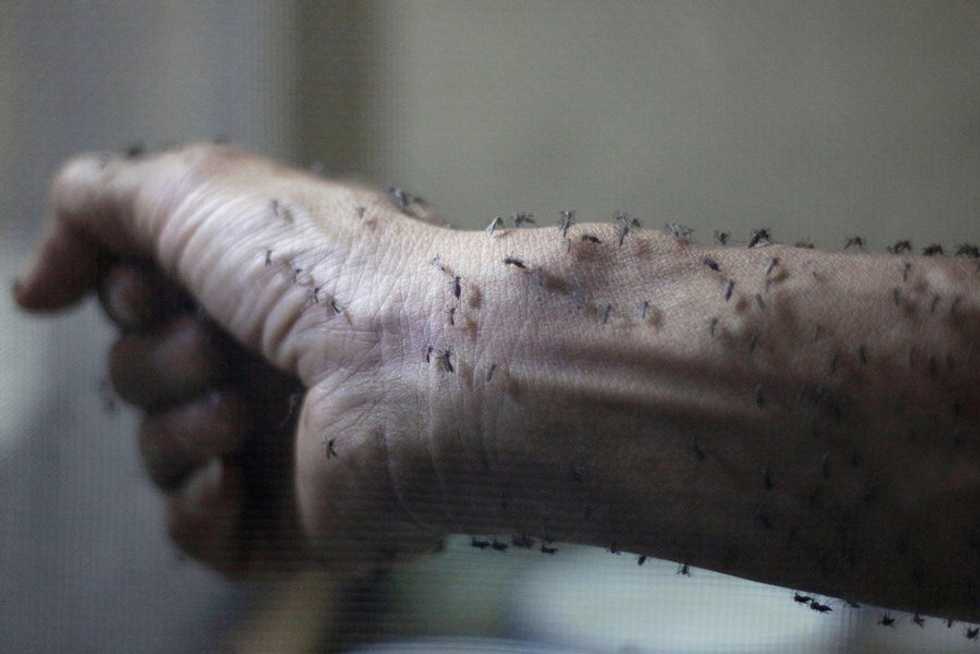
We are on the verge of the Zika virus becoming a global pandemic, an avoidable perfect storm. The zika virus came from the Zika Forest of Uganda, where the virus was first isolated in 1947. Since then it has spread to south america and is now migrating north. The virus was contained to places around the equator because that was the only climate conducive to the mosquitoes that carried it. But now--thanks to global warming-- the virus has migrated north as far as the great lakes according to Dr. Michael Kaufman. “A longer warm-weather season and changing rainfall patterns are allowing the creatures that can transmit disease to humans to thrive for longer periods each year—and to simultaneously move into broader areas,” explains Kim Knowlton, senior scientist and deputy director of NRDC's Science Center.
Not only has global warming contributed to the migration of mosquitoes, but it will impact the sheer number of those carrying the virus. With warmer weather, these mosquitoes have more time to reproduce in the warmer months, when these offspring resurface in the spring, their numbers will be greater than they were in years prior. This will have a snowball effect creating more and more mosquitoes.
The virus usually does not present symptoms in children and adults; however, when symptoms do present they usually do so as a mild version of dengue fever. The more concerning aspect of the virus is that in unborn children it causes microcephaly-- a condition in which the child is born with a partially developed brain and head. Symptoms of microcephaly may include a smaller than normal head circumference that usually remains smaller than normal as the child grows, dwarfism or short stature, delayed motor and speech functions, mental retardation,seizures, facial distortions, hyperactivity, balance and coordination problems, and other brain-related or neurological problems; although some with the disorder may develop normal intelligence according to medicinenet.com. Countries already facing the epidemic such as El Salvador are advising women not to try to have children till at least 2018.
For now, the virus has stayed contained--mostly-- to Central and South America. But, with the Olympics going to Rio in two months, the virus has the potential to spread worldwide. The country is expecting hundreds of thousands of tourists from around the world to attend. It is likely at least some of them will be infected perpetuating the viral outbreak. The long term effects of a global outbreak are not yet known.