

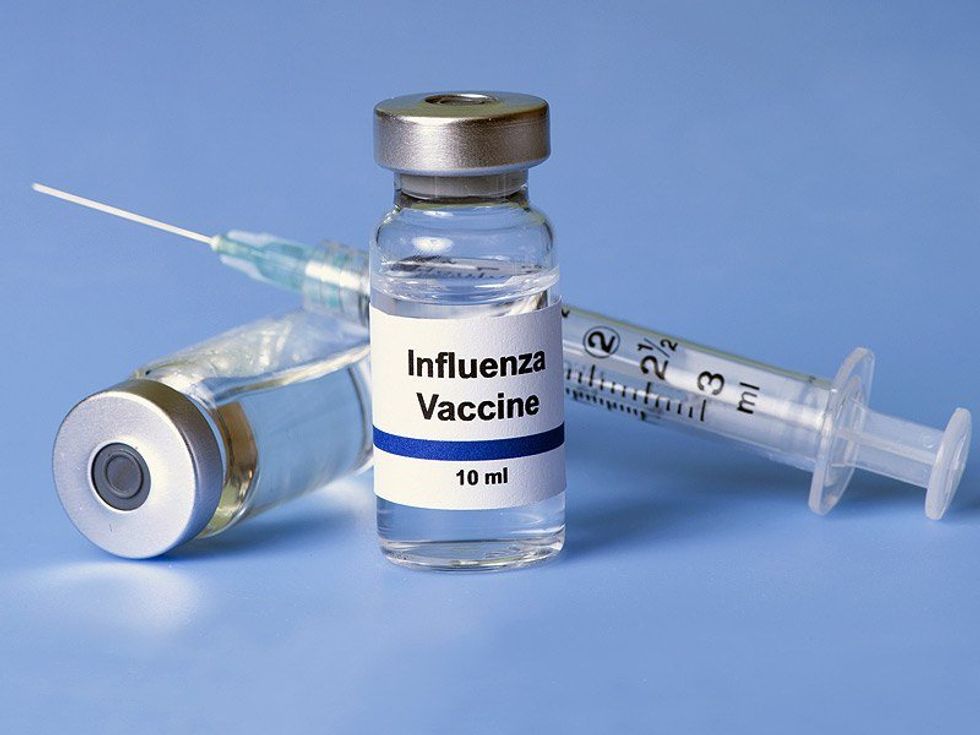
Every year around the end of October, health care professionals everywhere begin to educate on the flu shot and administering it to as many patients as they can. Flu associated deaths in the United States range from about 3,000 to 49,000 deaths (CDC, 2016). The importance of educating on it and increasing compliance has become more important in the recent years because the complications get more severe the older you get.
The flu shot is often adjusted and updated each year. Researchers look to see which strand that they think is going to be more common that year and they add those strains into the vaccine. The flu shot can cover three strains or four. The flu-mist, has been taken off of the market and not available for use due to question of its effectiveness. The virus strains in the flu shot are dead, which means you can NOT get sick, contrary to popular belief. The shot may have some mild side effects including arm soreness, redness or swelling, as well as a low grade fever and malaise (CDC, 2016). The virus is injected into your system, and the body creates and immune response to the virus strains, thus building up your immunity. Some of the reactions from building this immune response to the virus can cause the fever and malaise that many people feel. After about two weeks, your body has responded to the virus and made antibodies to it, protecting you from the flu.
The Advisory Committee On Immunization Practices recommends a flu shot for anyone 6 months of age or older (CDC,2016). Vaccination is mostly recommended to protect the very young and the very old, the reason being is that they can become hospitalized or even die from the flu virus. It is important to protect the people around us as well as ourselves.
Although the common strain of the flu changes from year to year, and sometimes the research is wrong, a simple vaccination can mean life or death to some older and chronically ill people. It can potentially help keep someone from getting sick what is the harm right? “A 2014 study* showed that flu vaccine reduced children’s risk of flu-related pediatric intensive care unit (PICU) admission by 74% during flu seasons from 2010-2012 (CDC, 2016). “Another study published in the summer of 2016 showed that people 50 years and older who got a flu vaccine reduced their risk of getting hospitalized from flu by 57%” (CDC, 2016). Although not all people should get vaccinated, the more people that do the better we can protect the people who cannot. As a future health care professional I feel obligated to educate as many people as possible so they can make informed decisions about their health care. For more information regarding the flu vaccination and reasons to get vaccinated, please visit this link below for more information.
http://www.cdc.gov/flu/protect/keyfacts.htm#recent...