


Everyone has a character in a TV show that they can identify with whether it be because of looks, personality or both. Personally, I didn't have much of a chance growing up to find characters that looked like me (Brown girl problems), and I don't know much about characters with my personality, but there was one character that, unfortunately, I could relate to: Kripke from the "Big Bang Theory."
You're probably thinking "Who?" because Kripke's not actually a main character on the show. He only shows up a couple of times, but when he does, he adds "comic relief" to an already comedic show with the fact that he's a nerd with a speech impediment. In a show concerning four "uncool" scientists working at Caltech, Kripke is a chance to show the audience that there's someone even more "uncool" than the main characters—it's a nerd who can't talk properly.
Kripke and I have something in common—we both can't say our L and our R sounds. I don't know how he got that particular speech impediment, but it's been something I've struggled with my whole life, and as far as I know, it's not very common.
Think about how frustrated you feel when you try to talk to someone in a language you're not fluent in. That's how I feel (not all the time, obviously) when I talk to strangers who aren't used to my "weird" way of speaking. They don't understand me, and I'll stand there awkwardly repeating the words, whether it be lettuce or "Rau" (my last name) over and over again. It's kind of frustrating to have to have your friend have to say your last name for you because you can only pronounce it correctly 50 percent of the time.
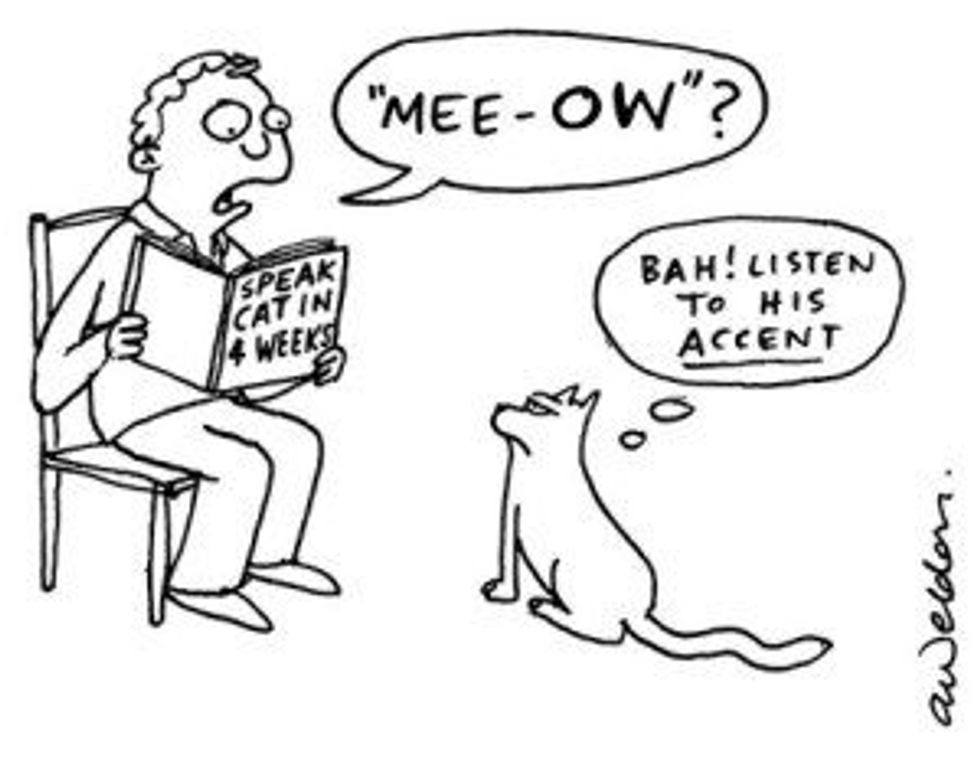
Since coming to Tufts, I've had this speech impediment pointed out to me a lot more than I used to. Sure, I was teased and bullied about it growing up—by everyone from my family to my friends to some random kid at school—but I never had to actually explain it—it was just something that everyone knew was there. At Tufts, it's a little different, and I've been surprised to hear most people not call it a speech impediment, but call it an accent instead.
I've been told that I have an Indian accent, a British accent, an Australian (?) accent, etc., etc. Never in my life has anyone mistaken my accent for a Chicago one, despite the fact that the Midwest is where I've lived my entire life. People have asked me where I'm from, and when I reply Chicago, they ask me where I lived before that since my "accent" isn't Chicagoan enough.
While it annoys me to no end that random strangers have decided that I'm automatically an International Student because of my "accent" (PSA: It's a speech impediment, not an accent. If you must point it out, please just call it a speech impediment.), it represents a bigger problem. America has a really hard time seeing Asians as "Americans," despite the fact that many people of Asian-American descent call this country their home. I could go into this further, but I think the following series of pictures from "Parks and Recreation" says it all:
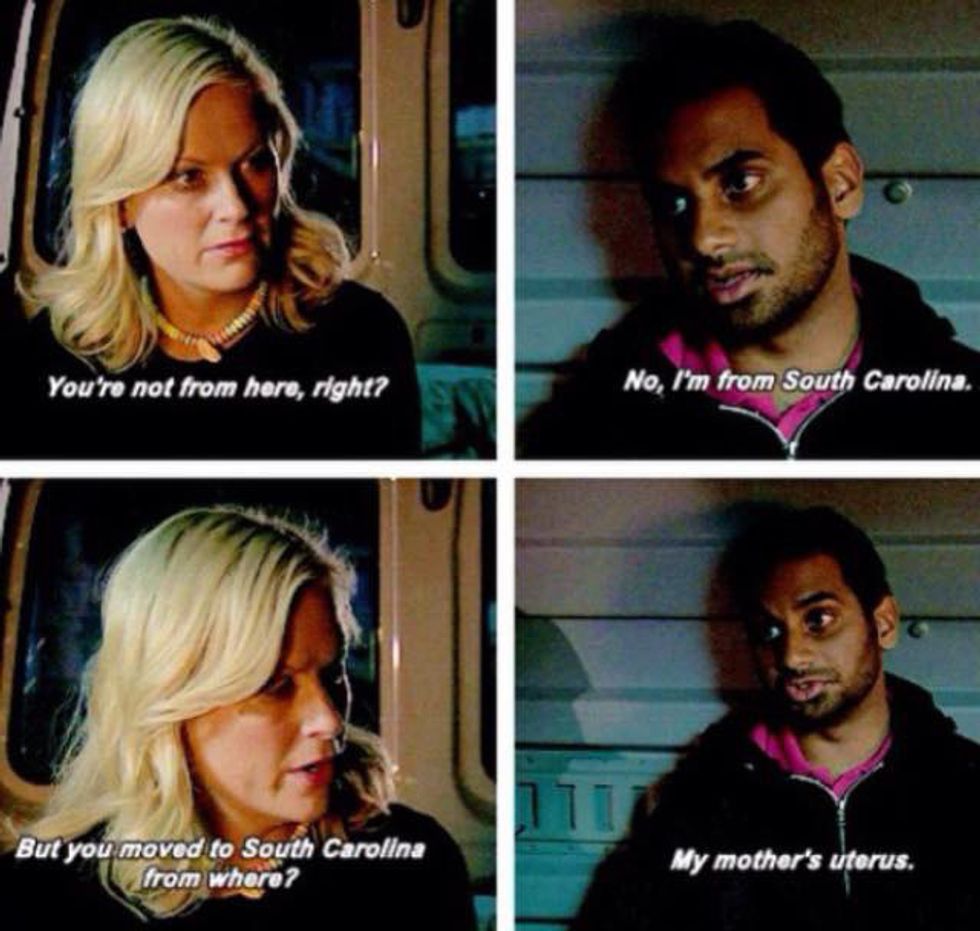
Ah, the eternal struggle brown people face. Long story short, though, there are two reasons people are obsessed with my accent: Because it shows them how "foreign" I am, or because they think it's fun to mock.
I get it. Someone doesn't speak the same way you do. Oh-my-god, please go ahead and imitate every word they say. The worst part is when people ask me to say random words—yellow, lilac, Rolo, etc.—just because they find it entertaining.
I realize this article is angrier than the ones I usually write (that may be a slight lie since I spent my whole last article complaining about colonization, but still). It's also a lot more personal. Truthfully, though, I'm just done with people pointing this out to me. I've had people ask me if they think I'm going into the right career field (read: I shouldn't go into a field where I have to talk) simply because of a minor speech impediment.
I'm not one of those people whose going to be like "Oh wow, this speech thing really taught me patience and how to be comfortable with myself, and I'm so happy I have it." Because, to be honest, I'm not happy about it, but I also don't think it's a big deal. The fact that people around me have to make it a bigger deal than it is becomes the frustrating part.
If you want to have an honest conversation with me about this, I'm fine with that. However, if you're one of those people (and I like all my friends but a lot of you have done this) that mock me because of my speech impediment or automatically assumes I'm not an American, it says more about you and the judgments you place on others than it does about me.
Kripke may be comic relief, but I'm certainly not.
















