
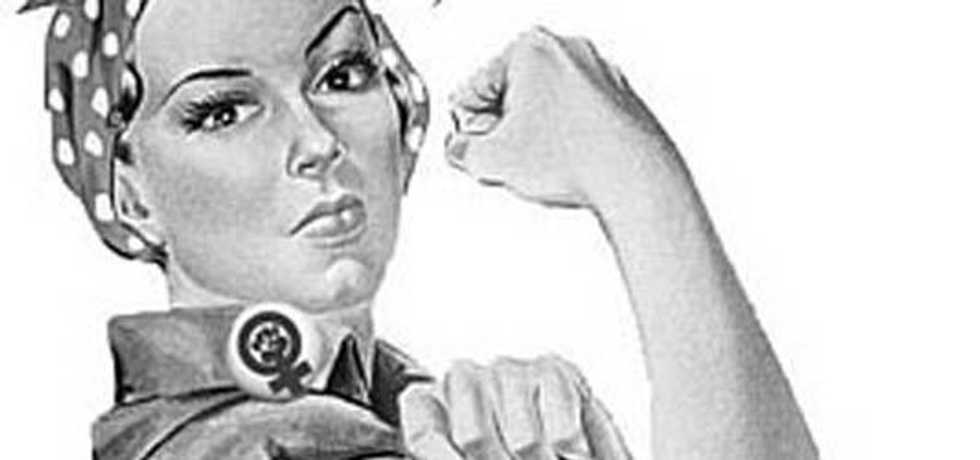
"Raise your hand if you consider yourself a feminist," my dramatic literature professor requested of my intimate class of mostly non-English majors. I expected it to be one of those moments where no one wants to be the first to answer, but as soon as someone bites the bullet, everyone else follows with a half-hoisted arm in agreement. After a second, I put my hand in the air. No one followed. In a class of 20 college students, the vast majority of which were female, 19 didn't associate themselves with feminism.
My professor raised her eyebrows. "Why don't you consider yourself a feminist?" she posed. The answers all came back to feminism as a dirty word, something my peers didn't want to claim because of the extremism it implied.
"Why are you a feminist?" she turned to me. My reason was simple. I believe women and men (and all people for that matter) should be treated equally. When the professor asked who agreed with my statement, everyone raised their hand.
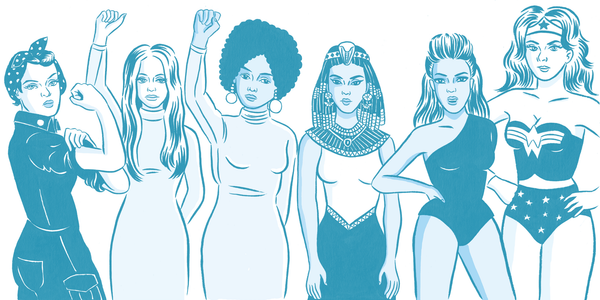
I proudly consider myself a feminist. I wear makeup and skirts and I like it when my boyfriend opens the car door for me and I am a feminist. The 19 people who didn't initially raise their hands are feminists, no matter how ugly they find the word. Unfortunately, society has painted a picture of feminism that is incredibly exclusive and specific. The man-hating, ball-breaking, hairy-legged feminist does exist, but feminism is not defined by sexuality, gender, personality, or appearance.
We all have different understandings of the concept of feminism and the fact of the matter is that we are all right and we are all likely wrong in one way or another. Because the term is incredibly broad, it encompasses more than most expect or can imagine. Even if you do actively identify yourself as a feminist, you might have inaccurate ideas about what a feminist doesn't look like. Maybe your behaviors don't support feminist ideals all the time. As an ideology that exists uniquely in each individual based on experience and social location, there is no such thing as perfect feminism. Feminism is not one thing.
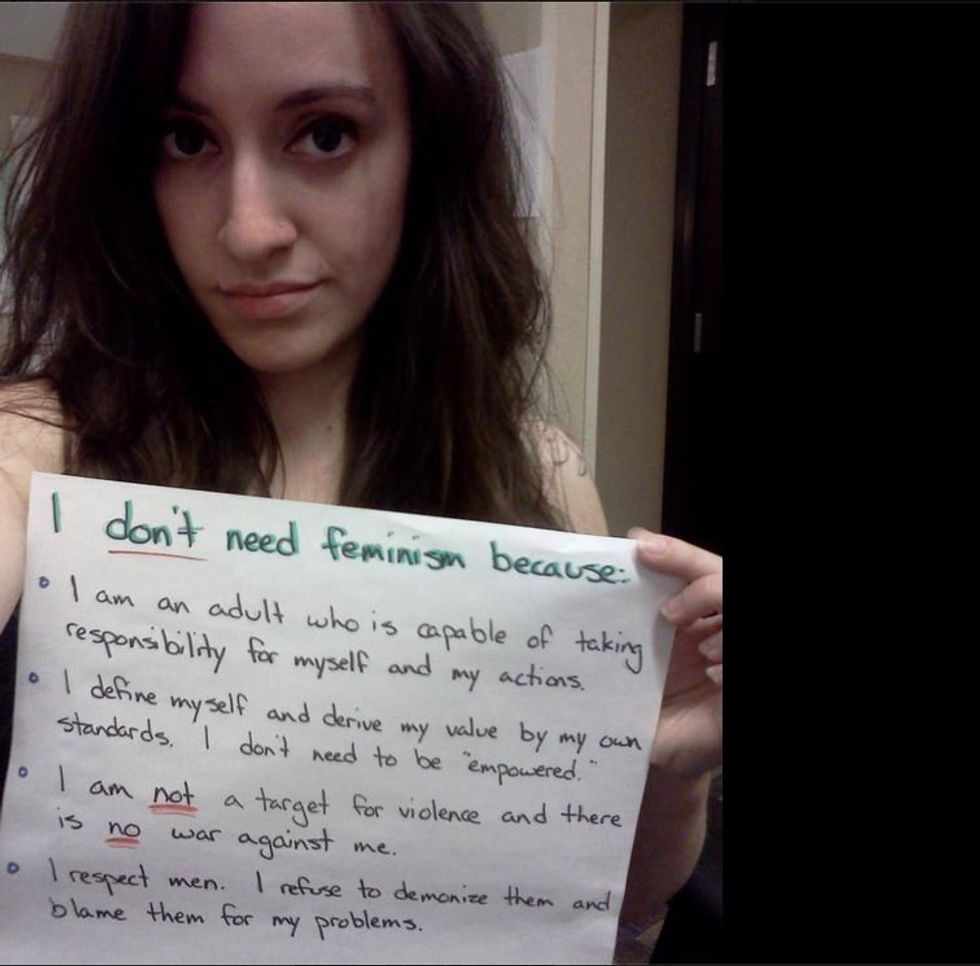
Recently, there has been a movement on social media where women list reasons why they don't need feminism. If you seriously don't think you NEED feminism, you might be right. It's probably not completely necessary for survival, but it does make living in this world as a female (or with females) a lot more bearable. Before you turn your back on feminism, you need to consider what it has done for you since the day you were born and long before that. Because of feminism, people of all genders have the right to vote in the United States. Because of feminism, women are not limited. We can dream and achieve things bigger than ourselves, whether that means running a household or a company. Because of feminism, men have wives who are educated and can challenge them to be the best versions of themselves. Feminism affects everyone, even those who are too blind to see it.
Ultimately, the problems surrounding feminism center around awareness and perception. The media have caricatured the term to such extremes that its true definition has been masked behind images of anger and hatred, hypocrisy and delusion. Nothing about feminism is inherently anti-male. Feminists do not aim to capitalize on playing the victim or use feminism as an excuse for their actions. It is much simpler than that.
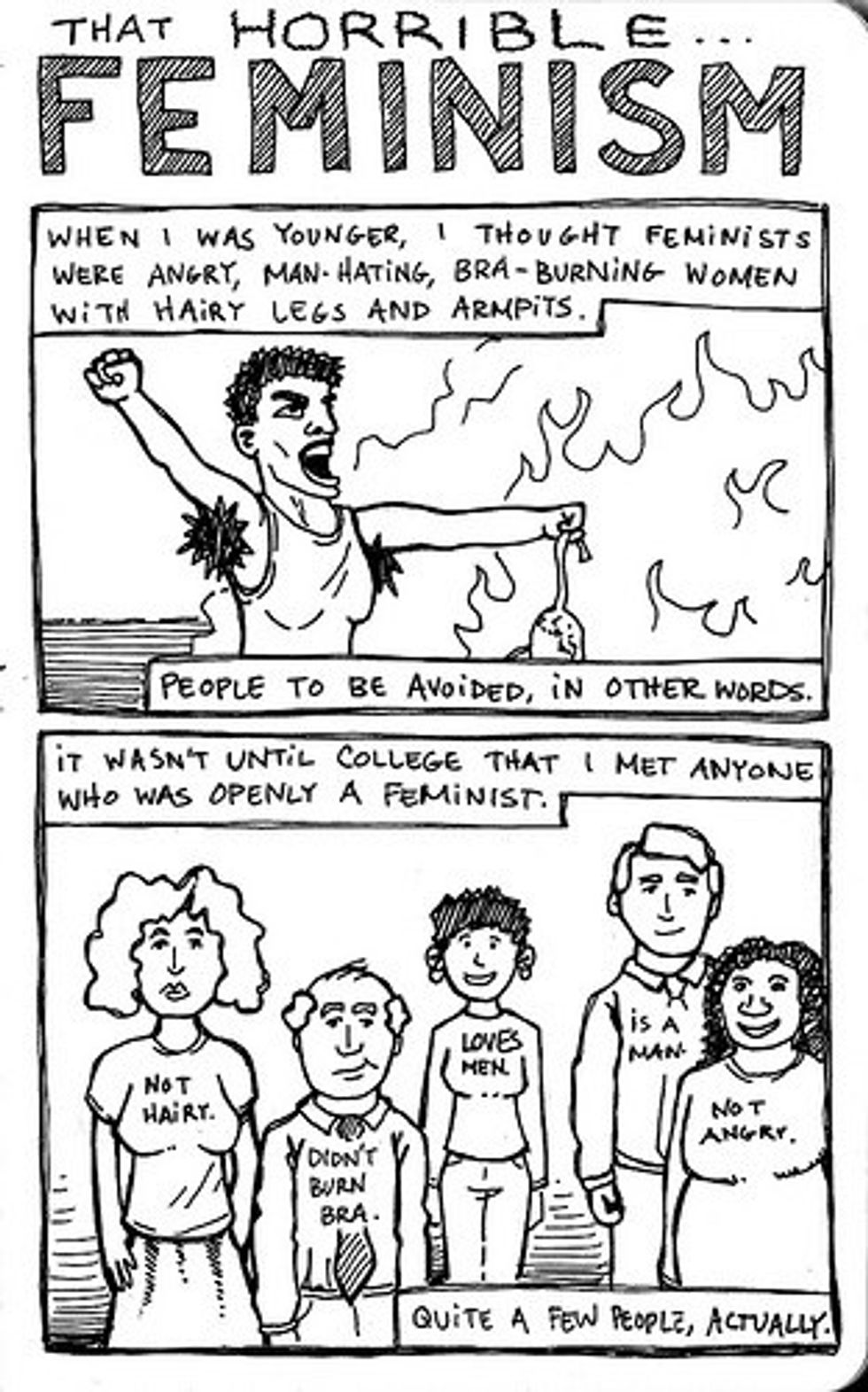
Feminists are all around you. They are the people who don't think it's fair for a man to be paid more than a woman for the same work. They are your sisters in college and your cubical neighbors. They are stay-at-home moms, police officers, Muslims, Christians, husbands, black, white, and every color in between. Beyonce is a feminist. You are likely who you are by some result of feminism. You can keep being who you are and raise your hand.