

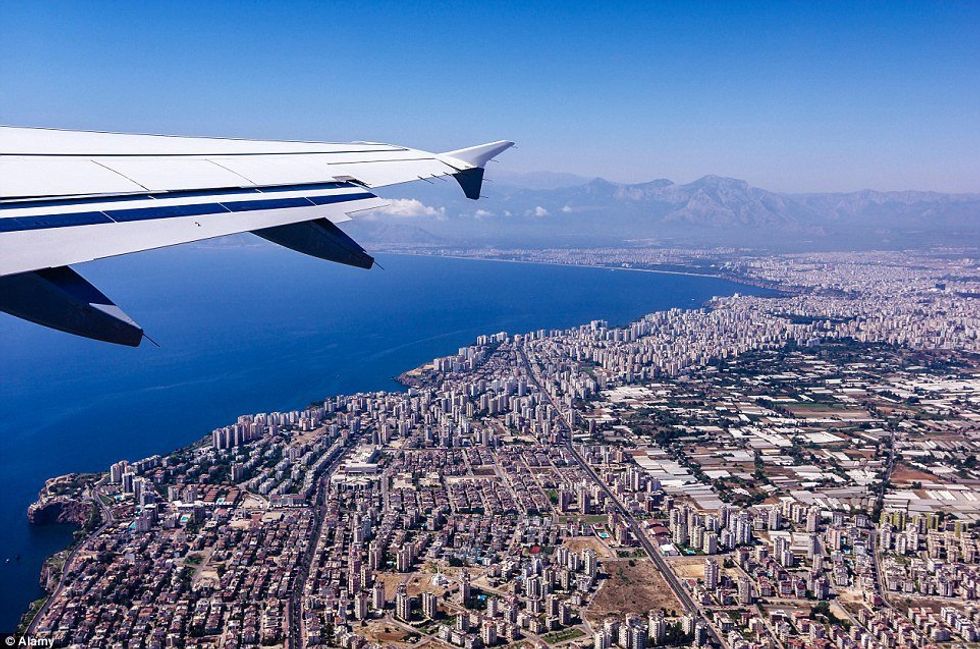
Each year, thousands of Americans will travel to countries around the world. Maybe they are part of the roughly 10 percent of college students who are studying abroad. Or maybe it's time for that big family vacation or exploration with friends. Or perhaps you're off to go backpacking around a foreign continent with whomever you meet along the way. No matter the reason, travel provides endless learning opportunities. If you are traveling for school you probably have a specific learning objective your trip is centered around, but whether or not that is the case, you can learn so much just by walking around a new place.
A point everyone, student or not, should know prior to traveling is that the world is not an amusement park. You're not packing a suitcase, hopping on a plane and going to Epcot. No. You're going to a real city or part of the world where people actually live. Because that is the case, it is unreasonable to expect everyone to be overwhelmingly polite and welcoming. Does everyone in your hometown go out of his or her way to accommodate visitors? If the answer is no, then you can't expect everyone to welcome you when you are a visitor. Naturally there will be nice people who stop and point you in the right direction when you're looking lost but, for the most part, people will probably ignore you.
Additionally, not everyone will speak English. Luckily for those of us in the United States, English is an international language, but that doesn't mean that everyone in every country speaks it. As tourists, it's polite (and way more educational) to try and speak the language of the country you're in. Even if all you know how to say is "hello" and "I don't speak *insert foreign language*." The fact that you're making an effort to speak their language is appreciated and gives you a chance to learn something new. The number of times I've witnessed an American tourist start speaking English louder and slower is heartbreaking. You can shout as loud as you want: if they didn't understand you the first couple of times, they probably won't by the 10th time either. One of my biggest takeaways from traveling is how much many of us take communication for granted. It's a little unsettling to be in a place where you can't fully read any signs and don't know if you know enough to say what you want to say. It is an incredible comfort to come home and know that you can go anywhere and know that you will understand what is going on.
The final thing that is important to note when traveling (besides having fun and trying new things) is that "weird" or "different" does not mean "bad." It's OK if you were expecting one thing and got something else. Not everything will be as expected. Maybe the painting didn't look exactly as you pictured, or maybe you learned something about the culture that you weren't expecting. It's OK if you're surprised at what something looks like or how something is done. However, that does not give the right to criticize what it looks like or how it was done. As previously stated, you're in a different place. Paris is not New York City with the Eiffel Tower in the background instead of the Statue of Liberty. Things are not going to be the same as they are in the United States, but that does not mean they are in any way, shape, or form wrong.
By all means, travel when you can. You can learn so much about history, people, food, and yourself by going out and seeing as much as the world as you can. Just remember that, when you travel, you are a guest in a new place where people are living their everyday lives.