


What would you do with $1 million? How about $900 million? For college students across the U.S., winning the lottery might mean no longer having to worry about student loans (honestly, you could just buy your college). Many might just opt out of finishing their degree, since winning the lottery would ensure you more than enough money for life. Or would it?
Unfortunately, winning the lottery is not as glamorous as it seems.
According to research conducted by Statistic Brain Research Institute, which surveyed 34 national lottery winners, 44 percent of lottery winners spend their entire winnings within five years. It might not be a bad idea to graduate college if you win the lottery, either, since 48 percent of winners remained working in the same job they had before they won. Only 55 percent of national lottery winners believed that they were happier after winning, while 43 percent found that the money had no effect on their happiness.
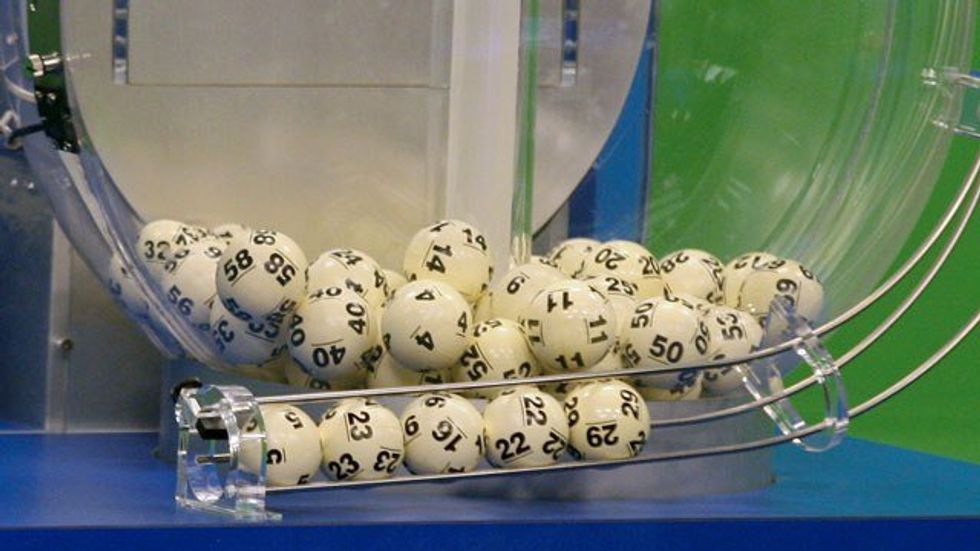
Since Lotto*America changed its name to Powerball in 1992, the largest jackpot has been $590.5 million, won on May 18, 2013. For the January 9, 2016 drawing, the jackpot reached $900 million, the largest of any lottery in U.S. history. The Powerball lottery is drawn every Wednesday and Saturday at 10:59 p.m. Eastern Time, and is played in 44 states. Powerball tickets are not sold in Alaska, Hawaii, Nevada, Utah, Alabama and Mississippi, which prohibit lotteries by law. For each game, five white balls are drawn out of a drum of 69, and one red ball is drawn from a drum of 26. The jackpot is won by matching all five white balls in any order as well as the red Powerball – the odds of which, as you can imagine, are incredibly high. The approximate odds of winning the $900 million jackpot are 1 in 292,201,338 (for a better understanding of this ratio, check out this Powerball simulator). A jackpot winner can choose to collect the prize in a lump sum cash prize, or an annuitized prize paid out in 30 graduated installments. However, even if you don’t win the jackpot, there are other ways to win with your Powerball ticket with much better odds. For example, there is a 1 in 39 chance of matching the red Powerball – a $4 prize. By matching all five white balls, the odds of which are 1 in 11,688,054, you’d win $1 million. Although it is very unlikely to win the Powerball, it is possible.
Even if you were to win the Powerball jackpot, unfortunately, you would not actually take home $900 million. In fact, how much you take home depends on where you live. Anyone over the age of 18 is eligible to play and win Powerball – including non-citizens. All winners must pay federal income tax; since lottery winnings are taxed like income, you’ll face a top rate of 39.6 percent. Additionally, you’ll face state and local taxes, which vary depending on where you’re from. Some states, like Florida and Texas, have no tax on lottery prizes. New York’s state tax is the highest of all, at 8.82 percent. The additional 3.9 percent municipal tax of New York City would have residents paying the highest rate of all. If a New York City resident wins the $900 million Powerball jackpot and chose to receive the prize as a lump sum, they would only take home about $348 million, with about 40 percent withheld by the government.
With tremendous odds to beat, you shouldn't plan on winning the Powerball lottery, even with the record-breaking jackpot of $900 million on the line. Past winners have proven that winning millions of dollars will not solve all of your problems, and after taking out millions of dollars in taxes, the big prize is not all that big. So while you shouldn't use your student loans to buy lottery tickets, there's nothing wrong with dreaming big and playing the odds – even though you are 25 percent more likely to become a U.S. president than win the jackpot.
















