

We have all, at one point or another, or even more than once, stared into our own reflection and asked: "What if I'm not good enough?” While it seems as though low self-esteem or depressive thoughts would be to blame for such harsh introspectiveness, it is vital that we constantly ask ourselves that question. Now, what will make us stronger or weaker is how we decide to answer that question and act upon it; be it a reassuring "yes, I am good enough" or an apathetic “no." Something I have gathered as my college career nears the end and the real world waits me is that an individuals success and failure is a poor measure of their self-worth. Rather, it is how persistent you are despite the challenges, it is your resilience towards whatever ordeal is set forth your way, it is how many times you will get back up after being knocked down.
I remember the college application process well and how truly horrid it was, to send all the letters and essays (let alone write them), then have to sit down - after all that work, all the running around and the sleepless nights – and have the most decisive part of the process lie on the virtue I had the least, patience. The post-college process is no different than that, applying for jobs, figuring out how to manage the remaining credits in order to ensure your diploma, and even attempting to plan a few years into the future. It is always hard, soul-crushing work followed by simply being patient because, well, there is only so much we can control. It is there when the big question finally begins to seep in and take ahold of you - what if you could have done it better?

While to some the fear of failure might be good thing, it is overall our worst enemy for it calls a battle lost before it is even fought. Countless times I have found myself unable to even begin something for the fear that I would fail and all my work would have been in vain, and thus allowing fear to consume me entirely. The world was not built on uncertainty, it was not made by those who allowed their anxieties to triumph over their ruthlessness. We are where we are because we understood bravery was beyond cowardice, that even though it took perseverance and distress, it was how we learned.
To ask yourself if you are good enough or worthy enough in the face of a challenge is not a sign of weakness but rather the strongest sign of self-awareness and valiance. Questioning yourself and your abilities is how you understand who is truly looking back at you in the mirror and prepares you for whatever lies ahead. It considers both winning, losing and that, regardless of the outcome, you will emerge more evolved and experienced. That is when failure comes in, where it should be considered as opposed to immediately discarded because, quite frankly, who wants to fail, right? Who wants to mess up and be thrown away into the pile of clearly useless simply because they tired and slipped, because they were human enough to make a mistake and god forbid they learn from it?
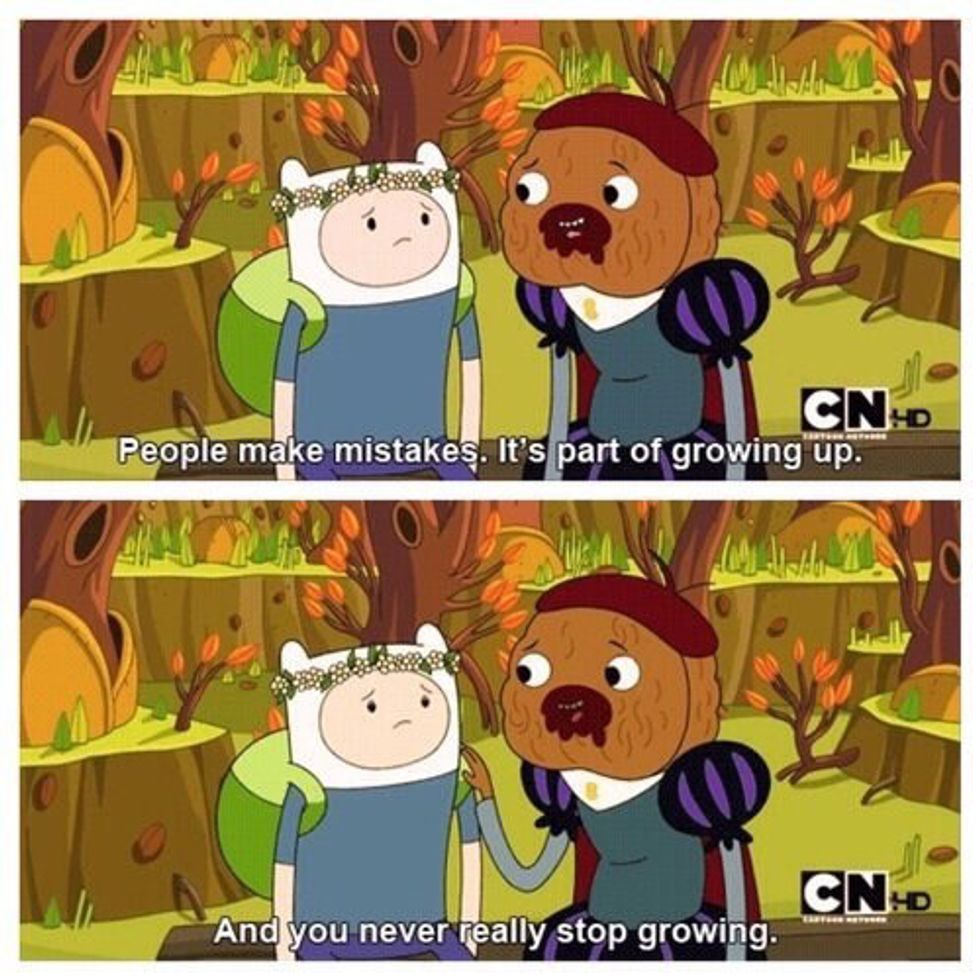
The way our society views errors is still as problematic as the exacerbated and toxic competitiveness imposed on us from as early as childhood, where it fosters a sense of disassociation from one another and essentially tells us that failing makes us into losers. In this society the idea that one could make a mistake and learn from it seems to be about as unimaginable as drinking salt water to quench a thirst. The thought that we are all meant to be perfectly engineered parts of a puzzle that can easily morph to fit any mold is absurd, but it is expected.
We begin to second guess ourselves and our abilities the moment institutions put upon us unreal expectations that, no matter how hard we try, we will only truly be validated if we win; that a failure is not only a setback but is what will define us. If all you do is succeed, you will only climb higher and higher, forgetting to prepare yourself if you fall. Simply because after so much success, failing becomes inadmissible; yet the higher you go without falling back every now and then, the harder you will fall and hit the ground when you eventually slip. As one becomes familiar with the outcome of an error and consciously makes the decision to not do it again, the individual that has not experienced failing does not know what will come of that instance if it were to happen. Which then, beat themselves up for not meeting the expectations instead of growing from it.
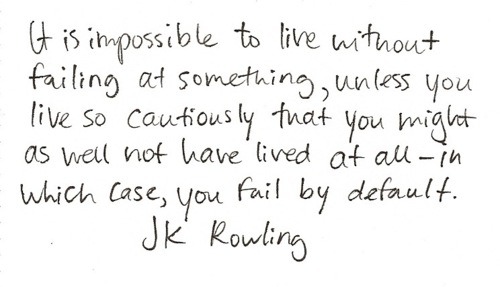
At the end of the day, we are the only ones who can control our own fate, we are the only element in the entire equation that gets the last say in how something will affect us. The correct answer to, “Am I good enough?”, is never the no, it is always the yes. Even upon falling down, understanding you have the strength to get back up is all it takes for being victorious. I knew, the moment I moved out of home and into a college dorm, that it was all up to me, that I was the one that would have to wake up in the morning, do my work and manage myself. When I allowed my own insecurities to take charge, I got nowhere, and it was when I failed that I learned how to succeed. When I tried again, I stood bigger, better and with more tenacity, accomplished my goals and grew. As William Ernest Henley put it, “it matters not how straight the gate, how charged with punishments the scroll, I am the master of my fate, I am the captain of my soul.”