

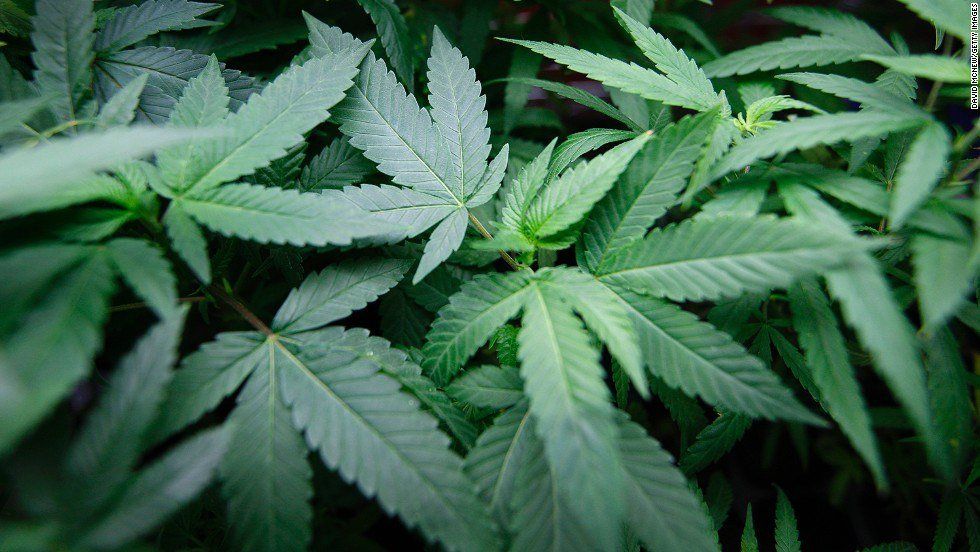
To date, there have already been multiple states in the U.S. who have legalized marijuana in at least some way, shape or form. The first legalizations began in 2012 and have attempted to spread but only at an incredibly slow pace. Now, four years later, we have the opportunity to once again legalize it in the coming elections. But most importantly, we need to legalize it.
In 2012, voters in Colorado, Washington and Oregon were given the opportunity to vote on initiatives that would legalize the recreational use and sale of marijuana. Of the three, Colorado and Washington were the first and only states to pass it. In February 2015, Alaska followed suit and became the third state to legalize the recreational use of marijuana. Soon after, Oregon joined in, in July 2015 to make it the fourth state. Currently in these respective states, you can legally purchase marijuana if you are 21 years or older. In total, twenty-three states and the District of Columbia have laws legalizing marijuana in some form.
The states that have already implemented this law have already begun reaping benefits. There are three types of state taxes on recreational marijuana. These include the standard 2.9 percent sales tax, a 10 percent special marijuana sales tax and a 15 percent excise tax on wholesale marijuana transfers. In June 2015, Colorado racked in $9 million in recreational fees and $1.85 million in medical taxes and fees. But this money doesn’t just go anywhere. The 15 percent excise tax is used for school construction projects. In the first six months alone, the excise tax brought in $16.6 million. As the legalization of marijuana in Colorado becomes older, the revenue it brings in only increases. In the first year, total recreational use brought in $313,226,353 and total medical use brought in $385,972,452, bringing the overall total of 2014 to $699,198,805. In the first six months alone of 2015, recreational sales were more than half of what they brought in the previous year with $253,446,208 and medical reached $188,759,726. Making the total combined revenue for the first six months alone $442,205,934. And remember, this is just one state.
However, schools aren’t the only thing benefitting from the legalization and sale of marijuana. A study released in January 2015 by the Drug Policy Alliance showed that crime in Colorado has been decreased due to the legalization. Laura McCauley, a staff writer for Common Dreams, summarized the study’s findings:
“According to statistics compiled by the DPA, in the first 11 months of 2014, the rate of violent crime fell 2.2 percent compared with the same period in 2013. In the same time frame, burglaries in Colorado’s capital, Denver, decreased by 9.5 percent and overall property crime decreased by 8.9 percent. Further, arrests for marijuana possession have continually dropped since 2010 and are now down roughly 84 percent.”
The possession of marijuana compared to a real danger or threatening crime is incredibly minimal. With cops no longer going after crimes in relation to marijuana, they’re going to have more time to go after real criminals.
It is incredibly clear that the states that have gone forward and legalized medical in addition to recreational marijuana have been benefitting in areas all around. The taxation of a product that has absolutely no danger or negative side effects brings in an incredible surplus of money into each individual state. Imagine what benefits could be felt if the entire country legalized the recreational use of marijuana. These are just some of the benefits of legalization but these alone should be enough to prove this is an incredibly positive and imperative choice.