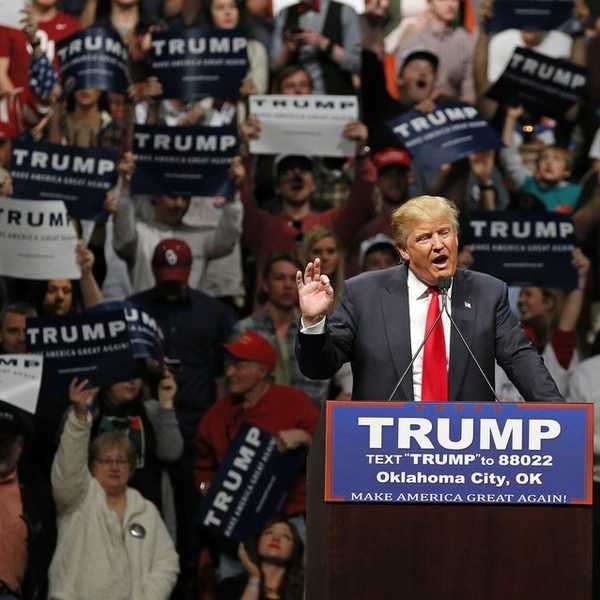
In the aftermath of Super Tuesday, one victory caught the attention of people across the country. Donald Trump, although accused of being racist, sexist, bigoted and xenophobic, fared well in the polls and won the Republican Primary in multiple states. So why is a man who is portrayed so negatively by conservative and liberal media doing so well with American voters?
The answer to this lies in understanding what defines the majority of Trump's voters and how his campaign effectively appeals to this majority.
Three notable characteristics define the majority of Trump voters. First, they do not have college degrees. NBC News Exit Poll Desk released an article revealing that 54 percent of voters without a college degree voted for Trump on Super Tuesday.
Second, they desire a leader from outside the political establishment because they feel alienated by leaders of said establishment. The same poll showed that 85 percent of voters wanting a leader from outside the establishment voted for Trump.
Third, they support barring immigrants, specifically Muslims, from the country as well as taking action against illegal immigrants already in the country. The Exit Poll Desk showed that 84 percent of people supporting bans on Muslims voted for Trump. Along with that, the majority of his voters support his policy of building a wall along the Mexico border.
The Trump campaign understands these defining characteristics and structures policies around appealing to the fears of this majority.
Peggy Noonan illustrates this aspect of the Trump campaign well in her recent article for the Wall Street Journal. She defines Trump voters as the "unprotected" of society who feel alienated and victimized by the "protected" of society and the establishment.
What makes Trump so appealing to the "unprotected" is that he proposes powerful solutions to their fears.
He has strong, even excessive, policies on handling immigration that appeal to voters without college degrees. These voters work in occupations that are threatened more every year by immigrants and politicians imposing taxes.
He appeals to voters who fear their lives and rights are being imposed upon by Big Government. He offers "strong leadership" and a solution from outside of the establishment.
His voters are not racist or hateful. However, they support him because he touts policies that play on people's fears of Muslims and radical terrorists. It is no wonder why support for his campaign rose notably after the terrorist attacks in San Bernardino.
Although there is endless negative evidence about Trump's character, he will continue to rise. The results of Super Tuesday seem to support this claim and it is likely other primaries will as well. His brash and arrogant disposition will not scare off his voters because he appeals to something that lies deeper than that:
Trump appeals to fears and to a desire for greatness.