
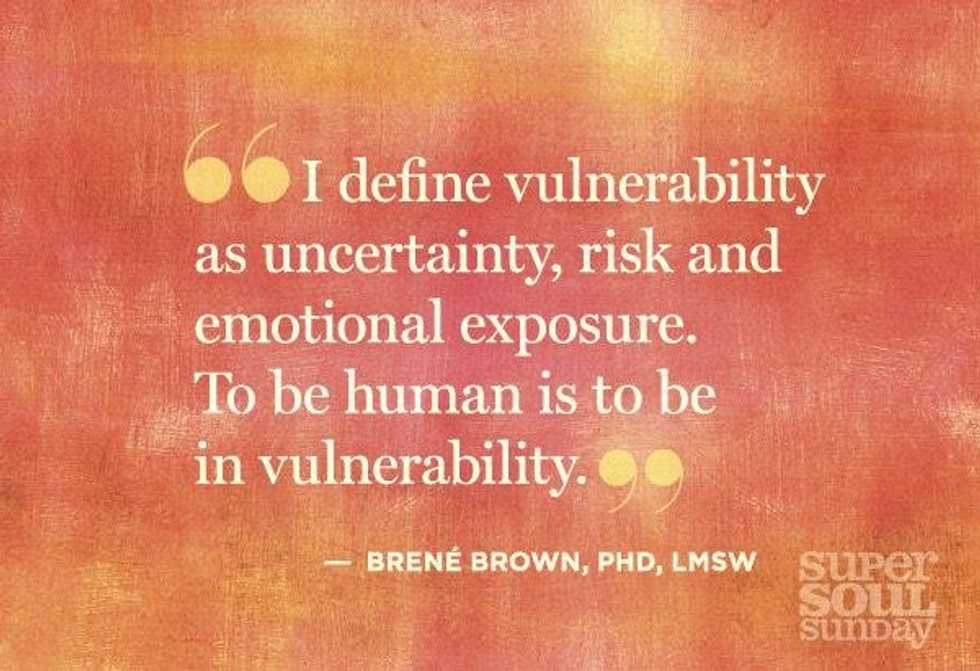
Vulnerability is too often looked down upon. If you fail a test, you’re supposed to laugh it off. You’re supposed to shrug your shoulders when you see a picture of your ex and his/her new significant other. Sharing your true feelings is often labeled as complaining or whiny, and crying makes you look weak.
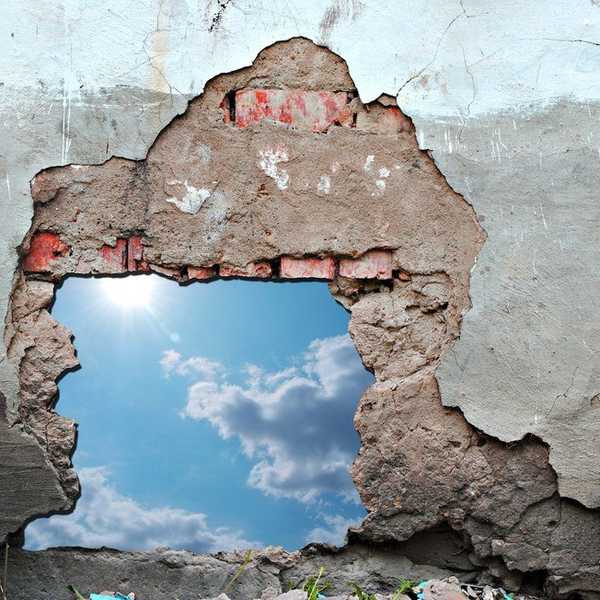
But I don’t think vulnerability means letting your guard down; in fact, I think it is quite the opposite. It tears down the wall between you and other people and more opportunities. Vulnerability makes us stronger. It deepens our relationships with others. People from whom I withhold my feelings, our relationships stay very superficial. My closest friends, however, are the ones whom I have late-night conversations with about our hopes and dreams and fears. In front of my best friends, I don’t hide behind anything — and we’re closer because of that. And some of my happiest moments stem from taking a chance and putting myself in “harm’s way."
Vulnerability opens doors for you that you would otherwise have never discovered. When you apply to a tough college or register for a hard class, you put yourself in such a tough position where failure is certainly a viable outcome. But, by putting yourself in this difficult position, you are betting on yourself. You are challenging yourself. No, it may not work out, but you are being your own advocate and building yourself up to become smarter and stronger than you were before. Recently, my sister moved to a different city all by herself to take a new job. The first couple days were hard, and she often called me to cope with how lonely she was. However, after a couple weeks, she made amazing friends and was enthralled by an amazing job. She put herself directly in the line of fire to better her life, and it was worth it.
Vulnerability helps you handle the difficulties life throws at you. When a good friend of mine broke up with her boyfriend, she continued to walk around with a smile and told everyone she was perfectly fine. But during class, I would see her gazing blankly out the window, and at parties, she would not be quick to dance, when usually she would be the life of the party. I pulled her aside and asked, “Are you really OK?” She started crying and explained how she was holding it all in, and trying to deceive herself into being whole again. Yes, sitting on the floor of my room sharing a boatload of truffles and talking about heartbreak was the most vulnerable position she could put herself in. Yet, sharing her deepest and saddest feelings with someone besides herself helped her heal. She had someone else to acknowledge her emotions, create closure, and thus she was able to start again.
And finally, vulnerability allows to deepen your relationships with others. I think quality of life has a lot to do with making connections with other humans, and that can never happen if you allow yourself to be a clam. In the beginning of college, I did not want to admit that I didn’t have it under control. The classes were tough, I was far from home, and I hadn’t found my closest friends yet. I didn’t want anyone to know that. But as soon as I casually mentioned, “Yeah this is a lot harder than I thought it was going to be,” rather than shrugging my shoulders and saying everything was fine, so many people opened up too and explained how they were also having a hard time. My relationships with those people suddenly became so much deeper because we had admitted to each other something personal, and now we’re still very good friends. Withholding those feelings created a wall between me and those around me because I was putting up a false pretense.
I’m not saying you should spill your deepest and darkest secrets to the guy next to you on the subway in the morning. But sharing feelings with others and putting yourself out of your comfort zone makes you so much stronger, not the opposite.