
Allow me to paint you a picture:
A second grade student meanders into the school cafeteria, brown bag clenched firmly in her hand. It's a Friday, and the preordered lunch of the week is Papa John's pizza, a classic among the student body. Bubbling cheese and tomato glaze are a lethal combination, filling the lunchroom with an alluring aroma an eight-year-old simply can't refuse. But alas, out comes the brown bag, it's contents strewn about the table: carrot sticks and hummus, a bag of grapes, and a peanut-butter-and-banana sandwich on wheat bread. No piece of pizza to be found.

You probably guessed it, but the above scenario was taken from my own elementary experience -- one I now look back on with some amount of appreciation. My parents had always been healthfully forward-thinking. I didn’t have my first sip of soda until I was in first grade, at a root beer float party. I was ignorant of the existence of “white” grains, because I had only been given “brown." I snacked on vegetables and fruits cooked, frozen, pureed, steamed, baked, you name it. But in reflection, this style of eating deviated pretty far from the norm within the average American family.
For a short historical snapshot, the fast food industry began in the 1950s, as suburbia and Levittowns also boomed. "Cookie-cutter” would be the word to describe this trend. In the food industry, homogeneity was reflected in the same food, uniform in appearance and size produced on a mass scale across the nation by way of “chain restaurants.” Convenience and speed became two of the primary values in food culture. Tradition, fresh produce, and natural cuisine were phased out, replaced by overly processed substitutes and chemically-enhanced sustenance.
The 1990s brought the term "fat free" to the table. Diets took over the market; from South Beach to Skinny Cow to Jenny Craig to paleo to Atkins to Weight Watchers, corporations have tried to fill inexplicable niches of weight loss and augmented physique. Carbs became the enemy in the early 2000s. And even non-celiacs began to embrace gluten-free, most with little knowledge as to what gluten actually is.

We are currently in an era of Instagram foodies, experimental cooking, and speciality restaurants. "Farm-to-table" has become a selling point for eateries and lost its hippie-esque stigma. Organic is not only accepted by consumers, but revered. Health food stores are on the rise. It's a good time to love raw and earthy food.
So what exactly is organic?
Organic: "Simply stated, organic produce and other ingredients are grown without the use of pesticides, synthetic fertilizers, sewage sludge, genetically modified organisms, or ionizing radiation. Animals that produce meat, poultry, eggs, and dairy products do not take antibiotics or growth hormones."
The above definition is taken from organic.org, and is a summarized version of the definition which appears on the USDA National Organic Program. Organic produce, besides that which you yourself grow in your garden, is the most pure version of produce located on the market. But, it's a bit more complicated than that.
100% Organic = 100% organic ingredients
Organic = at least 95% organic ingredients
Made with organic ingredients = at least 70% organic, the remaining 30% non-GMO

So essentially, it's incredibly difficult to find completely wholesome "organic" food. Furthermore, the USDA isn't infallible, and organic doesn't necessarily mean "sustainable," as in what is most beneficial for the planet. Business influence can still play a part in organic produce and poultry, so it's not a completely foolproof system and is still subjected to cutting corners of pure farming in exchange for greater profit and yield.
So, now with that backstory, we arrive to the point of this article: I choose to eat organically.
I hate it when people ask me how I label my eating habits. "I never eat red meat” equals vegetarianism to some. "I eat a high-carb breakfast complete with fruit, sprouted wheat toast, and nut butter” equals veganism to others. "I only eat organic, free-range chicken” seems to equal high-maintenance across the board.

My junior year of high school, after taking an AP Biology class, I decided to make the switch to full-blown organic. We had been shown a series of scarring Netflix documentaries (See: Food Inc.; Fat, Sick, & Nearly Dead; Supersize Me; Forks Over Knives) meant to shock, disgust, and abhor. Now, I do think it's important to note that the point of these documentaries is to build crowd tension and drama in order to generate change.
For me, these documentaries posed a series of questions: At what point did food stop being so simple? Why don't I know what I'm eating half the time? When did the switch happen? How could I be so blind in not even considering what I'm putting in my mouth?
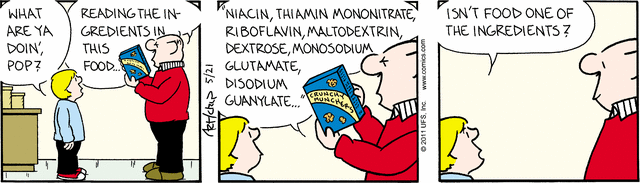
So, I gave myself one year to try incorporating organic into as many areas of my food consumption as possible. I convinced my family that this was a worthy experiment. We swapped our normal meats, started frequenting farmers markets, and dropped all sorts of processed food, even those advertised as "low-cal."
Each film pointed to a different fad as the key to healthy living. I choose to incorporate a little of each in my food repertoire under the umbrella of healthy, organic living. Also, I should note that by no means did I eat 100 percent organically. But, "organic" gave strong direction to the choices I made in the grocery store so that it made up about 70 percent of the food I was eating.
One year went by, and the consensus became clear: my family of four had benefited from our change in lifestyle. Personally, I felt leaner, more energized, and more in-tune with how delicious my food was. My tastebuds had altered, so that red meat no longer held an appeal, and rich fatty foods were savored in moderation. Fresh greens and juicy fruits were all I craved, with nuts, plant-based proteins, organic chicken, and wild fish completing my meals. So, I stuck with the lifestyle.
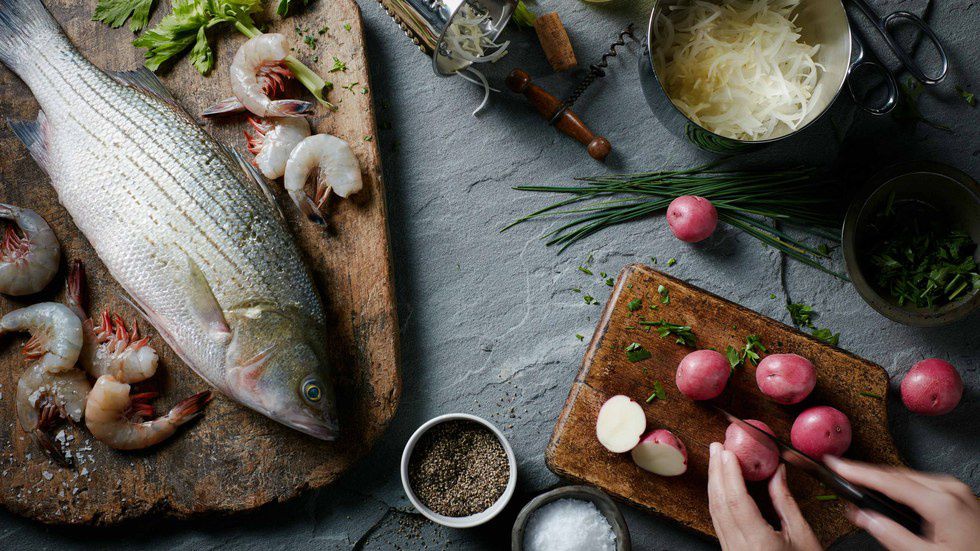
Coming to UC Berkeley offered an excellent community of organic options, in the dining hall, in the surrounding restaurants, and in the local markets (shout out to Berkeley Bowl!). I eat organically because "organic" for me signals choosing something less humanly-manipulated and more earth-based. But mostly because my body and mind has benefited from making the switch. I can't speak for others who don't find the solace in organic food, and I will say that "organic" is not a perfect system. Plus, it's more costly, which is a problem in its own right. For me, however, the term "organic" provides guidance as to what I'm putting in my body, and helps me form my choices in the grocery market and in life.