
Racism really seems to be a hot topic these days. The news broadcasts are bombarded with stories about police who target black people. People still tell racist jokes. Beyoncé made a stand for black people at the last Super Bowl halftime show. The issue of race, in some capacity or another, is everywhere. It seems crazy to me. We live in a country and a society that is growing in tolerance more and more every day, it seems. And yet, we still stumble over this one particular issue. This poses the question, “Why does racism even still exist?” To try to understand, let's first look through some history on the subject.
The earliest recorded examples of racism seem to go back to the time of the highly-esteemed philosopher Aristotle (384 - 322 B.C.). Aristotle considered anyone who was not of Greek heritage to be a “barbarian.” According to Webster's Dictionary, the definition of barbarian is “of or relating to a land, culture or people alien and usually believed to be inferior to another land, culture or people.” Furthermore, Aristotle believed that any non-Greek person was more naturally suited to be a slave or servant. In this case, racism would seem to be a delusion of superiority. One can imagine how much influence this idea had on people, given the reputation of the source.
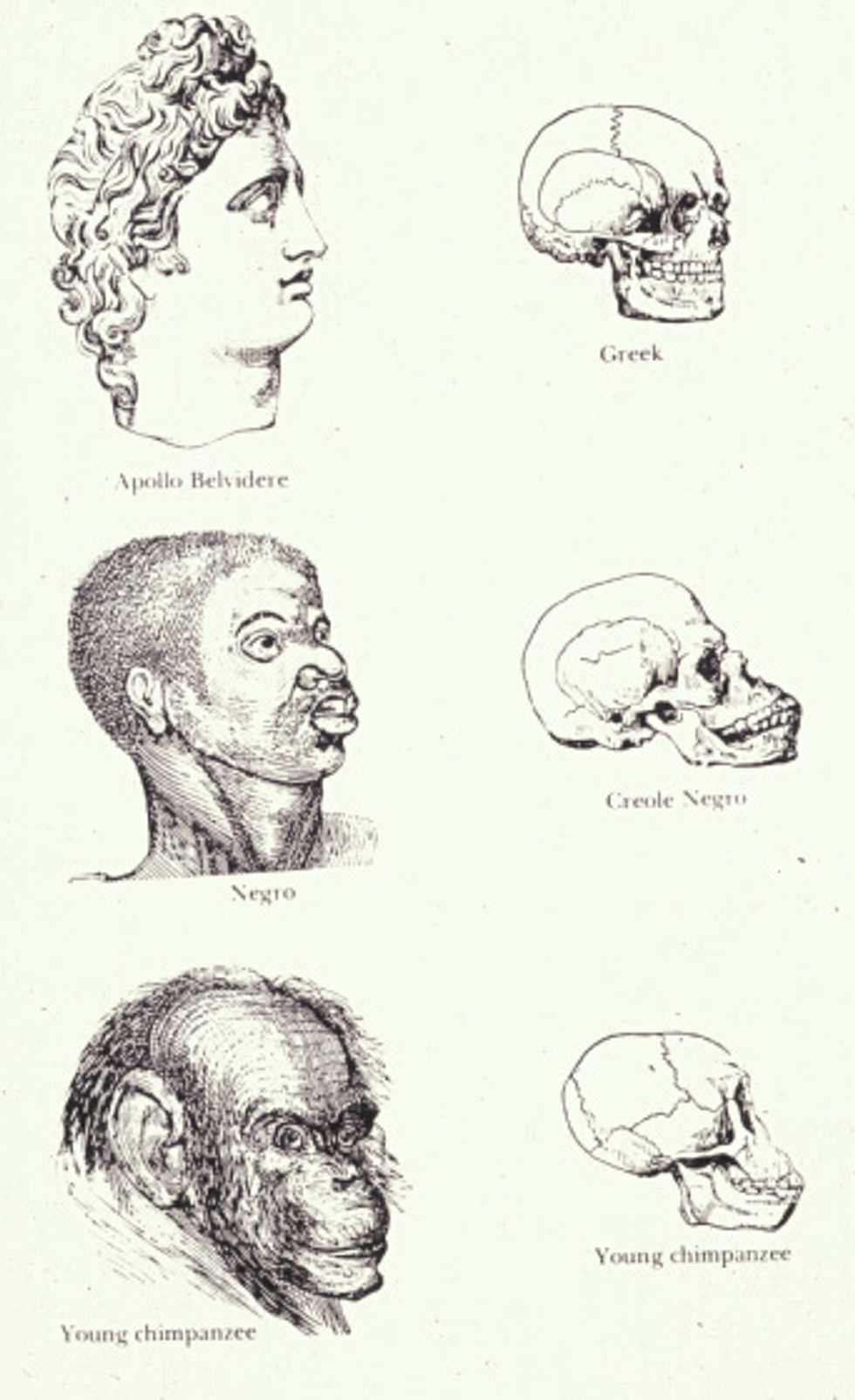
If Aristotle's influence wasn't vast enough, fast-forward to the 1800s where we'll find a man by the name of Charles Darwin. In 1859, Darwin published his book "On the Origin of Species by Means of Natural Selection or the Preservation of Favoured Races in the Struggle for Life." Ken Ham, founder of the organization Answers in Genesis, summarizes well how Darwin's views (whether intended to or not) fueled the fires of racism: “Darwinian evolution was (and still is) inherently a racist philosophy, teaching that different groups or 'races' of people evolved at different times and rates, so some groups are more like their apelike ancestors than others." It was through the theory of evolution that many were misguided into thinking that some people groups are less evolved, and therefore inferior, to more evolved people groups.
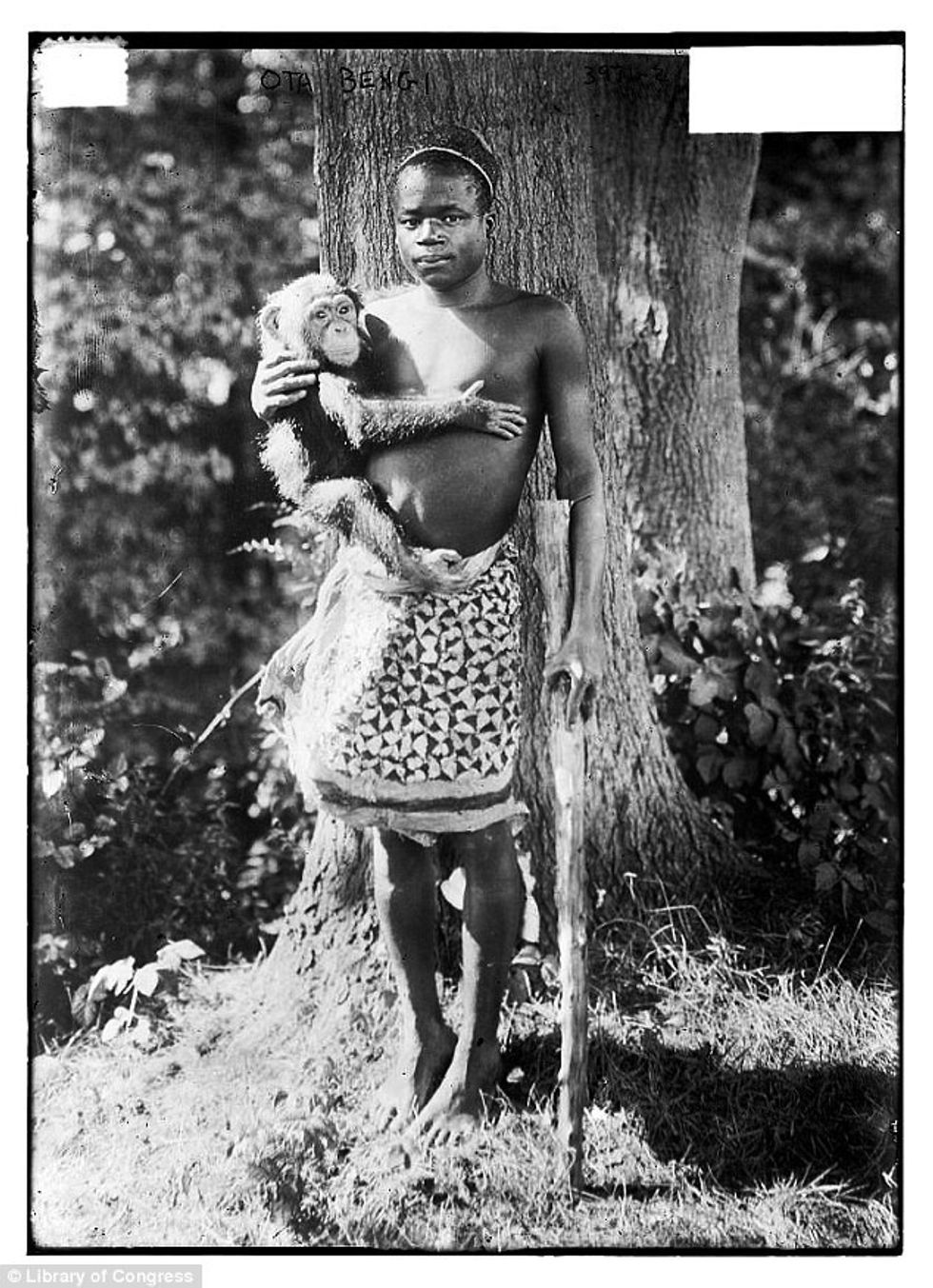
In 1906, at
the
New York Zoological Gardens, now known as the Bronx Zoo, a small,
23-year-old “black” man named Ota Benga was taken from his pygmy
tribe in the Congo and housed in a caged exhibit with an orangutan.
The zoo billed him as the missing link between man and ape and
proceeded to make quite a bit of money from him. Except for his small
stature (he weighed 103 lbs) and his teeth which were filed into
points (a custom of his native tribe), it was said that Benga looked
no different than any other dark-skinned man. Before long, the
exhibit was shut down.
Racism became quite natural in the United States. The first African slaves were brought to our country in the 1500s, often kidnapped from their homes and families. When they arrived in America, they were put to work as slaves — less than human in the eyes of their new masters. This slavery continued for a long time, but on January 1, 1808, the importation of slaves into the U.S. was prohibited, though internal slave trade was still legal. In 1863, President Lincoln issued the Emancipation Proclamation freeing slaves in Confederate states. The following year, the U.S. Senate added the 13 th Amendment to the Constitution which abolished all slavery — except when used as punishment for crimes.
Though slavery had been abolished, there still existed the idea that people of African descent were a lower form of humanity. After the abolition of slavery, Jim Crow laws started coming into effect, segregating “blacks” from “whites” in many public places. These laws remained until 1965. African Americans dealt with much hatred and prejudice during that time. I could go on and on telling you about various examples of racial prejudice and discrimination in our country and all over the world, but this article would be way too long.
Look at the world we live in today. Society seems to have made some pretty big leaps, both good and bad. Technology is constantly being updated. New and exciting discoveries are being made in the fields of science and medicine. So, you have to wonder why does racism still exist? We've looked a little bit at the history, but I propose to you that there is a simple one-word answer to explain it: sin. It really is that simple. With sin in the world, we shouldn't be at all surprised that racism is still an issue. After all, the human “heart is deceitful above all things, and desperately wicked” (Jeremiah 17:9). Unfortunately, I believe the problem of racism will continue to go on until the return of Jesus Christ.
But it's not completely hopeless. We can still make some differences for the good. We are given some definite information about race that everyone needs to know. First, check out what the Bible says in Acts 17:26, “And He has made from one blood every nation of men to dwell on all the face of the earth, and has determined their pre-appointed times and the boundaries of their dwellings...” (emphasis mine). There is one blood, one race of people that has ever existed on this earth: Homo sapiens. No matter where a person comes from, what color their skin is, what shape their eyes are, etc., we are all human. No people group is any more or less human than another. This is what biologists are discovering. According to one scientist at the Advancement of Science Convention in Atlanta, Georgia, “Race is a social construct derived mainly from perceptions conditioned by events of recorded history, and it has no basic biological reality.” They go on to say, “Curiously enough, the idea comes very close to being of American manufacture.” Though we may see different characteristics in different people groups, we are all human. In fact, the major biological differences (skin color, eye shape, etc.) account for only 0.012 percent of human biological variation.
So, there really are no different races. There is only one. This makes racism all the more illogical. We have a responsibility to treat everybody with the same respect that we would expect to be shown. Jesus Christ Himself tells us that this is the second greatest commandment that God has given us, “And the second [great command] is like it: ‘You shall love your neighbor as yourself’ (Matthew 22:39).” It is my hope that we can take this information to heart, and to share it with everyone we can. The world may never be a perfect place in our lifetime, but we can give it more love by the grace of God. Maybe when we take more action people will see the truth. Maybe when we take more action the media will stop showing biased material targeting specific “races.” I challenge you to go out and love your neighbor no matter what they look like or where they come from. Do you accept this challenge?
All Bible references were taken from the New King James Version.