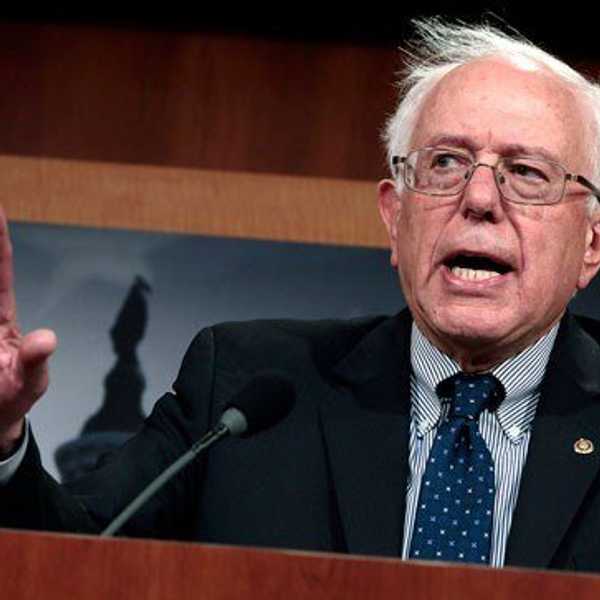

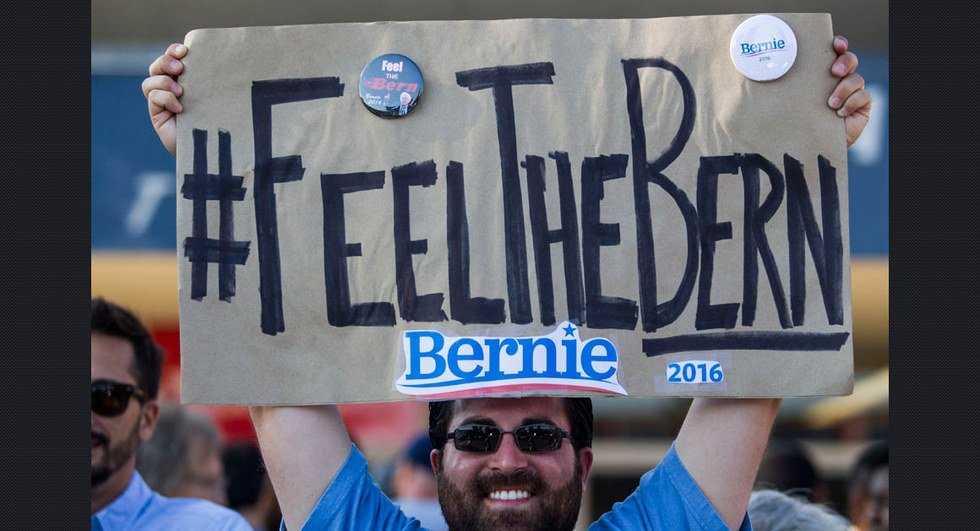
Millennials across the country are one of Presidential Candidate Bernie Sanders’s largest groups of supporters. Our generation seems to be significantly less opposed to Bernie’s campaign of democratic socialism, as most of us do not have the same sour connotation with the word that our parents do. When Bernie Sanders’s platform came into the media forefront, reactions were mixed – there were there who fiercely oppose the idea of any sort of socialist running for office, and those who were intrigued by his movement. The generational differences stem not only from millennials' lack of exposure to cold war experiences, but from the political experiences we were born into, and the cynicism associated with it.
We grew up in a time when Russian spy movies were already outdated. Communism was not an imminent threat to our generation, and we did not have role models, academics, and politicians constantly reminding us of authoritarian states that supposedly put our entire way of life at risk. Growing up, the fear we experienced was not associated with any word on the political spectrum, but we read about that fear in grade school.
Millennials were born into a time defined by an economic recession, terrorist attacks on home soil, and a dying planet. We were born into a society addicted to a fuel supply that is both destroying our environment, and running low – where the value of a college degree is dropping, while its price skyrockets – and where the the collective human future looks less than bright. To us, the idea of holistic assistance is attractive. For many millennials, our fears are centered around finding ways to get our basic comforts met in the future while hopefully enjoying our careers. Our time is characterized by environmental mess that we are reminded of every day, and are responsible for fixing – not only because it is the moral thing to do, but because action is now critical. Most of today’s college students have never experienced a period when global prospects seemed comforting, and we felt our futures were, for the most part, secure.
Sanders has made a strong point of redefining the word socialism, and making clear what his plans mean for Americans. His goal is to rebuild an educated, stable middle class, and he possesses a striking an honesty that other candidates do not have. Coming together to contribute to the betterment of all US citizens is not something that we have the leisure to pursue; we are forced to pursue it in order to maintain our humanity.
No college student needs to be convinced that Norway is doing something right with their tuition-free public schools, or that a there should be a more reasonable and comprehensive way to receive affordable education. The fear our generation lives with is not being able to pay off a degree, or not being able to find a job after four, or more, years of expensive schooling. Hearing politicians make calls for change, funded by the big businesses and recklessness that plans to thicken the mud we stand in, is shallow. Many in our generation have lost interest in the political system, confused why decisions are not made that consider the aftermath that we will have to live with. Sanders and his democratic socialism asks all voters to open their minds to more than just the failed thought processes of the past. For millennials, it is no wonder that the word “socialism” does not scare us.