
Picture this: a small child tosses and turns in bed at night, afraid of a noise they think they hear coming from their closet. The noise getting progressively louder in the child's mind, as they become afraid and eventually run to their parents for reprieve. The parents bring the child back to their bed, and open the closet just to show that the "monster" wasn't anything at all.
This scene is nearly identical to the 2016 election season. It may sound strange, but it's true.
Both Donald Trump and Bernie Sanders have centered their campaign tactics around fear. Uniting individuals within the American population by preying upon their fears has proven extremely successful for both candidates. Whether it's blaming immigrants on the right or taking down big banks on the left, fear fuels both of these extreme candidates.

Look at it from the far right side: Donald Trump has brought together a group of Americans that have been voiceless in most recent elections. It's not that the summation of Trump supporters are new, and have come out of nowhere. This part of the population has always been there, but now they have a voice and a face to represent them. These Americans are blue collar, relatively uneducated, and have lived in the same place for most of their lives. Trump formulates hatred that translates to these Americans, hatred towards things and people they often know nothing about and have never encountered other than through the lips of Donald Trump. These harsh views don't necessarily come from deep rooted bigotry or racism, but purely from a closed view of the rest of the world and living inside a bubble. Combine these supporters into a large group that's angry about issues like "non-Americans" taking their jobs, and you've got the political revolution that is Trump's campaign.
Then there’s the view from the far left, the determined, veteran democratic socialist, Bernie Sanders. Sanders has been around for a while, as the longest serving Independent in congressional history. Bernie’s strongly grounded stances on environmental awareness and the destruction of big banks and big business have rallied thousands upon thousands of angry supporters. Sanders’ supporters include a large portion of the nation’s millennials, who share in the anger Bernie advertises so strongly. Social media has been a large asset to the Sanders campaign, providing an outlet for a large group of young, frustrated voices. Yet what happens if Bernie is elected? Will he be outraged the entire time he’s in office? Sanders has not exposed much of his softer side to the public, and has maintained his “grumpy grandpa” disposition as a campaign tactic, using fear and malcontent to encourage voters to take his side.
The campaign tactics of both Donald Trump and Bernie Sanders prove that the power structure of presidential leadership is destined to change. When two of the larger bodies of support in the 2016 election are fueled by angry, scared voters, the results of the election are going to be staggeringly different than any other in American history. Both candidates have big, impactful ideas for change - yet have very little knowledge of how to execute these motions. Trump wants to build a wall along the Southern border of the United States, yet wants Mexico to fund this expenditure. Sanders wants to take down one of the largest and most complex institutions in the country, the banking industry. How are either of these candidates going to complete these essentially impossible tasks, should they be elected? You probably don't have a clue... and neither do they.
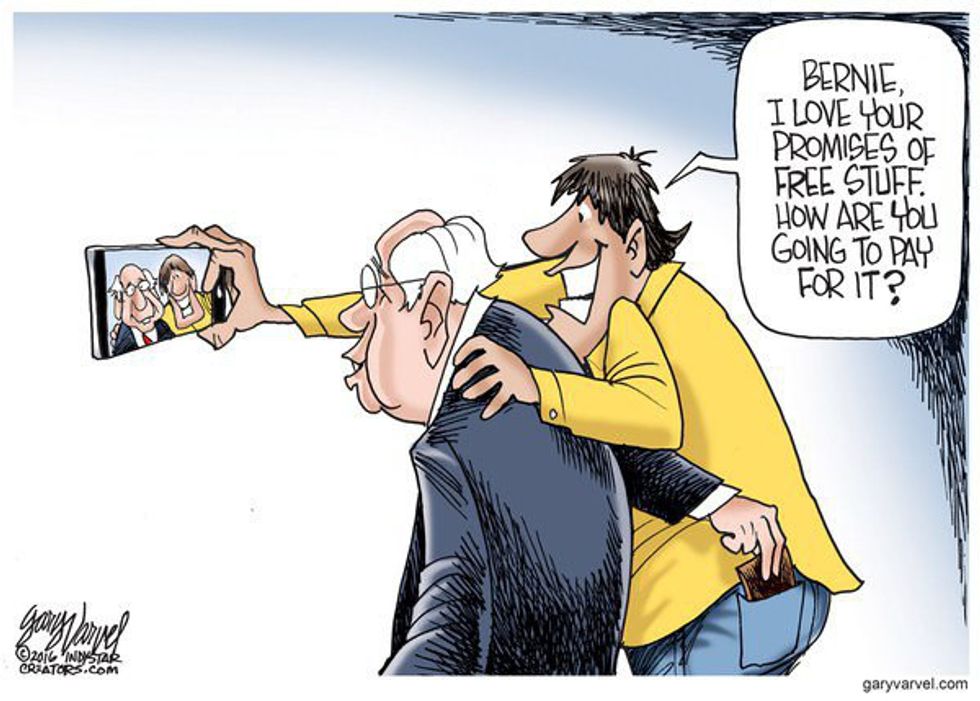
Trump and Bernie are trying to make sure that their supporters don’t ask themselves that essential tough question. And here’s where the monster-in-the-closet analogy comes in.
That scared child in bed is every American voter, hearing sounds and words that scare them that they do not completely understand. Trump and Sanders are both angry, but they’re also smart. They know that playing on fear is not only effective, but contagious. When voters are afraid of something, they go to others for assistance and awareness, whether it’s speaking to a local politician or posting an article like this one on Facebook. Just as a frightened child would run to its parent, a frightened voter runs to others.
When the parent returns to the child’s room, they open the closet door to reveal nothing is inside. Unfortunately for this election season, the same occurs when one investigates further into Trump and Bernie’s plans for the country. Much of what they say is noise; noise made to scare and enrage individuals. When dissected further, there is little that is realistic behind executing their big ideas. As their campaigning currently stands, voters are watching an outrageous show meant to get a reaction out of voters. Trump and Sanders understand that many voters are motivated by emotion and are playing to that, more than competitors like Hillary Clinton or Ted Cruz. Anger and fear are some of the most raw emotions, and both campaigns understand how to prey upon both of these emotions.
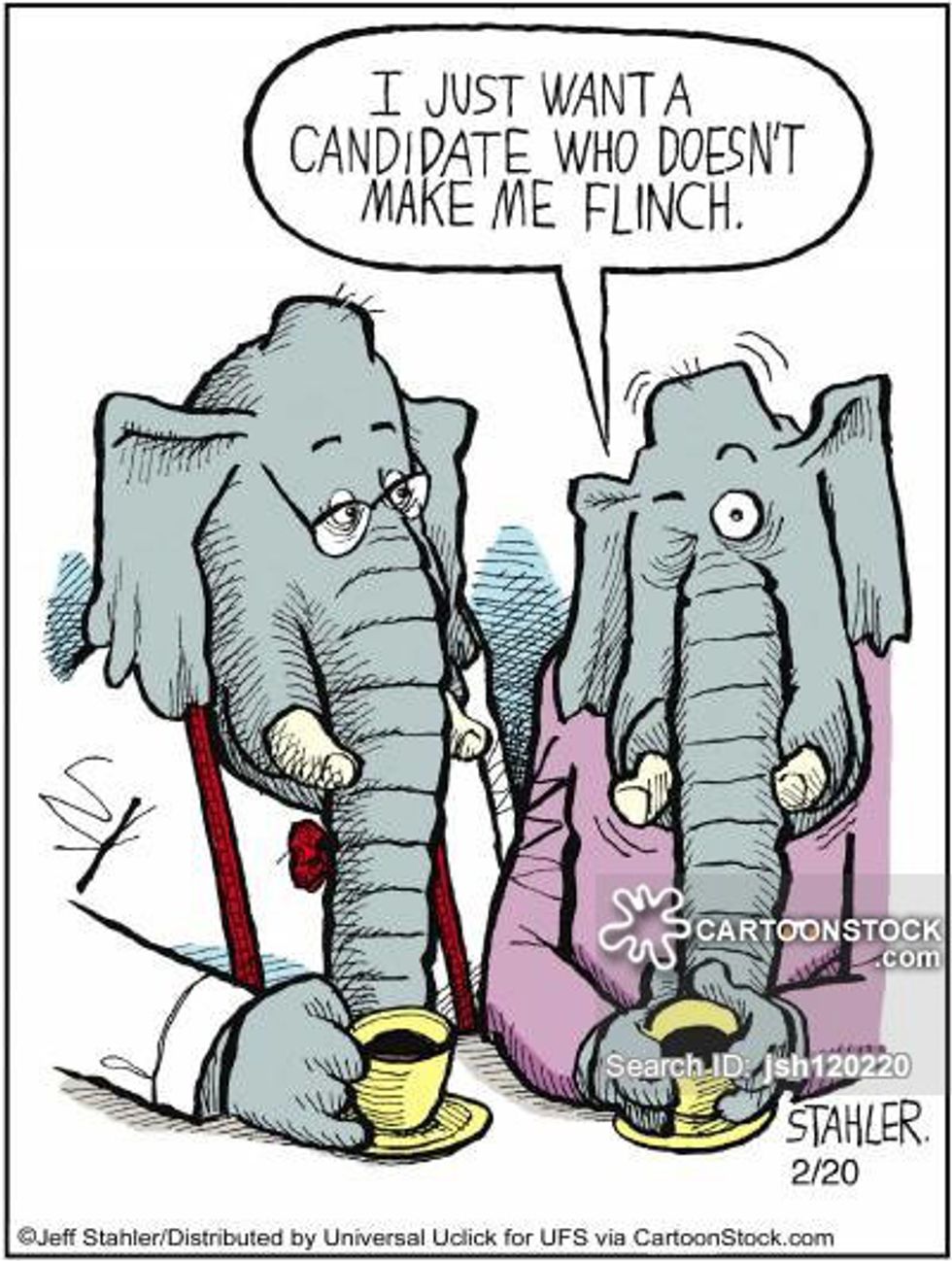
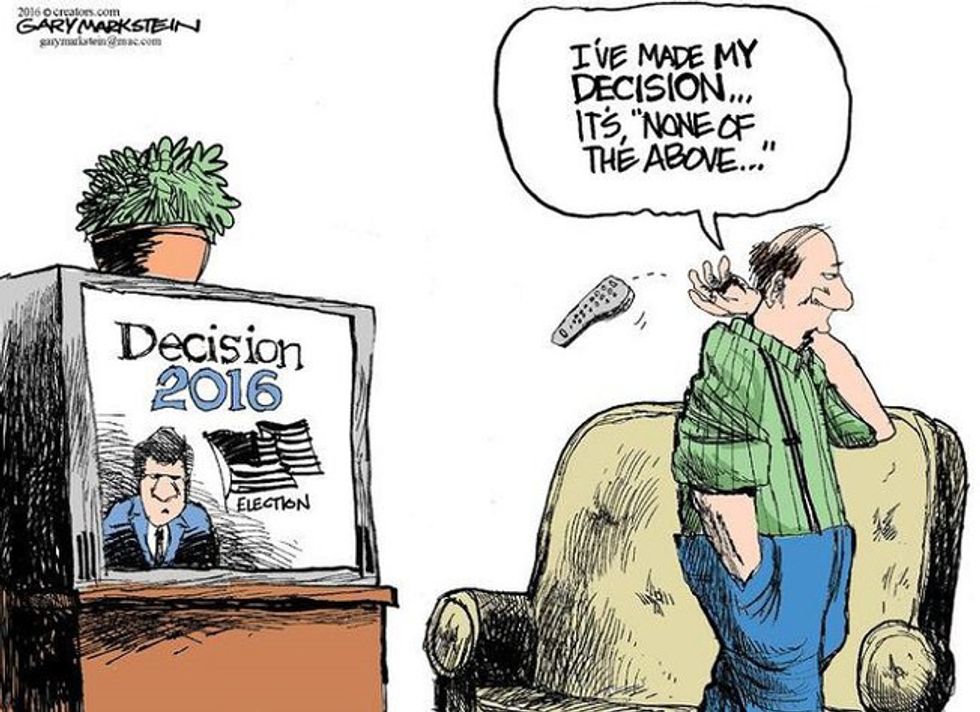
Who's to say how these campaigns will end, but one can’t be continuously angry for as long as Sanders and Trump have been. Either candidate could end up succeeding by running this fear-driven campaign style, but most Republicans voters have refused to back Trump, should he get the nomination, unlike Sanders who many Democrats endorse. The 2016 election has had a higher voter turnout than most recent elections, and is causing voters to think more about where they really stand on many central political issues.
But even with the thinking American citizens have been doing, many are still conflicted about which candidate will get their vote - so if you’re confused about the political warfare that has broken out during this election season, you’re not alone. If you’re scared by the issues raised on either end of the spectrum, you’ve become that child in bed. Don’t let the scary political monsters hiding in the closet scare you, they’re not actually real!