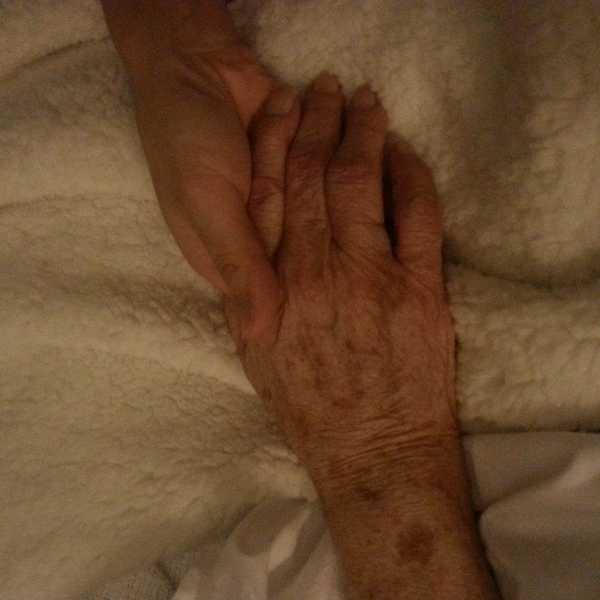


Who are you?
Don’t you remember?
I’m sorry, I can’t. Do you mind calling my wife to let her know you’ll be taking care of me today?
That’s me. I am your wife.
I knew that, I’m so sorry...I love you.
This is a normal conversation I overhear in a household with a member suffering from dementia.
Dementia is not a single disease. Rather, it encompasses a number of symptoms such as loss of memory and impairments in communication and thinking. Dementia is not normal, even for old people. The diagnosis of dementia involves severe symptoms that interfere with normal daily life.
As we age, we begin to lose brain cells. This can begin during our late 20's and is completely normal. What isn’t normal is forgetting who you are. What isn’t normal is being unable to remember your spouse, the names of your children, or what year we’re living in. These symptoms can most easily be associated with Alzheimer’s disease, a particular cause of dementia.
Alzheimer’s can develop with senility, or appear as early as 50 years old. The latter case is known as Early-Onset Alzheimer’s. Research reveals that around 5 million Americans have Alzheimer’s, of which nearly 200,000 have the early-onset form.
Right now, there’s very little we can do to stop the effects of dementia-causing diseases such as Alzheimer’s. Genetic testing is a precautionary measure many families choose to take if early-onset Alzheimer’s runs in their genes. This allows time for the remainder of the family members to cope with the changes that will occur as the disease progresses. Most people with Alzheimer’s have to quit their jobs, or take on a smaller workload. This impacts a family’s finances and genetic testing allows people to make arrangements prior to these transitions.
Watching a person whom I love grow old, develop dementia, and lose himself with time is difficult. It’s painful for everyone close to him, especially those who knew him before he even showed any signs. I feel hopeless as I watch the person I love struggle to comprehend the most basic things. It’s as if the pieces that made him who he is begin to chip away.
It’s hard to explain dementia or Alzheimer’s to people who don’t know others struggling with it. It doesn’t get better with time – it just gets worse. Some days are in fact better than others, but I have no clue why. There are days when they can pass for almost normal: they remember their loved ones, they keep up with the conversation, and they know what they did yesterday and what they need to do tomorrow. Then there are bad days. These are the days when they’re almost in a trance. They can’t focus, they’ll ask the same question three times in a row, and they’ll forget to whom they’re married, even when they’re standing right next to them.
Knowing someone that suffers dementia is scary, but it’s even scarier to suffer from it. At first, they are absolutely healthy. Their brain is functioning well and they can perform daily tasks without a problem. Then one day they’ll forget to turn the sink off downstairs and suddenly the basement will be flooded with a foot of water. They’ll know that they forgot to do a very basic task and maybe they’ll sense that something is off. But as time continues, they’ll forget that they aren’t OK. They’ll forget that they’re forgetting. The universe alters for them, because they live in their own world: without a time or a date or a family. They’ll remember moments from their long-term past – the most pleasurable and the most painful – as if they were yesterday, because they believe they really did happen yesterday. I can’t imagine anything worse than reliving the moments from your life that made your heart ache and grieve.
I sincerely hope that we can find a cure for Alzheimer’s soon. I want elders to feel included in their families instead of feeling isolated because they can’t remember things. I want parents around the world to be able to have conversations with their own parents without reminiscing on the person they used to be and feeling melancholy. I don’t want parents to have to tell their children that their grandparents are “getting old” and might not remember them at the next family reunion. Alzheimer’s can undoubtedly put a strain on a family’s bond; it isn’t an easy living situation and many times requires assistance from nurses and special homes. I dream of a day when this disease will no longer taint the special moments we share with our elders and instead they may continue to be active role models in our lives.