
Black Lives Matter. Missouri. Institutional Racism. Ferguson. The Black Panther Party. Beyoncé. Chances are you’ve witnessed a Facebook argument about one of these subjects in the last few months. We live in a time in which racial tension runs high and in which racial injustice can be virally witnessed by millions in a matter of hours after occurring. Racism and questions concerning race are more relevant in our political discussion due to social media making the reality of racism more visible than ever. This sparks conversation and controversy, seemingly on a weekly basis, in a way that isn’t always productive.
As a white person, I can say that every conversation I’ve seen involving racism or race consisted of at least one white person saying at least one version of the following platitudes:
- “Why are you dividing us?”
- “If you want racism to go away, stop talking about it.”
- “If you switched out “Black” with “White” you’d be called racist!”
- “Why does everything have to be about race?”
Sound familiar? You’d think with racial issues being at the forefront of our national conversation that such a conversation would progress at some point, but unfortunately it seems to always regress to the same sentiments. The reason why the conversation isn’t as productive as it could be is simple: those who are not and will not be victims of systemic racism, my fellow white people, don’t know how to talk about racism.
White people’s first inclination when discussing racism is to approach the situation skeptically. Instead of allowing the possibility that racial bias contributed to an action or event that harmed someone, white people try to justify the action or portray the perpetrator in a sympathetic light. What’s odd is that we don’t approach other instances of wrong-doing in the same way. If someone’s car is stolen, do we frame our understanding of the thief more sympathetically than the victim? Do we approach the victim as if the victim has an ulterior motive or is lying for attention? Do we think that it’s worse that someone is accused of being a car thief than if someone has their car stolen? I would think not. That’s not to say we should embrace every single claim of being harmed as always unconditionally valid and true, but for the sake of common and consistent decency and in the spirit of building empathy and community, it’s a good idea to listen and at least not invalidate grievances from the outset when people draw attention to them. This tendency to lay the burden of proof on victims or to approach victims with an intense level of skepticism is called Victim Blaming.
The primary reason white people cannot effectively talk about racism in America is because our initial reaction to racial injustice is to Victim Blame. When it comes to conversations about racism, white people are at a predisposition to blame or not take seriously the most common victims of racism, African Americans. Whenever an issue about racism comes up, instead of acknowledging harm and conceding at least the potential of wrong-doing, we change the subject of investigation upon those who have been harmed. We consider it worse to be called racist or to be accused of demonstrating a racial bias than perpetrating the actual harm of racism. As a result, we shift the burden of proof upon those harmed by racism; they have to prove beyond a reasonable doubt that the action in question was racist by the white standard of racism. It’s a convenient tactic to prevent any productive conversation about racism and race relations by not taking responsibility for our actions at the outset.
The second reason white people can’t talk about racism effectively is because they have been socially programmed to hold no respect for African American culture or for the particular position of the African American experience. We fully expect and embrace white Americans when they show pride in their ancestral cultures, whether they be Italian or Indian or German and so on. But when African Americans express pride in their culture, our immediate response is usually negative and varies from condescension to ridicule. Though we may show lip service respect to African Cultures that are on the continent of Africa, we don’t recognize African American Culture as part of American Culture.
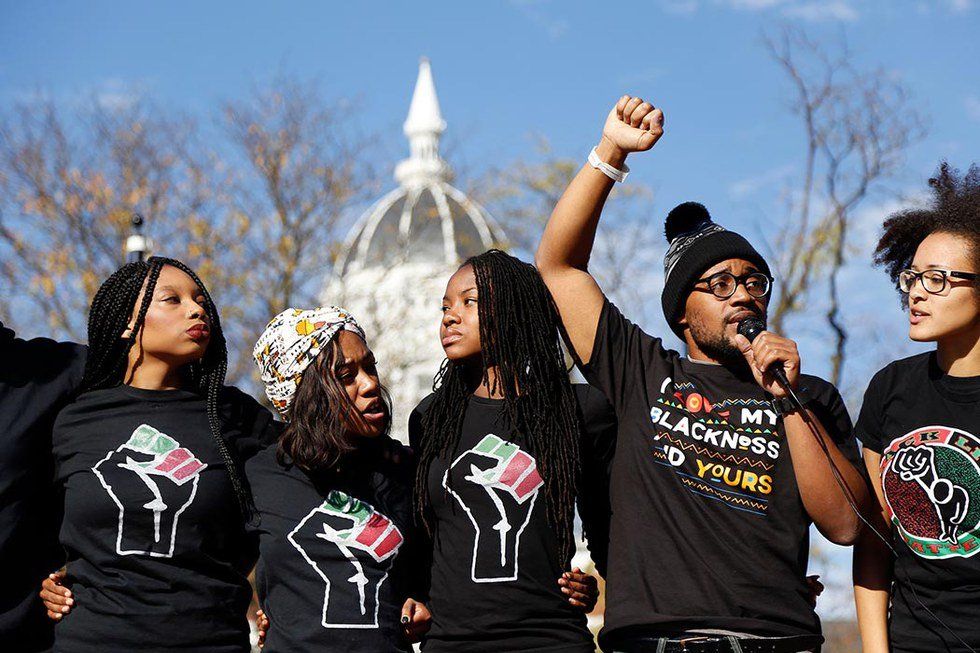
If you think this is a sweeping generalization, just think about how issues concerning African American students are talked about on college campuses throughout the country. Many colleges have Black Student Unions and clubs revolving around black interests, to the behest of white people who point out that if there was a White Student Union, it would immediately be called racist and condemned as such. This thinking demonstrates an underlying problem with American discourse on race. For many white people, to talk about race is to necessarily be racist and divisive. Yet still, we’re completely comfortable talking about race so long as it’s not African American. If someone says they’re proud to be Scottish, Japanese, or German, we don’t see that as a call for division, rather we see it as a legitimate part of someone’s identity that there's sufficient reason to be proud of. There are many African Americans, however, who can only go so far in tracing back their ancestry. The African slave trade displaced millions of Africans, bringing them to America with not much documentation of where they were from. In the generations following the displacement, that information of heritage was lost for many forever.
Even so, one also cannot overstate the experience of brutalization and terror that African American people experienced since first stepping off of a boat as slaves in the 17th century. Racism didn’t end with slavery and didn’t end with the Civil Rights Act. No other group was abducted in such massive numbers, enslaved, terrorized, and discriminated against for 400 years as African Americans have been. To embrace Black Pride is to acknowledge this history of terror and oppression and yet still retain pride in being black individually and culturally. It’s no more dangerous or divisive than someone claiming Italian or Japanese or Indian heritage; it’s part of someone’s identity and heritage, yet white people only consider that divisive and controversial when African American people do it.
Lastly, white people don’t want to acknowledge the empirical fact of discrimination. Even if you pretend the crimes against African Americans before the Civil Rights Act are unrelated to African American problems today, there is still an abundance of evidence for racism’s existence today. From housing discrimination, red-lining, police brutality, racial profiling, the wage gap, the wealth gap, the college admissions gap, the employment gap, the school to prison pipeline, mass incarceration, and more, you don’t have to be a liberal loon to admit the objective reality of racism against African Americans in the United States of America in 2016, you just have to look at the facts.
Yet still, we don’t even get this far when discussing racism. We’re stuck at the superficial aspects of racism because white people are socialized to think about race in a way that secures white power and perpetuates black disempowerment. White People don’t view “African American” as a valid cultural identity worthy of protection or praise, so any attempt to cherish African American culture or draw attention to how African Americans have been historically brutalized by racism is seen as a method of being “divisive” or “antagonistic.” At the end of the day, we don’t want to admit that African Americans are discriminated against. We’ll blame them for their problems long before admitting White People had a hand in creating and perpetuating racism even to this day.
If we want to build a more harmonious and benevolent society in which all citizens can participate fully in the benefits of being an American, we have got to stop blaming African Americans for their problems. We also have to recognize the validity of African American Culture as an equally authentic niche of American Culture, just as Scottish Americans, Italian Americans, Indian Americans, Latin Americans, German Americans, and English Americans have an authentic niche in the Salad Bowl that is American Culture. Most Importantly, we have to acknowledge the empirical reality of systemic racism against African Americans; though other forms of discrimination against other races exist, African Americans are the main race victimized by racism. Racism is not a problem exclusive to African Americans, but it is a problem specific to the experience of African Americans. If White People are serious about confronting and combatting racism, they must be conscious of their socialized biases that make them unable to discuss racism. Only when white people become conscious of these unfair tendencies can there be a truly productive conversation about racism in America.