Recently, Amandla Stenberg, a teenage actor who starred in the Hunger Games, attacked Kylie Jenner, another teenage celebrity, for wearing cornrows, citing her for appropriating black culture. In her remarks, Stenberg points out that while taking a style from black culture, Jenner does nothing to talk about police brutality and racism facing Black Americans. This prompted many people on social media to praise Amandla Stenberg for calling out Kylie Jenner on cultural appropriation. However, I disagree with this appraisal.
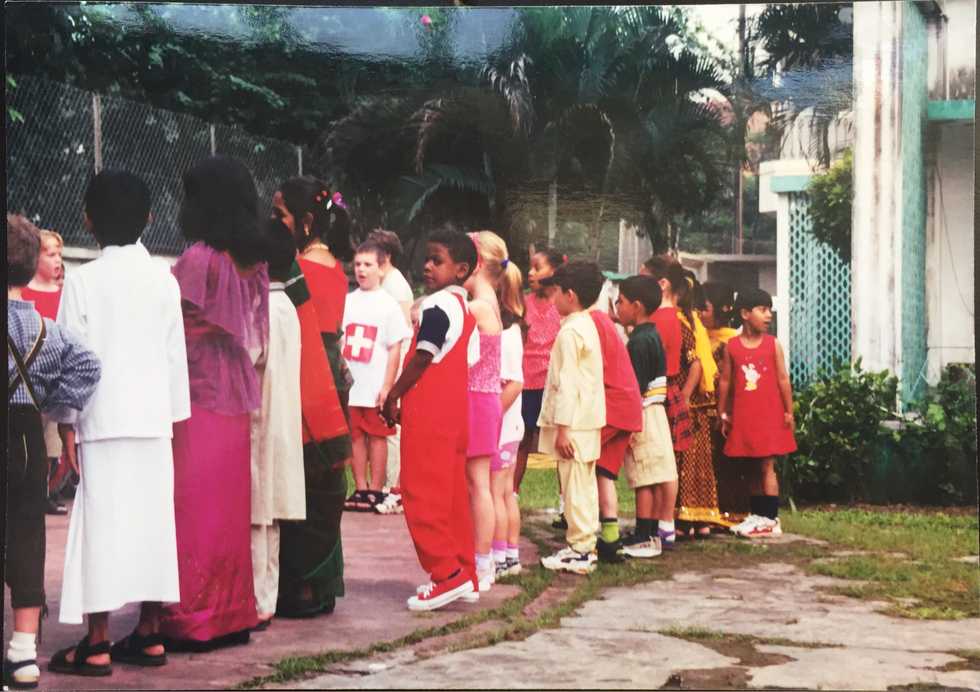
For a long time, I've had mixed feelings about cultural appropriation, especially as someone who has had an upbringing where I have experienced a variety of cultures, and sometimes when I was a kid I experienced many cultures at a single moment. At my lower school in Bangladesh we celebrated UN Day, where all of the kids would present their national culture to the rest of the school for everyone to celebrate, which reinforced the idea that culture is to share and to celebrate. When I studied abroad in Russia years later, I had the privilege of learning about and living with Russian culture as well. And the thing that all of these experiences have taught me is that culture does not belong to anyone.
Nobody owns culture, and people borrow from one another all the time, and have done so throughout human history, this even includes words in languages, and that's not a matter of privilege. It's just a matter of human nature, and the fact we like to adopt things that we admire, including cultural features, and this is unavoidable in a world where everything we do as human beings is extremely linked.
In the 21st century, we live in a globalized community. We're more interconnected than ever before in human history thanks to the Internet and other technologies that continue to make the world smaller, and our world will continue to become smaller as our experiences will become increasingly linked. Because of how interconnected our world is today, what we say in the West about rape culture connects to attitudes that lead to legislation in India, and national policies in France can change the landscape of the Middle East. As a consequence, nothing belongs to anyone's region or culture anymore – everyone's ideas are for everyone's taking. Rap is a great example of this phenomenon, because while its origins trace back to American culture, the music genre has been adopted everywhere, even in places like Russia and Palestine. If people admire something, people take it and exploit it, and that's not a bad thing. In fact as far as culture is concerned, it's a good thing. However, that's not exactly the case for the conversation surrounding cultural appropriation.
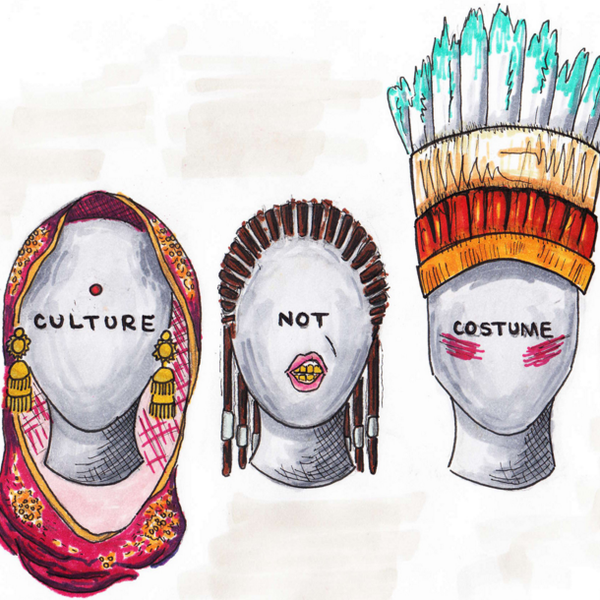
The subject of cultural appropriation is directly linked to white privilege, because one of the key aspects of white privilege is what leads to one of the main problems concerning cultural appropriation. In America, what is "white" is considered normal and mainstream, whereas what is "non-white" is considered exotic or at least distinctly different. Historically and even today, people without white privilege in America have been forced to abandon their "non-white" cultural features, such as hairstyles and clothing, and trade them for a mainstream (a.k.a culturally "white") equivalent in order to be accepted when they integrate their lives with the rest of society. Otherwise their cultural features are seen as political statements or those features are too extreme or improper for a professional environment. However, when people with white privilege adopt something from an "exotic" "non-white" culture, society sees it as cool, hip, maybe edgy, but not political, and they don't face the consequences that people without white privilege face; and the power dynamic of this double standard is part of what people who protest cultural appropriation are trying to address.
Getting back to Amandla Stenberg, I assume the reason why she was outraged that Kylie Jenner would dare to wear cornrows and not talk about issues facing Black Americans, is because "black" women have not been able to wear hairstyles, such as cornrows (but also afros and anything hairstyles with kinky hair), without it being seen as extreme, inappropriate for professional environments, or as a political statement. And as a consequence, Amandla Stenberg ultimately attempted to address this double standard by also making it a political statement for women with white privilege to adopt these hairstyles. And this is what's wrong with the entire mantra of cultural appropriation.
The mantra of cultural appropriation does not work, because it stems from the idea of separate but equal. Instead of allowing women with white privilege to wear hairstyles that women without white privilege have been faced with scorn for wearing, women with white privilege must be faced with scorn for wearing these hairstyles as well in order to balance the double standard, which is the definition of trying to be separate but equal. However, if history has proven anything, separate but equal never means equality when you have a social hierarchy of these separate groups. And this example proves that this does not bring equality, because by scorning women (with and without white privilege) for wearing cornrows, cornrows can never become a part of the mainstream along with other "non-white" hairstyles. The problem is not people with white privilege wearing cornrows – the problem is our attitude towards cornrows, and all "non-white" hairstyles and cultural features, and the fact we even distinguish them from what we think is "white".
The fact is we live in a racially stratified society from the remnants of official white supremacy in this country and arguably across the globe. In America a lot of progressive movements have been trying to address this racial stratification by trying to reach a goal that has been used as a tactic to empower this system – separate but equal, but calling it equality. As I said earlier, history proves that does not work in a racially stratified system. In fact, we should stop striving for equality between the different races; because like I said in my previous article, race does not exist and we should stop legitimizing it, and not treating these different groups as separate identities is part of doing that. So then how do we uproot white supremacy? By delegitimizing the idea that white exists. And to clarify: by delegitimizing that white exists, I don't mean we should act like white privilege doesn't exist. In fact the idea behind delegitimizing that white exists uproots the entire existence of white privilege too, because white privilege's existence hinges on the idea that white exists.
Instead of citing cultural appropriation to address the problem, we should dismantle the system of white supremacy in the first place, and the way to do that is to dismantle the fundamental idea that allows the system to exist – the idea of whiteness. Dismantling the idea of whiteness means that we confront that our society has a history of valuing "whiteness" more than we value non-whiteness, and our society continues to do so today in ways we don't even think about. After confronting that horrible truth we can start making more efforts to value non-whiteness as much as whiteness, and recognize non-whiteness indistinguishably from whiteness as a part of our society and mainstream culture. This includes "non-white" lives, lifestyles, traditions, and it also includes an act of no longer distinguishing between "white" and "non-white", period, across the board.
And I know it might sound like a crazy or an unrealistic idea, but it's not even close to as crazy or unrealistic as trying to create racial equality within a racially stratified system, which is a contradiction in and of itself. And yes, it's also a lot harder than it sounds and I'm not underestimating or understating that, nor do I think I have the answers for how to do that; but our subconscious attitudes about whiteness and lack thereof has to change.
I think in order to ultimately do this, we also need to address American culture, and the illusion that we have a distinct black culture that is different and not a part of a dominant mainstream "white" American culture. Truth is, black culture is not a separate culture from American culture, and American culture is not "white" either. Even if there used to be a dividing line separating black culture from American culture, where is the dividing line today, and why even emphasize a division? In fact, emphasizing a division between black culture and American culture does more harm to confronting racism, because it needlessly distinguishes "black" Americans from Americans and furthers the idea that these racial divisions are legitimate and define who we are.
Black culture has always been an integral and defining aspect of American culture, especially in music, and it's practically inseparable from mainstream American culture, not simply appropriated. And while some might argue that "white" society has been appropriating black culture this whole time, "black" musicians started using brass instruments and the piano for jazz in the Harlem Renaissance, which can only be explained by "black" musicians appropriating "white" instruments. So appropriation has little to do with privilege, and it's not like "black" musicians were forced to adopt brass instruments in order to survive in their society, nor have they gone unrecognized for their cultural contributions. And yes, oftentimes those with privilege receive credit for ideas they've taken from those without privilege, and then those without privilege aren't even recognized for the origins of those ideas, but we have overhyped this phenomenon to an extreme with the entire discourse of cultural appropriation.
What we need to recognize is that these seemingly different cultures in America, such as black culture, are ultimately just parts of American culture. American culture stems from origins in Europe, Africa, Asia, the Americas, and anywhere else where immigrants who have shaped the landscape of this country came from. And at least for the cultures originating in Europe and Africa, they are centuries removed from European and African cultures today, making them more related to each other than anything else and the rest of the world recognizes this. Nobody overseas would ever say Bruce Springsteen's music is European or that Jay-Z's music is African; they'd say their music as American, because that's their culture, and we should start doing that here too.
With that being said, there are times when people from these seemingly different groups insult one another by imitating features from their respective identities, and it happens a lot, but that's not appropriation – that's mockery. It can be rooted in bigotry or it can just be the symptoms of living in a society that values whiteness over non-whiteness. But actually appropriating something from another culture means making it a part of who you are, and if someone does that it's not an insult to the identity where that something came from. It means the person liked that aspect of that other culture so much that they wanted to adopt that idea as a part of their life, and there's nothing wrong with that.