I turned 3 years old on April 20, 1999. "The world was a much simpler place then" is too easy a phrase to say, when at that young age, the weight of current events cannot be contextualized into human anguish. It is too easy not to care about the going ons in the world because we could not care; we did not learn to care yet.
Through proper development of character, one is given the choice when approached about specific global happenings: to take it personal or not. Ignoring is easy, too easy an imitation of lacking emotion to perform. If one makes the conscious decision to take watershed moments in history personal, the individual experiences first-hand just how soul-crushing the "news" can be. Aspiring to maintain notions of being "well-informed" citizens of the world slowly breaks our hearts, groping around for bits of empathy connecting us to the damaged souls truly bearing the burden from headlining tragedies as victims.
In more tragically significant news, on that very same day, two Colorado teens walked into Columbine High School. Rehearsed visualizations of gunfire, targeting peers as they scrambled down hallways for their lives, came to horrible fruition. Going by personas born out of social estrangement, the "Trench Coat Mafia" walked into the school's crowded cafeteria before pointing their firearms at their classmates and school faculty. They killed 13 people on that day- one of them a teacher- while over 20 other people were left seriously injured in the wake of the shooting. A SWAT team found the shooters in the school library, where they had taken their own lives. The small town of Littleton was eternally rocked, put on the map as a testament to the devastation gun violence brings.
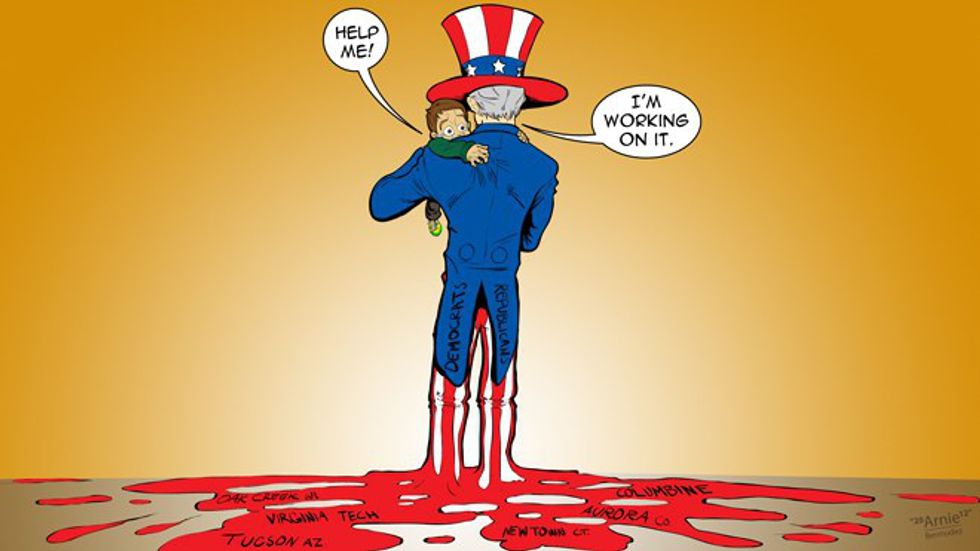
America's heart was shot that day. Bullets riddled the vessel containing the inherent sorrows of all who cried out in pain. A puncture wound tunneled through one end and out the other. Fragments were left behind so the hole had no chances of ever closing up. The hole was created by the very guns we worship. Congruently, guns were responsible for a leak to spring in the heart's plugged up dam system. A flood emerged, leaving America's heart as hollow as the bullet tips that hurt it. America's heart has been bleeding tears ever since.
Fast forward approximately eight years later. April 16, 2007, days prior to another anniversary commemorating the losses incurred by gun violence, history repeated itself with deadly force at Virginia Tech. The shooting deaths of two students that morning alerted authorities to the potential of more fatalities to come. The college campus locked itself down when news of a shooter spread. Ordered to stay indoors and keep out of sight, the shooter blended in with his scared classmates. He continued his spree, killing 30 more people, before turning the gun on himself.
Please note the absence of any mention of the shooters' names. The more common these events become, the more common we have to put names to them. Aurora, Colorado, July 20, 2012, 12 killed with over 70 injured as part of a night originally intended for the indulgence of escape-enabling fantasy at a cinematic screening of "The Dark Knight Rises" midnight release; an atmosphere that morphed into a nightmare. Newtown, Connecticut, December 14, 2012, after killing his mother, a mentally disturbed man forced himself into Sandy Hook Elementary School, to go on to execute 20 innocent students and 6 staff members. Charleston, South Carolina, June 17, 2015, a white youth entered the oldest African-American congregation in the southern states, exiting after shooting and killing 9 churchgoers participating in a Bible study group; that is the day my madness concerning constant knowledgeable awareness of worldly affairs began.
The power of which name is remembered is diluted if wasted on the criminal. We give names to memorable incidents to remember the victims, the lives permanently altered, the community's suffering. Titles, such as locations or towns, remind us of the people who really need the support and where to give it. Socio-geographically, we may be able to analyze notable factors, if any, contributing to these bloody climaxes and reason why they happened, if possible.
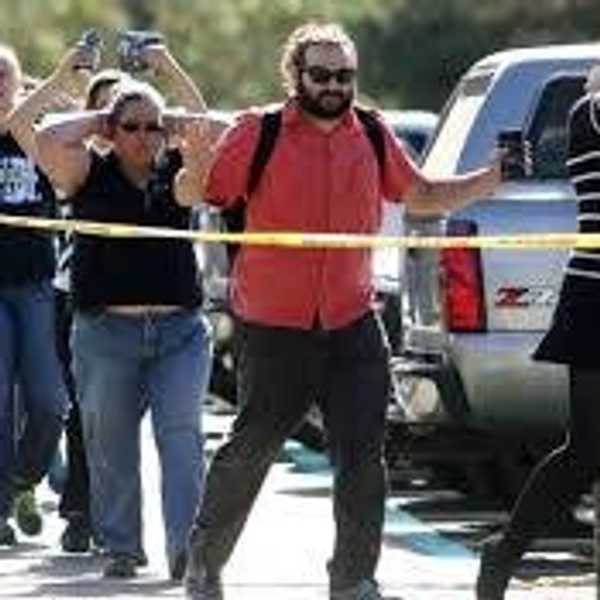
Now, we stand in ashes of yet another aftermath. On October 1, a gunman entered Umpqua Community College in Roseburg, Oregon, taking 10 lives on his rampage, including his own. Over a week after, two separate shootings happened the same day, October 9, at Texas Southern University and Northern Arizona University. In both of the two shootings, gunman shot multiple people, with one death by each shooter. A mass shooting constitutes that four or more individuals were killed. Whether gun violence falls into one category depending on how many die is not important. A single loss of life matters just as much.
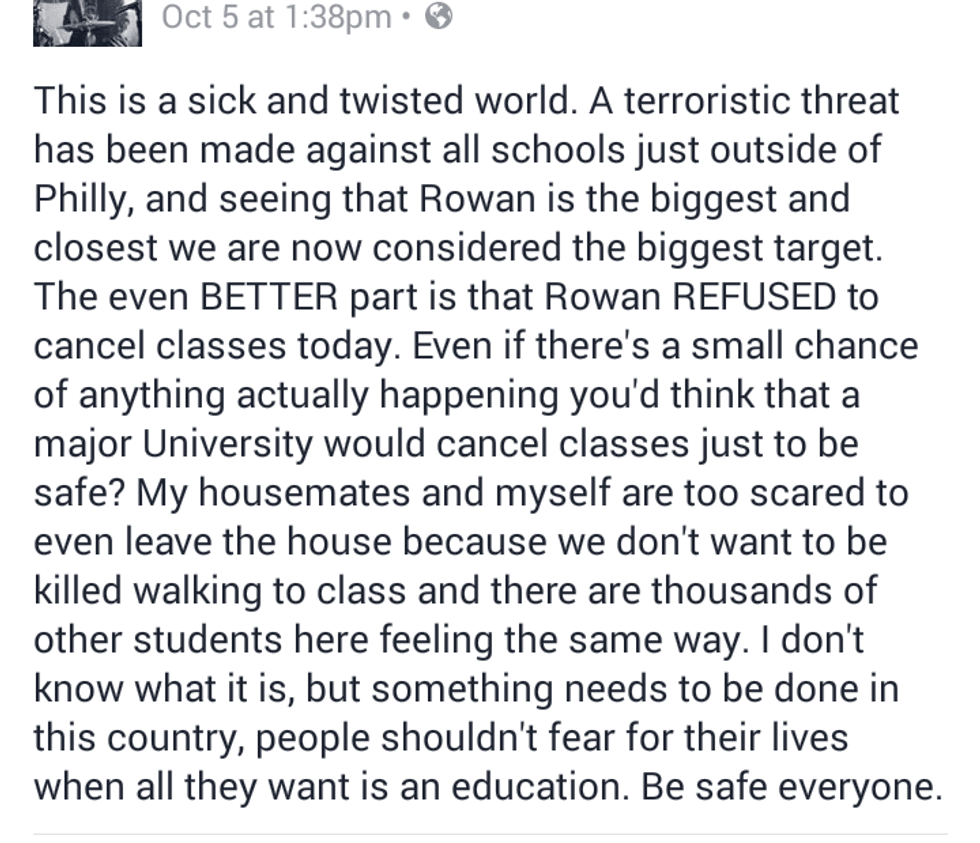
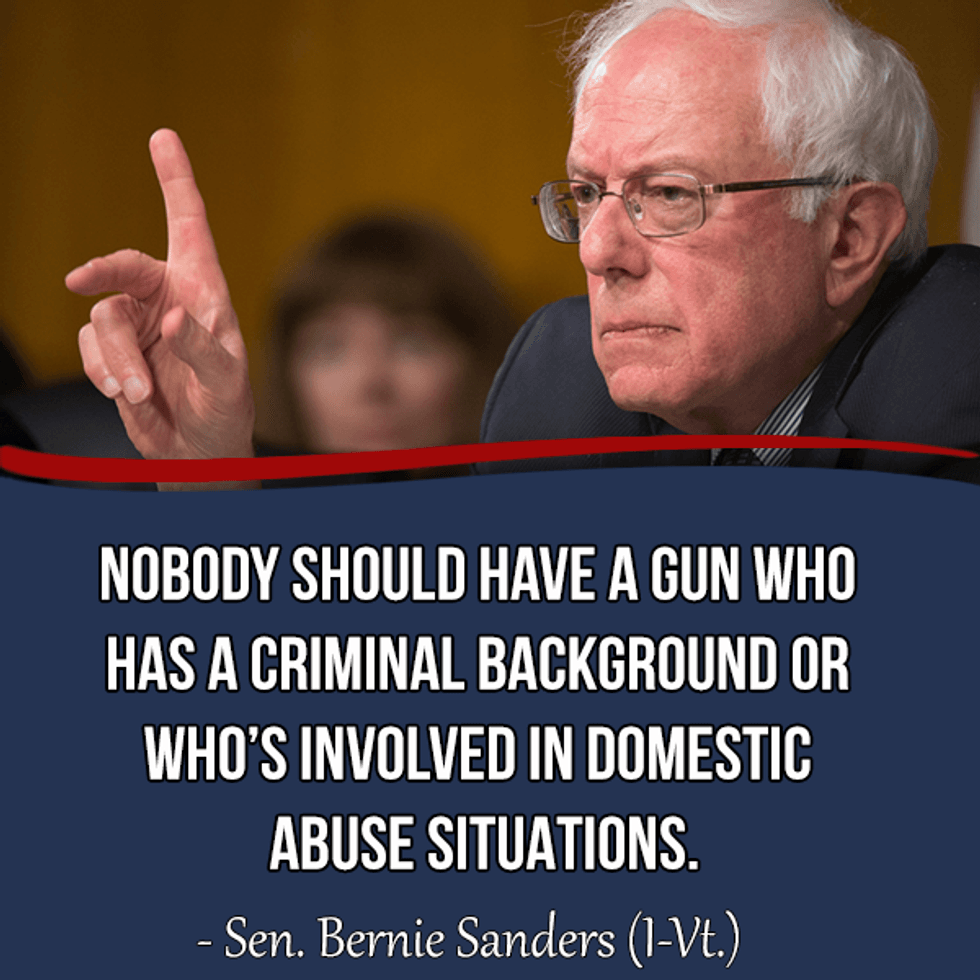
Responses varied from the politicians relevant in office and on the campaign trail. Dr. Ben Carson stated it his belief that even kindergarten teachers should have a gun in the classroom, referencing a possible prevention to Sandy Hook. Donald Trump holds a slightly fatalistic- unchanging events predetermined- view on events like mass shootings and how some mentally ill offenders may "slip through the cracks", while Jeb Bush less eloquently dismissed shootings as "stuff happens," with America being caught in a tired cycle of tragedies. President Barack Obama went to Oregon to console the community in grieving, later encouraging voters to vote for and support people who believe in the same policies.
When interviewed by comedian Marc Maron on the WTF Podcast, Obama vented his frustrations of trying to get effective gun control legislation passed:
"Right after Sandy Hook, Newtown, when 20 6-year-olds are gunned down and Congress literally does nothing, that's the closest I came to feeling disgusted. I was pretty disgusted."
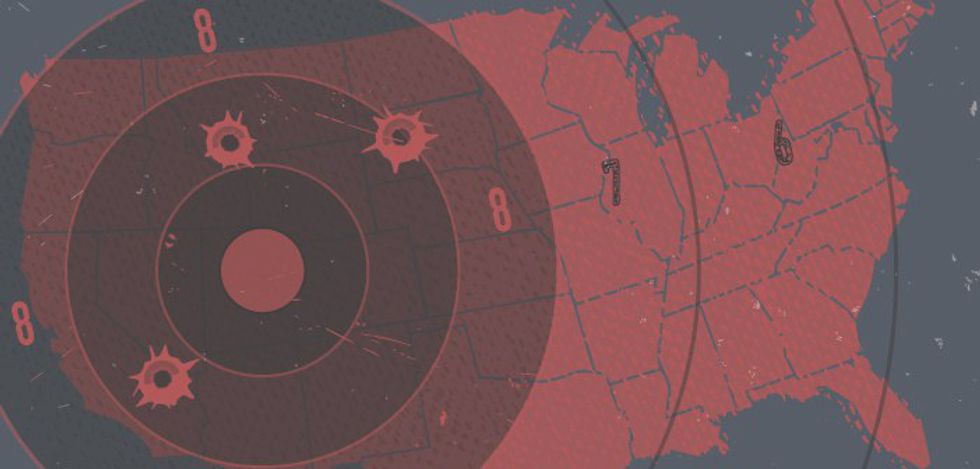
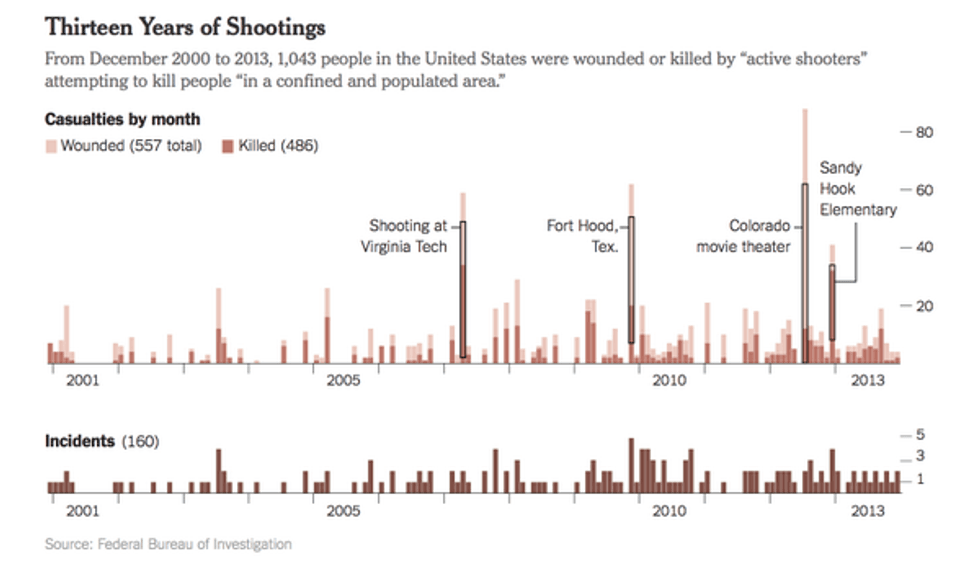
In a New York Times article from September 2014, Michael Schmidt analyzes statistics to show that from 2000 from 2013, 486 people perished in gun related shootings, including Virginia Tech, Aurora, and Sandy Hook. 366 of those deaths were from 2006 to 2013 alone, where the rate of shootings climbed from 6.4 a year to 16.4 in 2007. The FBI, after looking over 160 mass shootings from 2000 to 2013, found these characteristics to be constant: most shootings were relatively short, ended when the police arrived, two out of five times typically ending in the gunmen's suicide; gunmen rarely worked in accordance with others and very few were women; one out of seven times the gunmen attacked more than one location, with 45% of targets being offices/stores, and 25% of targets being schools.
In response to the Charleston shooting, the Los Angeles Times published a more recent study, stating from 2011 to 2013, “there was a mass shooting in the U.S. once every 64 days, on average.” Continuing with statistical evidence, Melissa Healy reported that 195 people perished from 43 mass shootings between January 1, 2014, and May 26, 2015. The United States' homicides involving firearms in 2013 was estimated to be 11,208 deaths, reported by the Center for Disease Control and Prevention. Furthermore, Healy states the firearms within the U.S. towers at 310 million, according to the Bureau of Alcohol, Tobacco, and Firearms' reports. Dr. Garen Wintemute is quoted as saying: “[Mental illness] is a minor contributor to violence on a large and small scale…Mass homicide in the U.S. is a firearms phenomenon.”
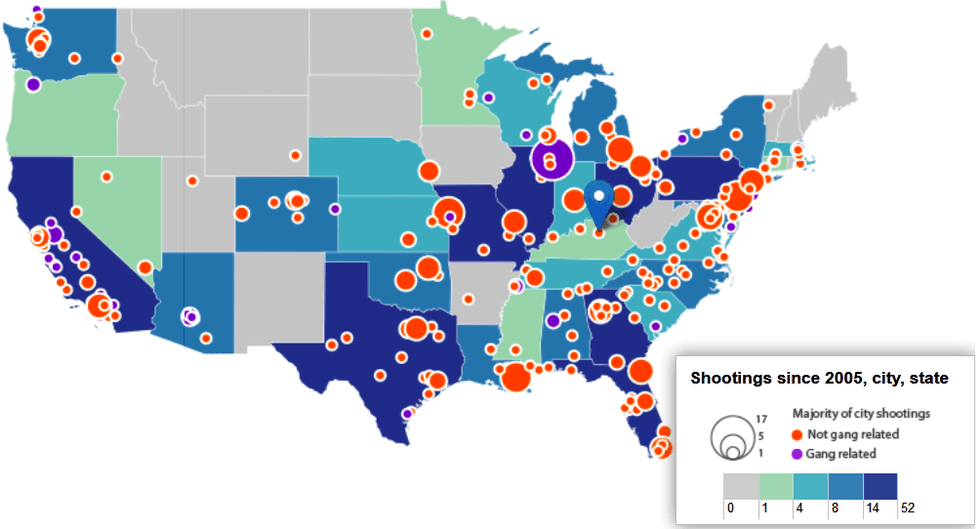
Documentary filmmaker Michael Moore tried making sense of America's globally leading death count caused by guns in his 2002 Academy Award-winning film "Bowling for Columbine," the title a reference to the early morning bowling class the Columbine shooters were enrolled in. Moore opens the film with him receiving a free hunting rifle for opening an account in a Michigan bank. Later in the film, a montage, hauntingly played to Louis Armstrong's "What a Wonderful World," timelines America's brutal practices of war all over the world, its involvement with the numerous installations and trainings of dictators and future enemy groups, and the events' resulting casualties (The imagery in the video may be graphic). The proceeding sequence then contrasts how most other countries are exposed to the same violent media as Americans, possess more broken family structures and higher poverty rates, but still do not even touch the United States' figure representing annual gun deaths, at the time: 11,127. After the Aurora shooting, the United States' gun deaths stood at 9,146, trailing only a handful of lesser developed countries with destabilized governments, but still leading all first world countries by a ridiculous margin.
President Theodore Roosevelt's most notable words, from a speech during his vice presidency, were to "speak softly and carry a big stick." Stick being a euphemism for military arms, Americans have been doing all of the talking using only their "boomsticks" for the last 114 years. Moore examined America's gun culture, the tool's over glorification in our society, and several laws pushing gun ownership. Analysis into comparative homicides between the cities of Detroit and Windsor, Canada, concluded with Detroit yielding astoundingly more deaths; the cities are only separated by a bridge and Moore counted there to be 7 million guns in nearly 10 million Canadian homes, out of the population of 30 million at the time. America was literally founded off of war, gaining our independence by breaking off from England. Its everyday citizens are seemingly prepared to fight one at a moment's notice too, as shown when Moore interviewed National Rifle Association president, actor Charlton Heston, who admitted to having loaded guns in his house despite never being a victim of crime; he had them prepared just because he could. Violence is so deeply rooted within American culture, Moore noted the simultaneous occurrence of President Clinton's bombing of Serbia and the Columbine shooting with musician Marilyn Manson, an icon incessantly blamed for negatively influencing teenagers.
Who exactly are these mass shooters? These men, who transform into monsters the moment they squeeze the trigger, that gain so little from taking so much away from the friends and family of the victims. It is very difficult to pinpoint clear outlines of past shooters that form a definitive profile. A LiveScience article from 2012, responding to the Aurora shooting, pointed out the inaccuracies of assuming mass shooters are generally "white males between 20 and 30", who target specific people at specific places, or are social outcasts or loners. The who, what, why, when, where, and how can be completely random! Notable mass shootings in recent history are only cherry picked facts for these generalizations. Although many shooters were white and fell in that age range, the Virginia Tech shooter was South Korean and the Columbine shooters were 17 and 18. Exceptions are made as correlation does not mean causation, shown by the series of shooters' potential mental illness.
The population of mentally ill citizens in the U.S. are largely nonviolent, with violent offenders being a miniscule percentile. If the shooters are severely disoriented by any mental conditions, they are not representative of the rest. In a study by Dr. Jonathan Metzl, four false assumptions on mass shootings and mental illness are formulated:
"(1) Mental illness causes gun violence,
(2) Psychiatric diagnosis can predict gun crime before it happens,
(3) US mass shootings teach us to fear mentally ill loners, and
(4) Because of the complex psychiatric histories of mass shooters, gun control 'won’t prevent' another Tucson, Aurora, or Newtown"
Metzl concludes that American gun violence is an entirely separate entity from a mental health issue. He argued shooters are not products of living loner lifestyles- most shooters have friends, despite any classifications of popularity- and are more so created from the cultural and political climates. Portrayals of schizophrenics are overly exaggerated in the media, labeling the people with it as incurable psychopaths; again, only extreme cases of schizophrenia or any mental illness exhibit violent behavior. Lastly, Metzl describes mass shooting phenomena as the time when social subjects such as mental illness are thrown into the spotlight to avoid discussing the real issue at hand: the guns.
A Supreme Court verdict on a Chicago case challenging assault weapons ban may cause a rollover effect in seven other states; mass shooters tend to use semi-automatic assault weapons or pistols with extended magazines to hold more bullets. Although controlling what types of guns are sold, that does not fully prevent any and all future shootings; there will always be people wanting to lash out at others in explosive ways, violent and hurtful ways. Democrats, since the beginning of 2015, have been pushing to limit the sale of firearms capable of holding more than 10 bullets. If anything, there should be more laws regulating how many bullets someone can buy.
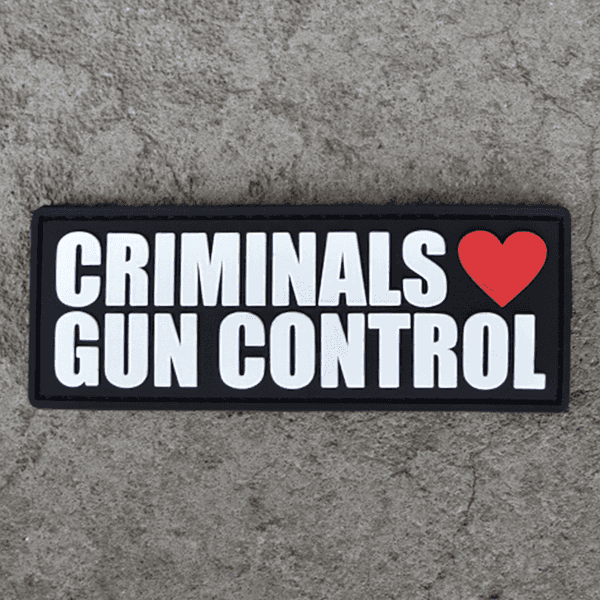
The Charleston shooter was capable of reloading his pistol twice when firing on the church members. Controlling legal gun purchases may prove to be impossible. Criminals will always find ways to get their hands on guns; the demand for something unattainable or illegal always creates a black market for trades. 3-D printed guns are even being made or sold as digital blueprints. The bullets the Columbine shooters used were bought from K-Mart, with no background checks necessary; K-Mart stopped selling firearms and ammunition after Michael Moore's advocacy against it. Business Insider estimates that gun stores in America outnumber grocery stores by about 15,000, Wal-Mart being one of the arms distributors. The guns are only the instruments enabling people to kill. The bullet does the real damage. Put the bullets under watchful eyes and maybe we will start to see some change.
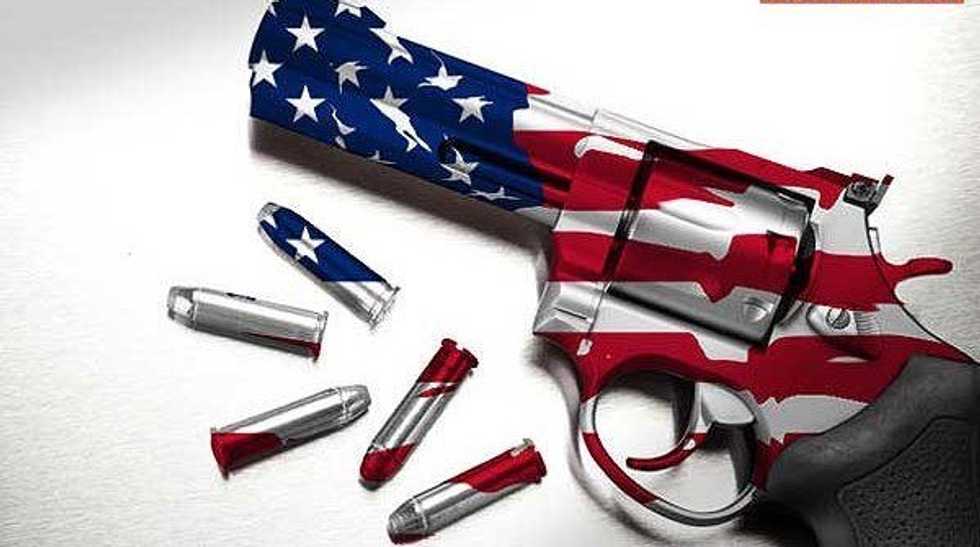
The gun is an oddity. Engineered by men, one of them named Colt, we ironically live in the land of the gun. We inhabit its domain, like it has always been that way, acting as subservient masters. The gun does something funny to us, exclusive to America apparently, makes our fingers twitch, itch to press down on the metal firing mechanism. We believe it to give us power. Makes us feel big and bad and invincible but we lose sight of how drunk we got off these complexes. Intended for self-defense, it is always re-purposed for an offensive front. And whatever is released from the gun, never goes back in...