

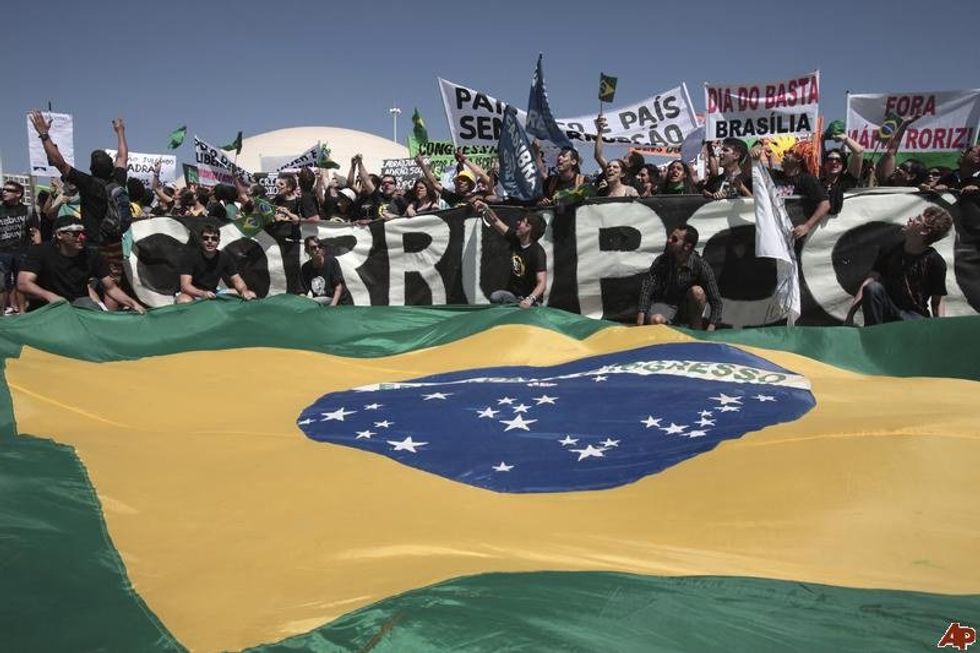
As Brazil gears up to host the 2016 Summer Olympics, it’s also experiencing a severe case of Murphy’s Law. The country is facing a severe recession, the possible impeachment of its president and pressure to contain the deadly Zika virus, which started on Brazilian soil. In the past six months, the country has been downgraded by Fitch, Moody’s and Standard & Poor’s to non-investment grade.
At the center of the nation’s political corruption is a $2 billion scandal involving the state oil company, Petrobras and a number of construction companies that have been exceptionally busy in preparing for this summer's Olympic Games. It’s alleged that politicians worked with Brazil’s most prominent construction and engineering executives to increase the value of their companies’ contracts.
President Dilma Rousseff, along with hundreds of other top businessmen and politicians, are facing the possibility of long jail sentences for crimes including tax evasion and money laundering.
On Tuesday, the Brazilian Democratic Movement Party, a key role-player in Rousseff’s reelection, announced it would no longer support her government. This makes her impeachment likely within the next year, and investors are gaining the confidence to make the investments needed to get the country back on track.
Despite being in the middle of its worst economic recession in 25 years, many people are optimistic about the future. The United States’ recent decision not to raise interest rates will help alleviate outside pressure on Brazil’s economy. The Brazilian Bovespa stock index is up 19 percent this year, making it the best performing stock market in the world. Brazil's real (their medium of exchange), the worst performing currency in 2015, is up nearly 10 percent this year, indicating that the move toward political stability will have a strengthening effect on the economy.