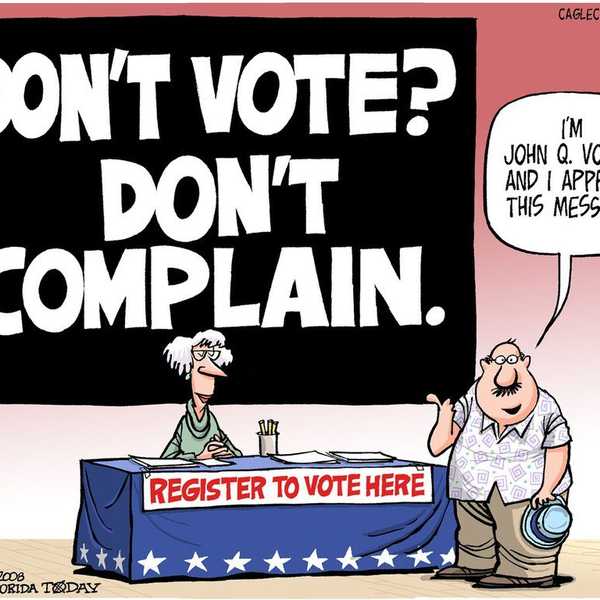

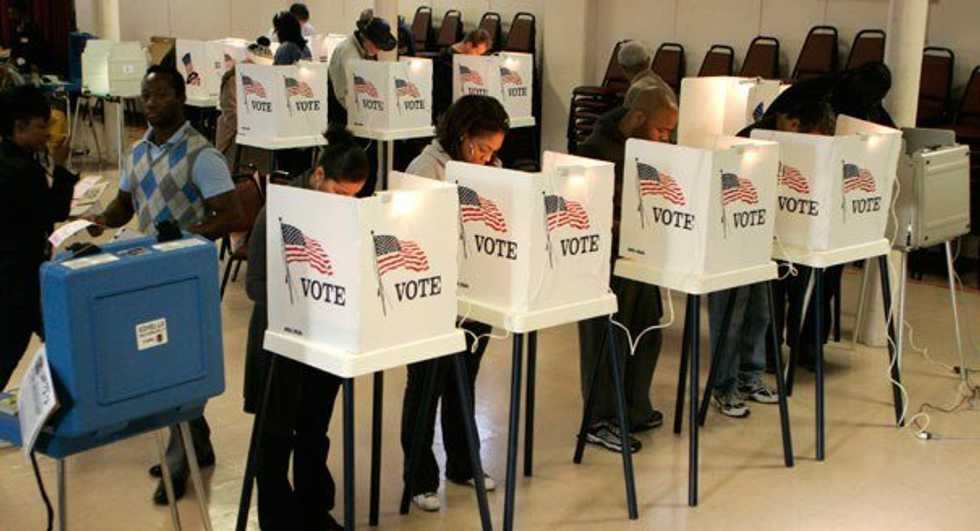
Voting: it's the most democratic of institutions, and yet in our democracy, there seems to be very little of it. In the 2014 midterm elections, turnout was estimated at 36.6% across the entire US. "But hold on!," you might say; midterm elections always have lower turnouts than elections during the presidential year. Even taking that into account, the voter turnout in 2014 was the lowest voter turnout has been in 72 years. There are many reasons for such a low voter turnout, and IPSOS found the biggest ones.
In 2012 voter turnout was at 58.6%. So why didn't that 41.4% of voting age US citizens vote? Over 25% of them just were not registered to vote, with 21% of them never getting around to it, 14% who don't care about politics, and 11% who don't believe their vote can influence candidates anyway. 18% of non-voters chose not to vote, and 16% believe their vote won't make a difference. A quarter of respondents also say that they did not vote because of logistical issues, including "not having a way to get to the polls (7%), having to work (7%) or travel (4%)".
Now, at face value, most of these are valid reasons not to vote. Voting should not be in incredible burden on the part of the voter, and the decision between working and voting is a no-brainer for some people. However, this leads to a questioning of the system, and why our election system functions so poorly. States today are experimenting with automatic voter registration or all-mail voting, and some in congress have even proposed a national voting holiday to make it easier for people to vote. However, these movements to make voting easier are not without opposition.
All of our votes do actually matter. Believe it or not the biggest political change happens at the local level, and those are always the best way to really get your beliefs heard and implemented. Here's a quick rundown on your state's voting laws. Now get out there and exercise your right.