
Someone recently asked me, "So, what do you want to do with your life?" and it caught me off guard.
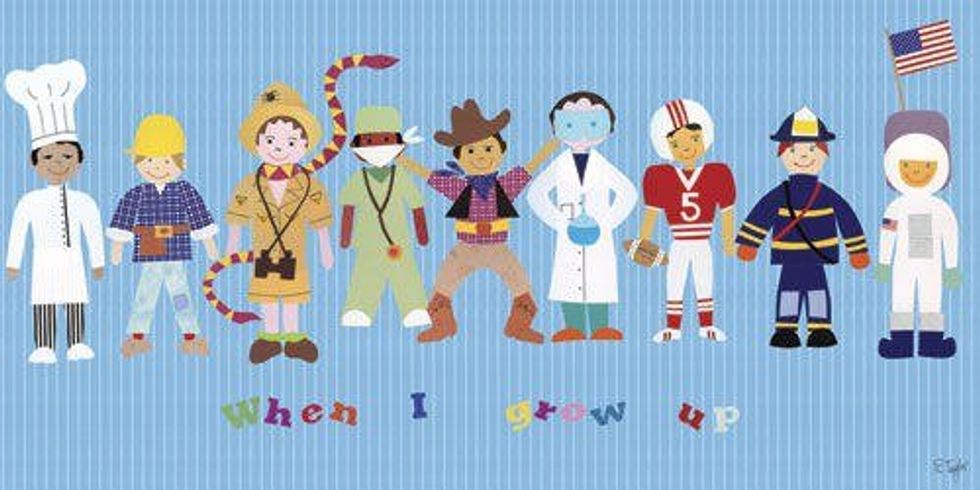
Although I know what I want to do when I graduate, I've never used those words to describe it. Hearing "your life," seems to carry much more weight than when I was a kid and people asked me "What do you want to be when you grow up?"
As he looked at me, waiting for an answer, I started to feel this pressure weighing on me, as though I had to say something profound and appear to have my life together. I’d forgotten that I'd only just met this man, and somehow I was already questioning whether my career goals were realistic and achievable
I did my best to put all that aside and told him about my interests, trying to show him this major life plan, even without the certainty that it’s going to work out.
He was fascinated.
Never had I encountered someone—a perfect stranger even—that was so passionate and interested in what someone much younger than him had to say.
It made me realize how much pressure we put on ourselves. We live in an age where so much is expected from people, and not just average expectations but things that are truly astronomical—like being famous on social media or starting our own company or writing a bestselling novel.
We expect people to be good at just about everything, and jump through hoops to be successful. And along the way we compare ourselves to prodigies or celebrities and feel as though there must be something wrong with us. [If Taylor Swift can have almost 8 million followers on Twitter and more than one multiplatinum album at the age of 25, how can I compete when I’m still learning how to juggle all my responsibilities?
We work ourselves to brim of insanity and statistics show that the number of ADD/ADHD diagnoses has only been increasing over the years.
It's no wonder so many of us get this childlike feeling of inadequacy when we have to present ourselves professionally.
We’ve created this stigma that we must have so many different talents/skills in order to be marketable to an almost impossible job market. And it’s creating an unhealthy level of competition.
Despite hearing how excited this stranger was about my goals, our conversation was still like a wakeup call that my dreams might not work out. My plans after college will most likely change, and it's going to be really hard and maybe even a little scary in the real world.
I'm not sure what the answer is to help our society relax a little, but rather than stressing about all the reasons I’m not good enough, or why other factors might keep me from achieving my goal, I’m going to start responding with "When I grow up, I want to be happy and healthy."
See how people react to this response. Perhaps it'll make them rethink their own priorities.
At the end of our conversation, the gentleman smiled and said, "I know you're going to do great things."
Those things may not be the same tomorrow, and they may not even be so great an hour from now. But even so, thank you, kind stranger. I also hope I do great things