
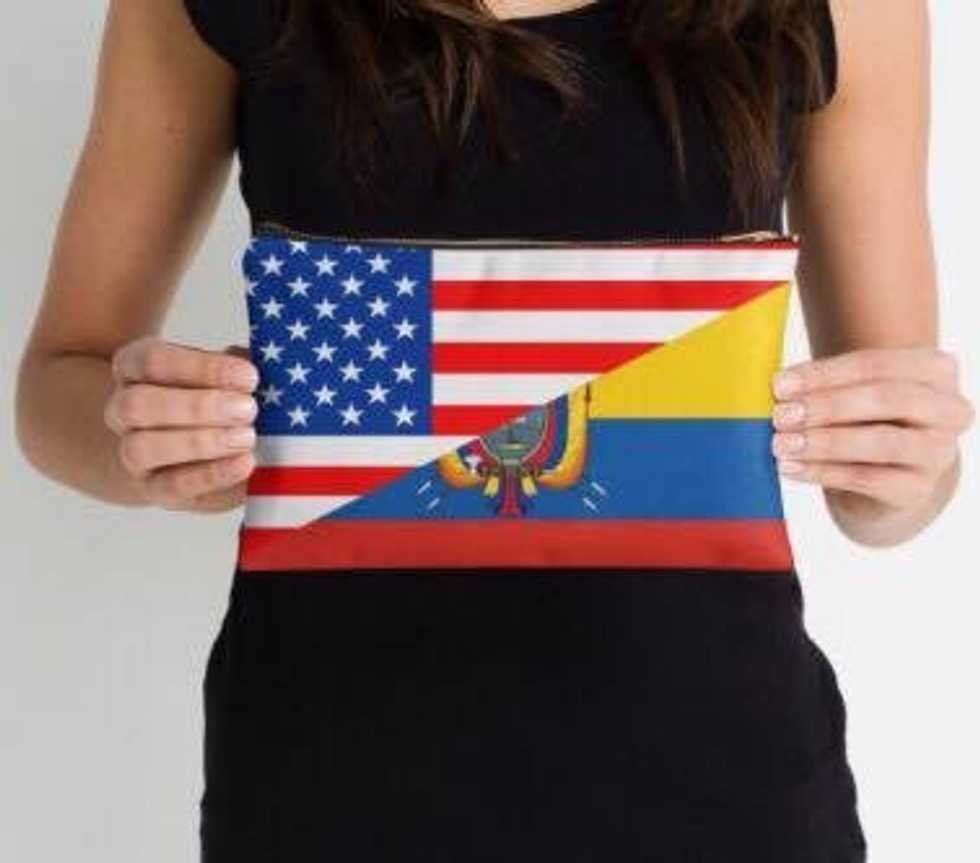
This Independence Day will mark the 23rd and 24th year since my parents immigrated to this country in search of a shred of a chance to improve the lives of their future children. My parents were a lot like yours, probably. They were young when they sought out further education and sustainable work. Taking English classes in the mornings and weekends while working starter-level jobs in the evenings was their routine. Looking back, I can relate a lot to their livelihoods as I take courses in the mornings and afternoons and work different jobs evenings and weekends. When I confide this to them, they stop me. "Your life may be starting out like ours," they say, "But if you work and seek opportunity, you will succeed in greater ways. And all of our sacrifices will have been worth it." No pressure, of course.
I was one of the first in my family to be born in the United States. Along with new-parent anxiety and sleeplessness, a newborn child in their lives gave my mom and dad hope. My parents would send pictures back to our family in Ecuador so that they could meet their first-born. Similarly, my close cousins' pictures were mailed over. A birth in the family is always a deep and unique joy. The celebration seemed amplified in the case of me and my cousins in the U.S. Navigating a new life in the U.S. with a new generation of children undeniably fell within the category of unknown.
Being born and raised in the U.S. is a blessing. Growing up, I would overhear my parents talking about their childhoods and how young they were when they lost them to hard labor. It was hard to take things like school lunch or summer camp for granted knowing that my parents had to find jobs and end their schooling as young teens. I felt they had given this gift to me by having me here and keeping me here instead of abandoning their American Dream and returning to our native country.
I knew my parents hopes for me since I could write my name. At a young age, I set my mind to going to college and graduate school after high school. My outlook was that everyone had the opportunity to apply themselves towards their education. Being born in the U.S. felt like a responsibility. My job was to always earn the A+ and to excel in every way I could in order to prepare myself for the future and to make my parents' efforts worthwhile. Today, I realize that the most fulfilling learning experiences don't come from maintaining perfection, but from recovering from failures.
Had I been born in my parents' native country, I don't think I would be unhappy. It would have been a different life for us. I probably would have been more involved in my family's agricultural lifestyle. I believe my parents, wanting the best for me, would have helped me get through high school and college, if financially possible. Life outside of this land of greater opportunity is almost unimaginable, and the only surviving piece of our lives would be the love we share for each other as a family.
For us, the U.S. is a dream. But that doesn't mean it is a paradise.* As we are now in a place where we meet our basic needs, different issues arise. The nation is becoming more aware of various social, economic, and moral ills that pollute our visions of fruited plains. Hostility fills the media, only agitating people's fear and anger. For the first time, I feel that many people in this country may resent my existence simply because of my Hispanic heritage. In the midst of political and economic unrest, it is difficult to be optimistic about the state of our nation.
Whether or not my optimism is realistic or not is ultimately up to you. Since birth, I've had faith in this melting pot that my parents joined. Our country is strong because of our mixture of beliefs. No matter the adversities that face us, we find the will to push through the worst situations and rebuild. Our work ethic is unmatched when we truly challenge ourselves.
For me, being born in the United States is a chance. It is my opportunity to have a voice in society through open press and voting rights. It is my gateway to giving back to the community I came from so that others may find their way towards higher education. It is the freedom to have differing opinions and live in a place where I can use them constructively alongside my peers' views.
Being born in the U.S. made me the best I could be.
*Quote derived from 2016 Stanford Bioengineering Commencement Speech by Wenying Pan.