I went to Baton Rouge to take part in the Black Lives Matter protests on July 11, six days after Baton Rouge police shot and killed Alton Sterling, and six days before Gavin Long shot and killed three BRPD officers.
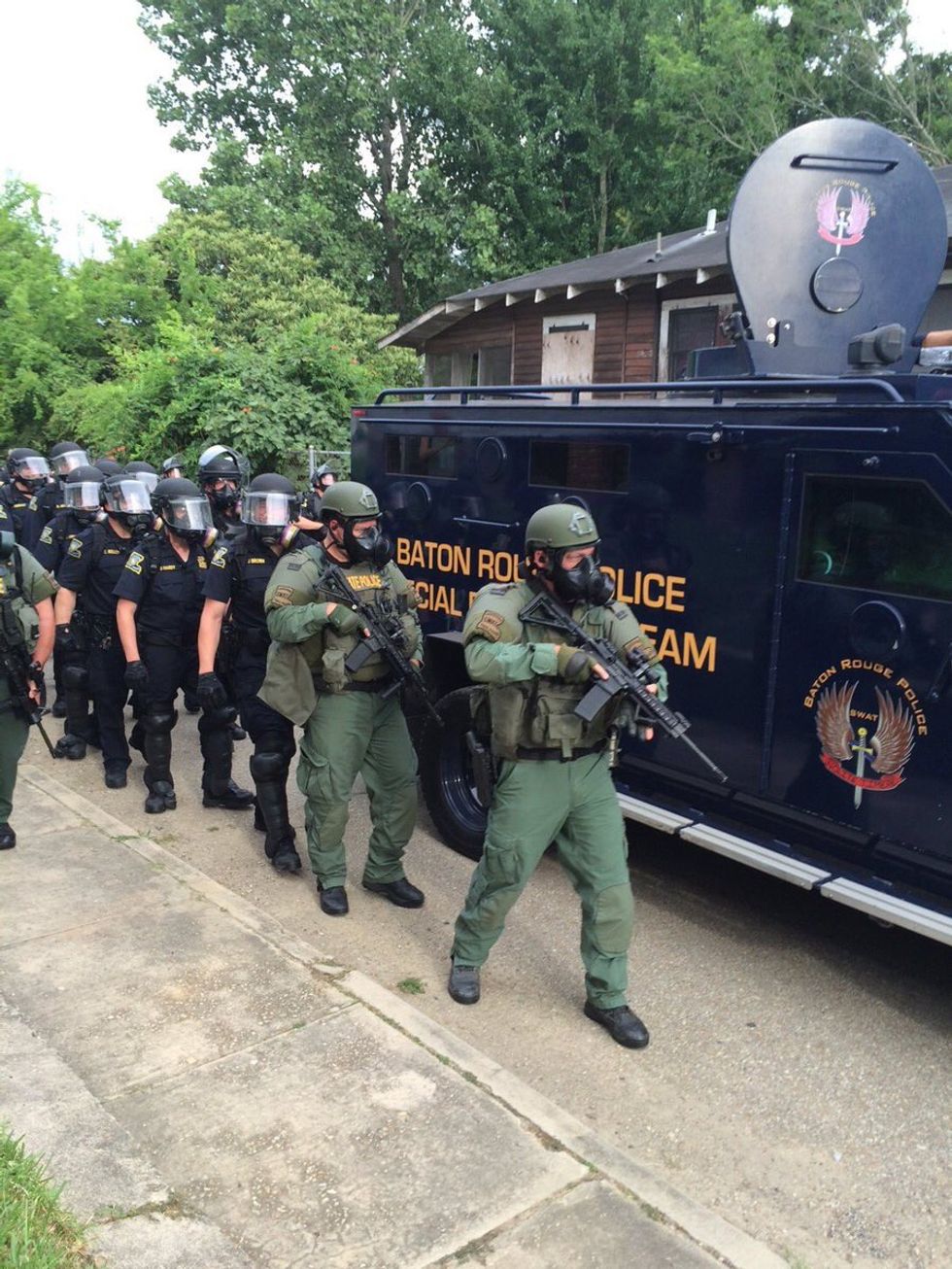
If I hadn’t gone to Baton Rouge myself, I don’t know what I would think about BRPD’s militarized response to protesters. I might have believed their claims of protester violence toward officers, without considering the absence of photo evidence or the fact that none of the 48 arrests made that day were for violence toward officers. I might have believed that protesters were trying to advance onto a highway, if I hadn’t seen for myself that protesters with no intention of doing so were being arrested for exactly that. I might have understood why officers would arrest people for being in the middle of the street, if I hadn’t seen for myself that the police had chased protesters out of private property (onto which the protesters — but not the police — had been invited) and into the street. I might have believed that the police launched a militarized response because they were facing a violent crowd, if I hadn’t seen for myself the peaceful crowd BRPD surrounded and then advanced upon in full-scale riot gear.
BRPD chief has defended the department’s militarization, claiming that it actually saved lives on the day Long attacked BRPD officers, but I wonder if that militarization wasn’t part of Long’s motivation. Had BRPD expressed remorse or regret or at least sadness regarding Sterling’s death, had BRPD acted as if black lives mattered when dealing with protesters in the days following Sterling’s death, had BRPD worked to acknowledge and de-escalate the anger of its citizens instead of going to war with them, would Long have still attacked?
Long didn’t identify as part of the Black Lives Matter movement, nor as part of the protests in the wake of Sterling’s death. Yet he targeted BRPD because of their treatment of the black community. If BRPD Chief Carl Dabadie had clearly denounced officers’ use of excessive force when dealing with black citizens, instead of defending and escalating that force, would Long have felt the need to shoot?
There’s no way to know the answer to that question, but we do know that militarization increases the likelihood of conflict. We do know that people turn to radical actions when that is the only means by which they feel they will be heard.
Long’s actions were wrong. He hurt individual people and families, he hurt the Black Lives Matter movement because so many people unfairly blame BLM for his actions, and he hurt the city’s healing process by re-injecting fear and violence into the community. But so were Dabadie’s actions. He hurt individual people through unfair arrests (consider how few will be prosecuted — even BRPD knows these arrests were bogus), he hurt the Baton Rouge Police Department by eroding any trust the community still had in them, and he hurt the city’s healing process by re-injecting fear and violence into the community.
Going to Baton Rouge and seeing the protests — and the police response — for myself was an eye-opening experience. I was reminded of the importance of bearing witness firsthand, instead of trusting news sources that tend to favor “official” accounts even without corroborative evidence. I was also reminded of how dangerous fear can be if we let it dictate policy. When Dabadie and BRPD responded from a place of fear, they escalated the situation in Baton Rouge. Had BRPD prioritized their duty to protect and serve instead, the protests in Baton Rouge could have brought the city together the way similar protests did throughout the country. These lessons feel especially important as Donald Trump uses inaccurate or misleading statistics to scare Americans about the state of crime and the impact of immigration on our country. We need a leader who can work to heal and unify our country by building respect, not a leader who uses fear as an excuse to militarize our police forces and our citizens, escalate internal conflict, and declare war on sects of our society.