A poor man is like a foreigner in his own country.
-Ali ibn Abi Talib
Yesterday, there were three pairs of boots on my roommate's bed, ordered online to try on for size and send back. I thought about how the net cost of those boots was almost certainly more than the total amount in one of my parents' bank accounts.
In my Spanish conversation class, we went around the circle and were asked what we did over winter break. "Fui a New York." "Viajé en Scotland." "Visité mi familia en India." I went home to Montana and felt lucky, very lucky.
My close friend committed suicide last semester. After the endless waves of initial grief, realizing I wouldn't be able to go home for the funeral sent me into another panic attack. I knew my parents couldn't afford another plane ticket for me. (After finding out about my situation, my cousin offered to pay for the one-day trip home, refusing my offer to pay her back over the next year or four. There are not enough words in the English language for gratitude.)
1 of the 1,000,000 hugs I'm going to give my cousin the next time I see her.

I am not poor, exactly. I never worried I wouldn't have enough to eat. I always knew I would go to college because my mom and dad met at Dartmouth, and I was a valedictorian, and higher education felt like a foregone conclusion. I lived in a real house for my whole life. My father is paying for my undergrad education. I am white, and cis, and have a loving family, and in many respects have been very privileged and very, very lucky.
But there is a difference between "not being in poverty" and "being financially secure," and I walk the fine line between those two states. I don't have to worry about my tuition, but I do--because if it wasn't for some very generous financial aid, I would not be here. Because I know that even with a greatly reduced tuition price, going to an expensive out-of-state college is a huge strain on my family's finances. Because I could have gone to my hometown university to save money, and part of me still whispers that I'm selfish for leaving. What if I don't make something of my major? What if my dad, who worked so hard as a single parent for years, feels burdened by my choices? What if I fail?
And most insidiously, what if I don't belong here at all?

I realize now, of course, that it's not really reasonable to be mad at someone just because they're a rung or two higher on the socioeconomic ladder. And as I slowly opened up about my frustrations, my envy, and my futile attempts to make myself a beautiful and wealthy collegiate, I began to realize that a lot of people feel out of place at the Scripps Country Club. I wasn't the only one with $20 sneakers and secondhand clothes (though I challenge anyone at the Claremont Colleges to rival my hand-me-down collection.) I wasn't the only one who couldn't afford plane tickets to Cambodia, and I certainly wasn't the only one hanging on the thin thread of financial aid.
I'm still fighting my overspending habits, and my star-crossed love of expensive Thai food is destined to be thwarted. I've run out of both money and excuses, and I'm tired of feeling insecure about my financial situation. But I'm starting to understand that most people won't give a damn if your clothes come from Target, or if you can't afford a Starbucks latte or a good burrito. And most importantly, I understand that if you got into college, you deserve to be there, however alien you may feel.
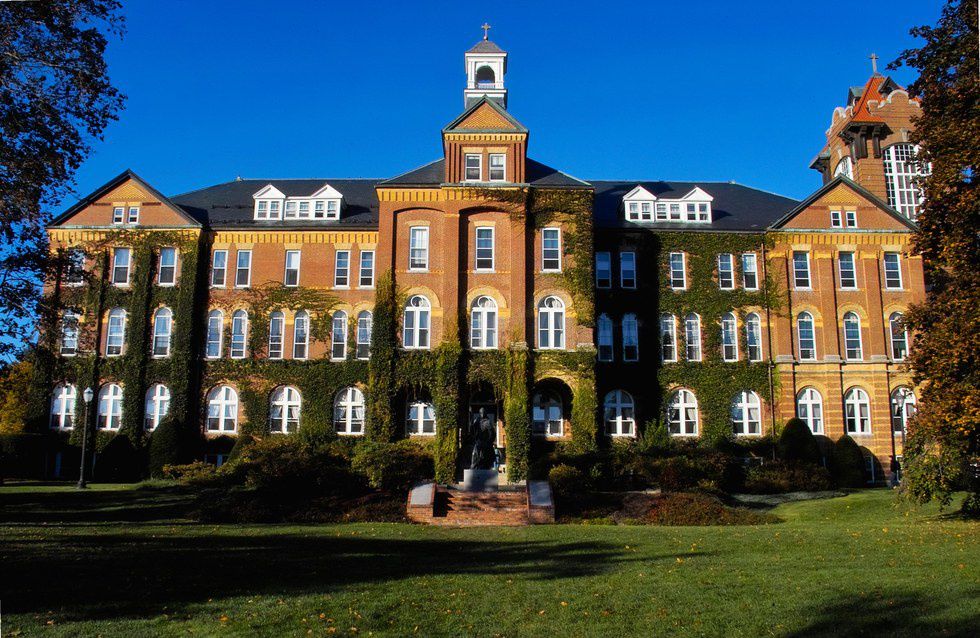
But to be frank, many elite colleges--including Scripps--still have a lot of work to do when recruiting and taking care of students with lower income levels. According to the Hechinger Report, "higher education has become more segregated than ever by wealth and race as state funding has fallen and colleges and universities... are shifting financial aid from lower-income to higher-income students." Economic diversity is essential to deepening a student body's understanding of the world, and lower-income students provide a needed perspective on issues of class (and often race, as a disproportionate number of lower-income students face the additional obstacle of racial bias, and the two issues are inextricably connected.) Until an elite institution has a need-blind admissions policy, it is impossible to claim they have a truly diverse campus. And without more initiatives to help lower-income students find community and solidarity at elite campuses, many students will feel as confused and alone as I did.
So, to college administrations: step up your game. You're neglecting a valuable group by not having need-blind admissions and not actively fostering a healthy and supportive environment for lower-income students.
To the poor kids, and the ones who feel like aliens: you're not worth less than anyone else around you, and don't forget it. Don't pretend to be something you're not. You're doing yourself a disservice.
To the rich kids: you're pretty okay. You have your own problems, struggles and sacrifices. But always be aware of your privilege. Understand that not everyone has the same opportunities you do, and never take them for granted.
(Also to the rich kids: I don't know, maybe you could spot me some Thai food every once in a while. I'm told there is nothing in the world so delicious as charity.)