


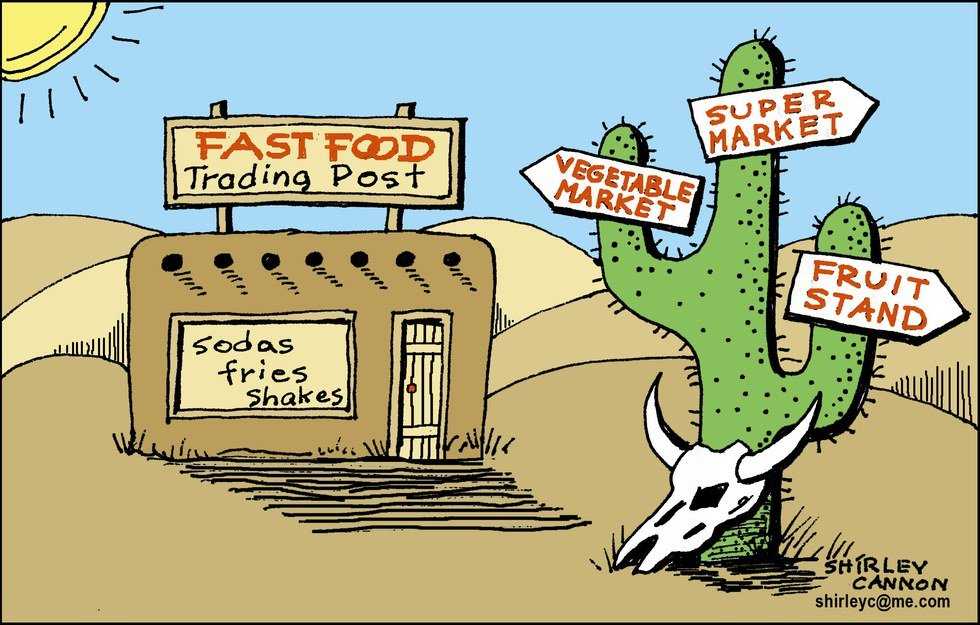
Grocery stores. They seem like such a basic amenity that most people don’t think twice about. Who would have known they are actually unavailable to many communities across America.
Believe it or not, the food fairy does not magically re-stock our pantries and refrigerators with milk, bread and vegetables. In most cases, parents will deal with grocery shopping and preparing meals, but how do you go about handling food when you don’t have access to… a grocery store?
Food deserts are urban neighborhoods and rural towns that don’t have access to supermarkets to provide affordable, healthy, fresh foods. These communities usually only have access to quick markets such as gas stations and fast food restaurants. Typically, these are impoverished areas where obesity is on the rise and general health is on a downwards spiral. Sugary, processed, fatty foods sold in quick marts and fast food restaurants make it difficult to lead any other kind of lifestyle. People living in such places usually have to take multiple buses to next-door cities to get access to fresh produce.
When I first came across the concept of food deserts I was completely taken aback. I couldn’t understand how a community could function with zero access to fresh fruits and vegetables and other necessities for healthy eating and living. I grew up with my mom always feeding me the ‘eat your greens’ speech every chance she could get. Of course like any normal youngin’, I despised anything but junk food. I never thought there were people in the United States that would rather eat fresh vegetables over fast food if they had the chance. The analogy almost reminds me of the way people compare how lucky we are to attend school to children in third world countries who never get the opportunity to get an education. Key-phrase; third world country.
America is the farthest thing from a third world country. We have everything at our fingertips, yet there are still communities struggling just to get their hands on fresh foods.
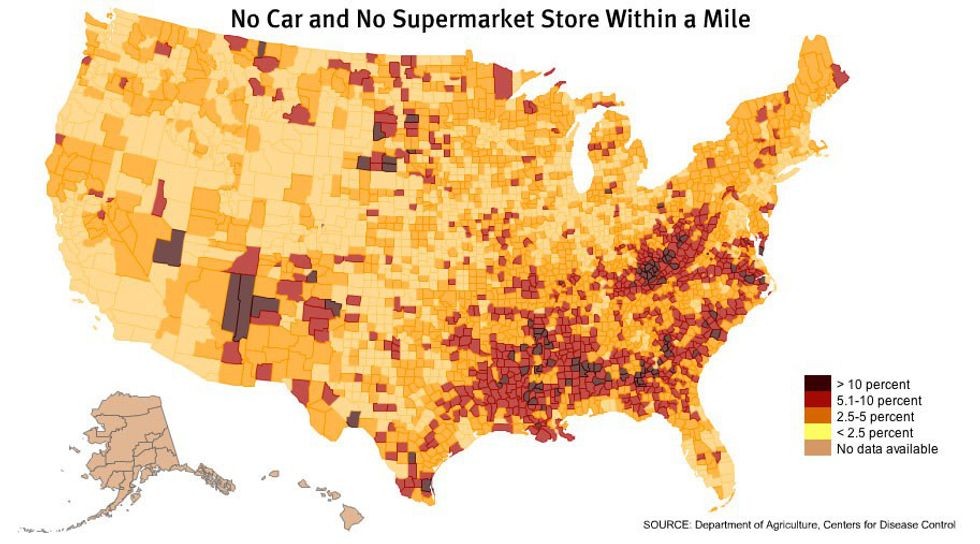
Grocery stores, unfortunately, are not the only aspect of eliminating food deserts. Eating habits have shaped the way such societies and people view grocery shopping and cooking in general. Visit the Food Empowerment Project website at http://www.foodispower.org to find out what you can do to help combat such health problems as obesity and diabetes due to nutritionally inadequate diets. Educating people about healthy eating habits and the initiation of grocery stores in food deserts can help improve and hopefully eliminate these unsatisfied communities.

















