


I live in a city that is estimated to have a population of over 8 million. New York City is a small space that is home to a lot of people. I live in Brooklyn, and there is no place I would rather live. I love the hustle and bustle, the fast pace, the way you can experience five different cultures in a five-block radius, the endless number of restaurants and cafes and the endless number of new opportunities and experiences that the city has to offer. I also love the crowds of people.
I can’t tell you the number of people I pass on my commute to and from work every day, but I know it’s a lot. Each one has a story. Every tired face, every smile, every grimace, every creased forehead, every smirk and every curse mumbled has a reason and a story behind it. Sometimes, I wish I could have a peek into the life of my fellow train-riders. Where are they going? Where do they live? Where are they from? What are their hobbies? What is it that brought them to this exact seat, sitting across from me on the train?
Consciously — and sometimes unconsciously — I am constantly assessing and drawing conclusions about the people I see. Sometimes, I may be right about the conclusions I come to, but at least 95 percent of the time, I am probably wrong.
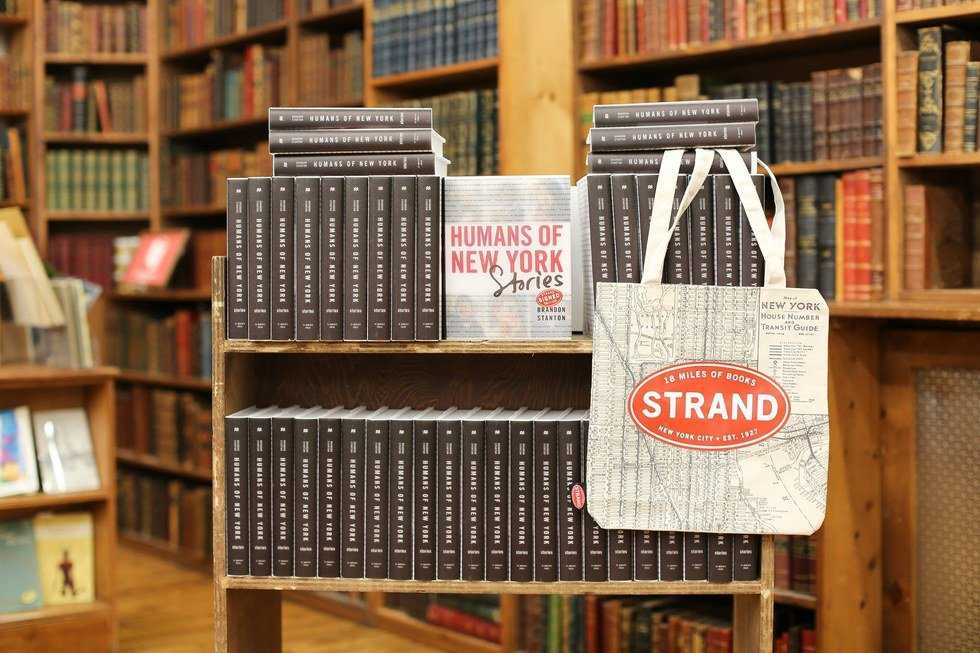
I became more aware of my unfair presumptions when I began following a photographer by the name of Brandon Stanton. Of course, when I started following him, I did not actually know who was behind the camera; I only knew him through his Facebook page – Humans of New York.
HONY, as the site is often referred to, was started in 2010 when Stanton moved to New York and set a goal to take 10,000 photographs with the city as his backdrop. His project quickly turned into not only photographs, but quotes and short stories from those he was photographing.
There have been numerous times when I’ve seen one of his photos, come to my own conclusion about the person I see in the photo and then read the caption and realized that my conclusions were completely wrong.
HONY has taught me to look at those strangers I pass every day with less judgment and more curiosity. What caused that person to give a dollar bill to the homeless man on the street, while another walked by callously? What did that person just see on their phone that made them laugh, or cry?
We are all living out our own stories and acting on our own individual feelings and experiences. Judging others simply by what we see is wrong and only hurts us — yet it seems to be a perpetual problem in our world.
Be someone who gives compassion, forgiveness and second chances to everyone – friends and strangers alike. This world already has enough people who act on their wrong assumption far too often.Here a few of my favorite HONY posts:

“I’ve
always believed in heaven. But it was so hard to lean on that
understanding after my father passed away. I was a Daddy’s girl. His
death was an emotional clusterf*ck. I could close my eyes and imagine
he was somewhere else. But for the first time in my life, I couldn’t
pinpoint his location on a map. And even though I’d taken an astronomy
class in college, I couldn’t find him with a telescope. His absence was
so much more real than I thought it would be. And it really shook my
beliefs. I had to form a deeper understanding of what exactly ‘heaven’
means. And I’m still working on that. But I do still talk to him
everyday. And I still believe that I’ll see him again.”

“I
was working as a school safety officer when I met her. She was a
teacher. But she kept working her way up. She became a principal. She
went to work in the central office. She got her doctorate. Eventually
she became the highest-ranking black woman in New York education. She
was always taking that next step. I was working as a custodian when we
got married. She was making five times more
than me. It bothered me at first. It took some counseling to convince
me that she hadn’t ‘settled’ for me. I’d been raised on the idea that
the man was supposed to provide. But eventually I came around to the
idea that money wasn’t the only way to provide. I could support her by
doing chores, or taking the kids to school, or picking her up from the
airport. Her work benefited all of us, so I could help provide by
making her job easier. And eventually she inspired me to want more for
myself. She’s the one that convinced me to go back to college.”
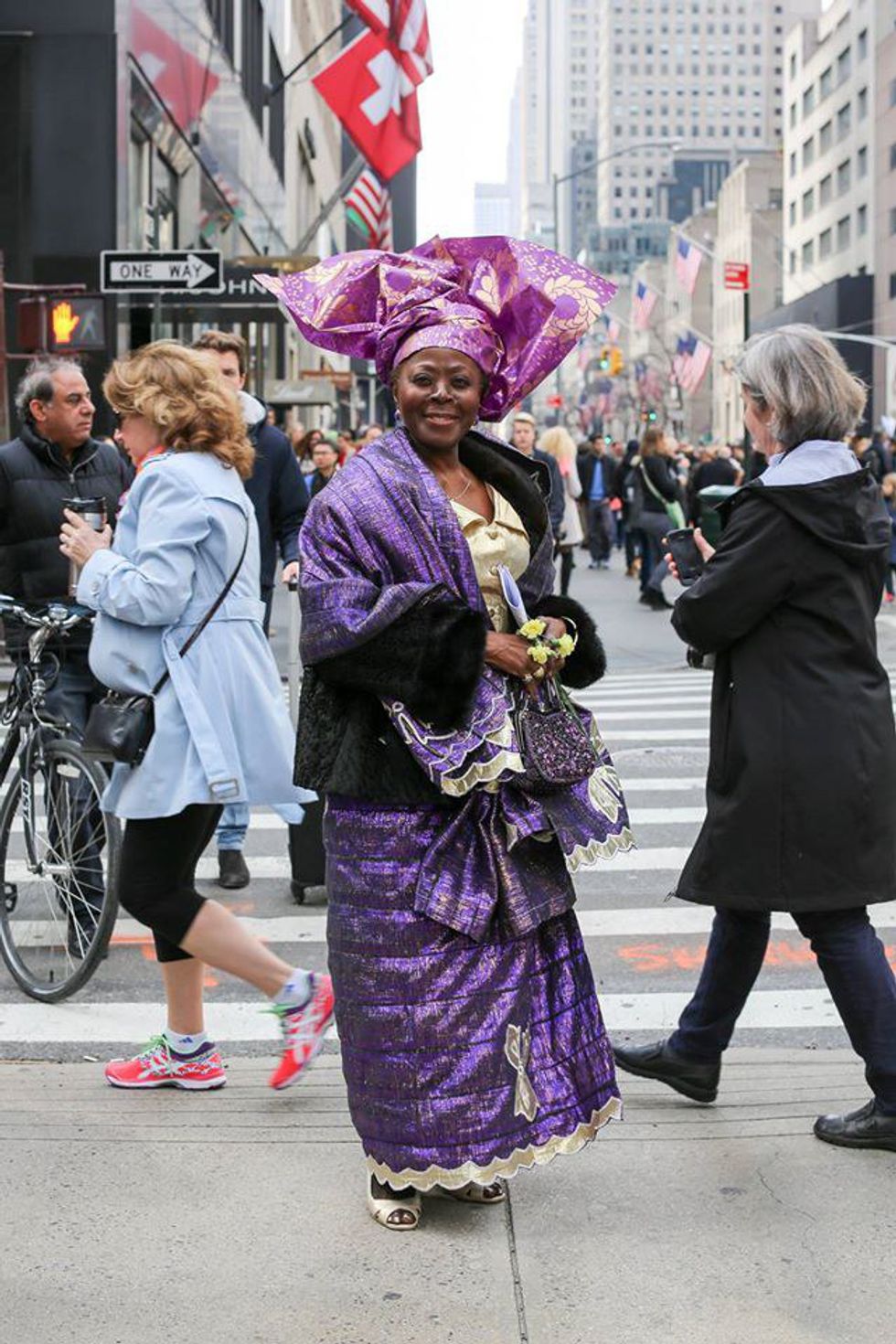
“I
emigrated from Liberia at the age of eighteen, and a lovely Jewish
family took me in and helped fund my education. Their names were Anne
and William Rothenberg. They had never even met me before. But they
allowed me to live with them and introduced me to everyone as their
daughter. They would never explain beyond that—it was always just ‘our
daughter.’ It was so fun to see the confusion on people’s faces.
They’ve both passed away. But a few years ago I started a scholarship
fund for Liberian children, and I named it after them.”

“I’d
always wanted children, but I just never met the guy. So I decided to
go to a sperm bank. I started trying when I was 42, and I had her when I
was 45. People always ask me if it’s hard being a single mother. I
say: ‘Yes. But not as hard as it would be if I didn’t have her.’”

“I
went to pick up my daughter and my baby’s mother wouldn’t let me in the
house because her new boyfriend was over. I’m trying to get in the
door, she’s trying to keep me out, and she ends up on the ground. The
police came and got me the next day. They had a picture of my baby’s
mother with a single cut on her forehead. My heart sank. My public
defender was very nice. She said she believed
me.
Every time she interrogated my baby’s mother, the story kept changing.
First it was I pushed her. Then it changed to I threw her into the
wall. Then it changed to I punched her in the face. But my lawyer said
it was dangerous to go to trial. She said without a witness, the woman
is going to have the advantage. She said if I lose at trial, I could
go to jail for seven years. I couldn’t risk that, so I pleaded guilty
in exchange for three months. I told the judge: ‘I didn’t do it, but
I’m pleading guilty.’ The judge said: ‘If you’re pleading guilty, you
did it.’ I did the time, and now a few years later, I’m working a full
time job, and my baby’s mother is on trial for robbing a store. But
it’s not like I can go back in time and wave that in the judge’s face.
Every time my daughter comes to visit, she starts crying and begs me not
to send her back home. But they tell me because of the domestic
violence charge, they’ll put her in the foster system before giving her
to me.”















