


Whenever two people meet for the first time, generally a conversation ensues about each other: what they enjoy doing, hobbies, sports, where they went to school, what kind of work they do, their family and where they’re from. This is a simple "get to know you" type of conversation, which I’m sure many people have had. After a getting to know an acquaintance, usually deeper, more meaningful conversations are had. These revolve around our fears and hopes, where we think the world is headed, what their spiritual background is, what we base our actions off of or even the purpose of our life. These second type of conversations, the deeper ones, where we truly find out more about our friend and strengthen the friendship, are, in one sense, a manifestation of our identity, or who we are as a person. We may put a lot of thought into these conversations in the moment, but do we ever stop to reflect where our lives are going and what kind of identity we think we have versus what other people actually see of us.
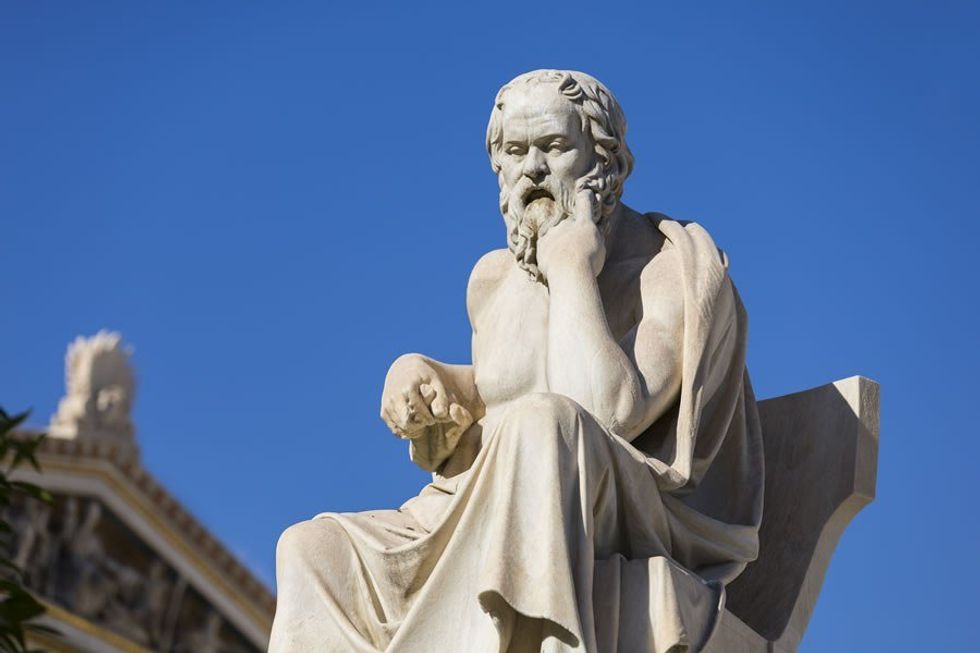
Stopping to examine and reflect on who you are as a person may seem either daunting, boring or just plain useless. However, as Socrates put it, “The unexamined life is not worth living.” One man, living thousands of years ago, made the claim that living a life by just “going wherever the wind blows you” is ridiculous, and should instead be replaced by a life with inward examination and carefully placed steps. If Socrates could make that statement reverberate through thousands of years of time, then maybe we should perhaps listen to his advice?
But what exactly is this “examined life” that Socrates is talking about? Is it about finding yourself by taking a pilgrimage to a holy land, or by meditating day and night? Fortunately, this is not the case. Socrates is stating that ignorance is not bliss, and that you should think for yourself instead of being handed your opinions by someone else. An examined life is one where you actually take the time to think about what you are doing, what you are saying and what you are becoming as a result of your actions and words. In a sense, Socrates is telling us to be mindful of what we are becoming: to be mindful of our identity.
Many people seem to place their identity in temporary things, things that can be a part of our identity but that should not its foundation. These things eventually change, and with them, the people whose identities are based on them. I am sure many people do not want to change with the wind and instead desire consistency in their lives. This can be better achieved if their identity is not based on something that is liable to shift at a moment’s notice, which can only be known if you take the time to actually think what thoughts, words and actions you have had lately, and whether or not you want to continue making similar ones or change to a different way.
Some people look to material things to base their identity in, because they have at least a small sense of security in them in this life. Others look to religion, hoping that by living a good life, one that follows the rules, they will eventually achieve some afterlife. I base mine in a relationship with Jesus Christ. I would strongly encourage everyone to consider Christianity, but it cannot be forced. I can only ask that you take the time to examine your life, your beliefs and your identity and see where it leads you and what implications that will have on how you view the world. To end it all, I leave you with a quote from Obi Wan Kenobi, who encourages us to “Be mindful of your thoughts.”
















