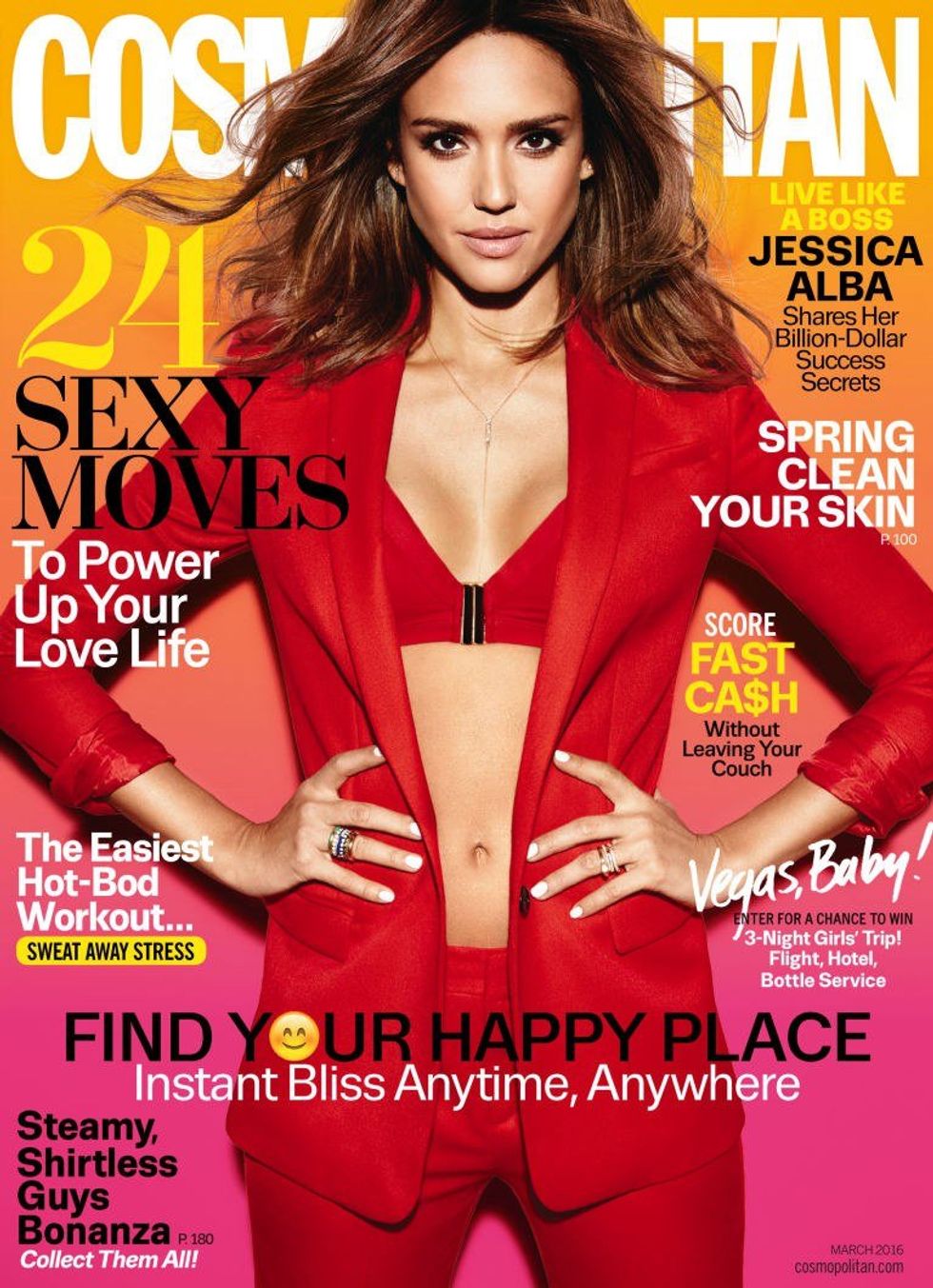
Reading magazines while lying by the pool is one of my favorite teenage pastimes. I love keeping up with the latest trends and dreaming about the incredible lives of twenty-year-olds with all their freedom and glory. One of my favorite magazines was Cosmopolitan magazine, a popular brand that encourages readers to educate themselves about sex tips and tricks to “get a hot summer body in two weeks”.
You’ve probably heard about or seen Cosmo in the grocery store or on Snapchat updates. I researched the history of Cosmopolitan and learned that it was created in the 1960’s by a woman named Helen Gurley Brown who supported women empowerment and feminism. The ideal ‘Cosmo Girl’ was seen as a young, single girl who embraced her sexuality and independence. The magazine was often criticized for encouraging young women to engage in pre-marital sex in order to have fun, but young girls throughout the United States praised Brown for publicly embracing women’s sexuality. Currently, Cosmo continues to incorporate sex advice, along with lifestyle and fashion tips.
Sounds like the ideal magazine for feminists, right? Think again.
When I skimmed through the magazine, I noticed that a majority of the models and actresses featured in the advertisements were all thin, Caucasian women in their twenties. I came across one article titled “Meet Cosmo’s Fun, Fearless 50,” the only article that featured accomplished women of all races, ages, and sizes. I found it fascinating that we, the readers, were expected to have the desire to be as successful as these women, only to turn the page to discover pictures of the Kardashian clan in tight white dresses and dramatic makeup accompanied by the caption “What’s Sexy for The Summer.” Women buy these magazines for advice on how to get their lives together, only to be shut down when they realize they cannot have it all.
The original ‘Cosmo Girl’ was a woman who embraced her individuality when society demanded her to blend in. Now, the ‘Cosmo Girl’ is expected to have a great sex life, a killer dream job, a bangin’ body, and a phenomenal sense of style. Not only is it exhausting to accomplish all of these things, it is exhausting to simply read about it.
The magazine targets young, privileged, Caucasian women in their late teens to early 20s. A majority of the articles encompass ways to achieve a ‘dream’ lifestyle for young girls’ futures. The readers are expected to aspire to be like the perfect ‘Cosmo Girl’ -- if their future is not heading in this exact direction, then their lives are practically in shambles. Young women purchase this magazine to feel inspired and motivated to become Cosmo’s idea of ‘successful.’ Women who are not Caucasian and younger than twenty years old might feel marginalized by this magazine. Cosmo also fails to address racial barriers in the United States, and neither does it include more than about three pictures of African American or Asian women per copy. Very few pictures of women older than twenty are displayed.
Initially, I read the magazine as any consumer would. I gazed at the new fashion and beauty trends in awe and longed for the model’s long legs while reading through the fashion editorials. I realized how easy it is to be trapped by these beauty ideals and standards. When I investigated further and questioned the choices made by the magazine editors, I was able to stop myself from wishing I was today’s ‘Cosmo Girl.’ Instead, I took an objective approach and critiqued the magazine’s choice to exclude models who were not white, skinny, and young. Cosmo readers, who come in all shapes, sizes and colors themselves, deserve to see a variety of women reflective of the world we live in.
Cosmo’s initial mission was to defy society’s standards for women, and to create their own, but now they too have fallen into the trap of consumerism. Magazines like Cosmopolitan no longer purposefully challenge society’s unrealistic expectations of women -- instead, they encourage them. Cosmopolitan claims to be written “by women, for women” when in reality, society’s impossible standards of ‘normal’ guide their journalism. Although I, a young, white woman, fall into the target demographic for Cosmo, I am infuriated by the lack of diversity the magazine presents.
I also find it ironic that Cosmo boasts that it appeals to ‘real women’ of all ages, sizes, and races, and encourages them to lead successful, happy lives, yet the women depicted on their pages, sporting the hottest summer trends and doing the latest exercises are while models with ‘ideal’ bodies. Why doesn’t Cosmo include pictures of a diverse group of successful women? Why do I only see young women with voluptuous bodies modeling for the sex positions editorial? Can only young, Caucasian women practice casual, fun sex?
So next time you pick up the latest issue of Cosmo, take it with a grain of salt. After all, the ‘Cosmo girl’ is gorgeous, in her 20s, single, white, probably 5'10", financially independent, sexually brilliant, mentally gifted, blessed with extraordinary style and zero percent body fat, and she has managed to crack the glass ceiling while still maintaining an unforgiving fitness regime.
And we know so many women like that, don’t we?