
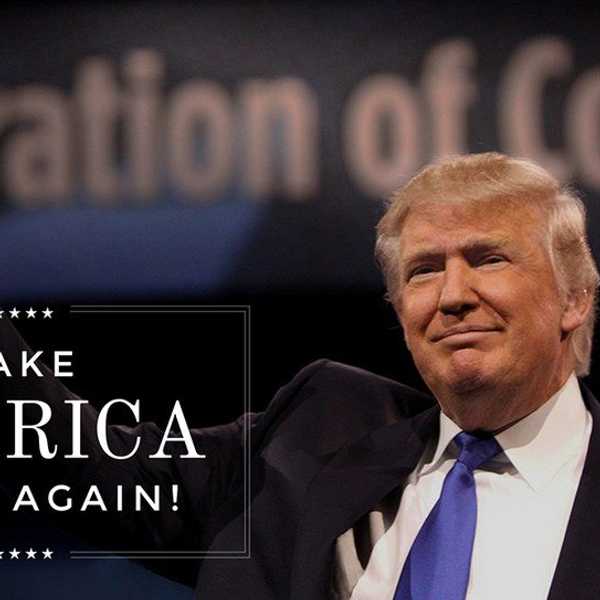
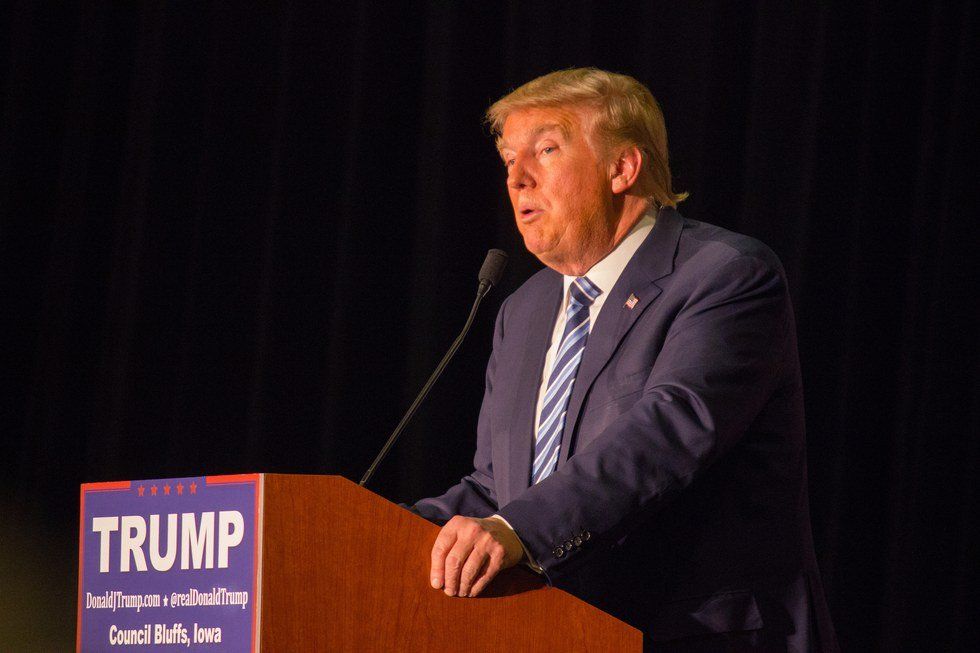
On Tuesday, November 8, 2016, Donald J. Trump was elected as the 45th president of the United States of America, having won 310 votes in the electoral college, despite losing the popular vote by a slim margin to former Secretary of State and first lady Hillary Clinton. Trump will take the oath of office on January 20, 2017, succeeding President Barack Obama. This election comes as a great shock to many, as Clinton, the Democratic nominee was widely expected to win in a landslide. Trump’s election represents a change election in America, and a repudiation of our current government, and the Washington D.C. establishment.
18 months ago, when Trump declared his candidacy, most people thought it was a simple publicity stunt. He ran as an unorthodox candidate. The brash Manhattan billionaire announced he would not be taking any money from special interests and would self-finance his own campaign. His audacious style immediately polarized the electorate, winning over a strong base of supporters, while alienating much of the electorate. He made many controversial statements during his campaign. He stigmatized people who crossed the Mexican-American border illegally as “rapists,” “criminals” and “murderers.” A few months later, shortly after the tragic Paris attacks, he advocated banning all people of Muslim faith from entering the United States.
Make no mistake, statements like these are un-American and have no place in our political discourse. The idea that we should ban an entire religion of people from the country is damaging to our democracy. The anti-immigrant sentiment of Trump’s campaign has also been very discouraging. We are a nation of immigrants, and we need to maintain a compassionate immigration policy, while also enforcing our immigration laws, and securing our border. We should never forget, however, that we are a nation of immigrants. The statue of liberty stands for freedom and opportunity, not just for people that were born here, but for people across the world who seek a better life.
We also must understand what drove Trump’s candidacy. He tapped into a deep pain that is not just race-based. Many people in this country are hurting economically and feel like both major parties no longer represent their interests. That’s why Trump, a maverick, with no political ideology was able to break Republican primary records, and re-secure the rust belt states (Michigan, Wisconsin, Ohio, Pennsylvania) for the GOP. Many people who are well off, myself included, either refused to see the pain of these people or were just too out of touch to notice. We must do better. The mainstream media and elitist Hollywood entertainment industry has been out of touch with the realities facing most Americans for a long time, but it has never been more evident than in this election. From the beginning of his campaign, Trump and his supporters became the butt of jokes from late-night talk show hosts such as John Oliver, smug celebrities, and beltway media elites. The reality is that the conversations we hear on Television or on social media is nothing like the conversations we have at the kitchen table with our families. The modern Democratic Party has become more in line with these coastal elites, than day-to-day American voters.
For years, the Democratic Party has treated working class white people with contempt, while relying on a special brand of identity politics to bring minority voters to the polls. In this election, poor and middle-class white folks acted as a group and came out in droves to vote for Donald Trump. It is now time for Democrats and Republicans alike, to realize how destructive racial politics is to our democracy. Political parties should not be interest groups for a particular race or religion, but rather vehicles for effective, combative ideologies that benefit all Americans, and give all Americans a real choice every time they go to the polls. This will increase voter turnout and participation in our democracy. At the end of the day, democracy is not a spectator sport. We all have a duty to participate in it, to improve our politics, our dialogue, and our country.

















