


In the modern world there is not much that influences children in the U.S. more than what comes across a screen. In the field of movies and television, Disney has clearly been the front runner, as they have successfully released with over 500 children’s movies, five theme parks, and entire franchises, making millions of dollars every year, with no signs of stopping. With all of these movies and characters being presented to the children of the world every single day, it is almost impossible for them to not have an impact on how these children perceive the world.
These movies teach children about other cultures, genders, social statuses, and so much more. The problem arises when the information being presented to these children misrepresents the truth, as these movies, specifically the older ones, display to children unrealistic stereotypes respectively pertaining to gender.
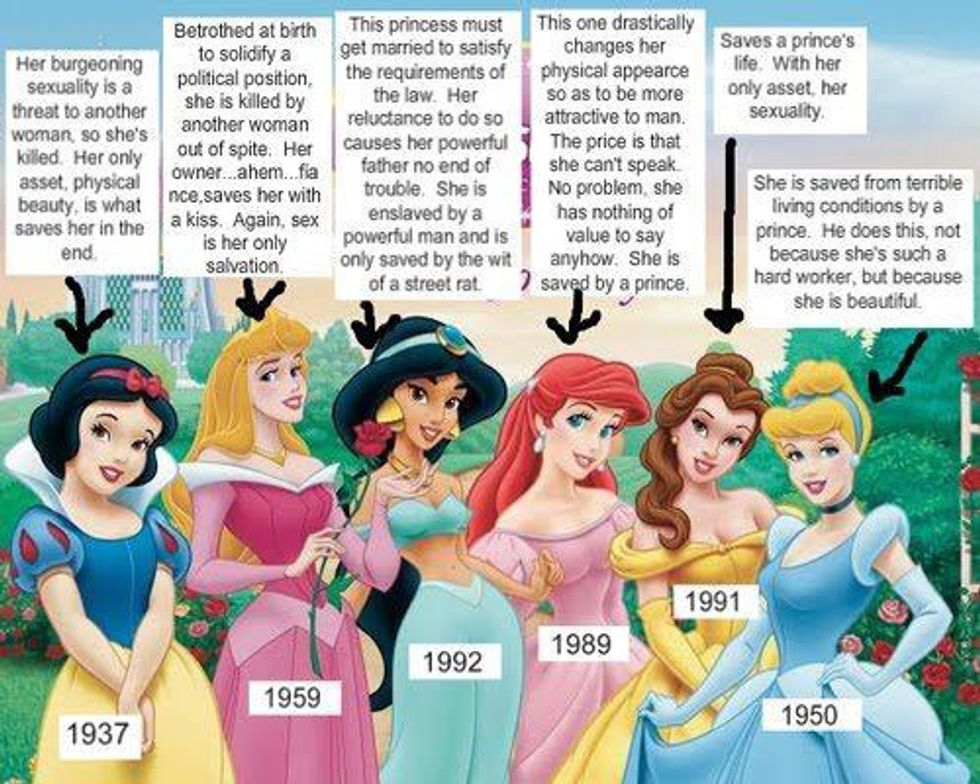
Throughout many of the Disney films there are stereotypically played out roles, with respect to the time periods in which they were made. The older movies made from the late 1930s up to the late 1960s all portray women’s roles in a similar fashion to how they were regarded in that day and age. Also regarding different races, characters portraying those different races fit into the stereotypes that might have been considered appropriate during that time period. The fact is that children in today’s world continue to watch and adore these classic Disney movies like Snow White and the Seven Dwarves or Dumbo, and the lessons that they teach, like how a princess is supposed to look, even though they are completely out of date and can be even be considered immoral in our current world.
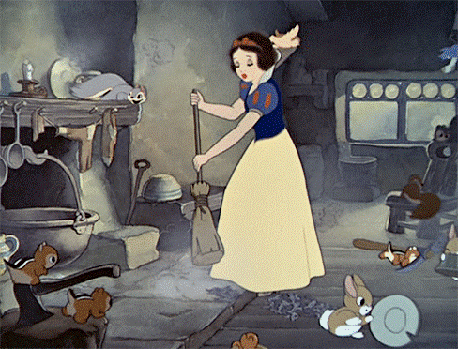
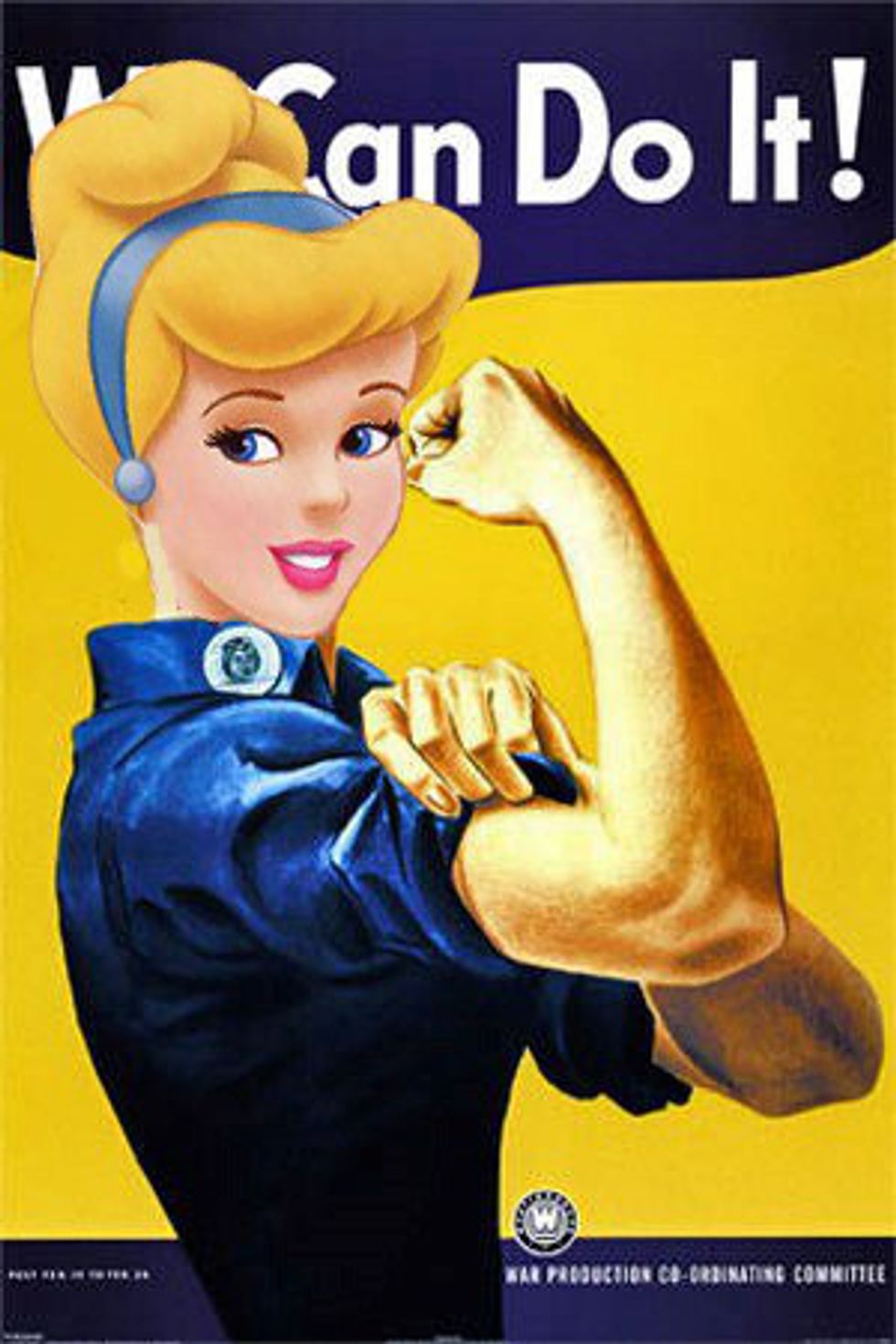
Especially within the early years of these Disney movies, the women are always nice and polite, and their jobs are to do the cleaning and housework. Women are never portrayed as brave or heroic, and are always the ones who need saving, as seen through the stories of Disney princesses like Snow White, Sleeping Beauty or Cinderella.
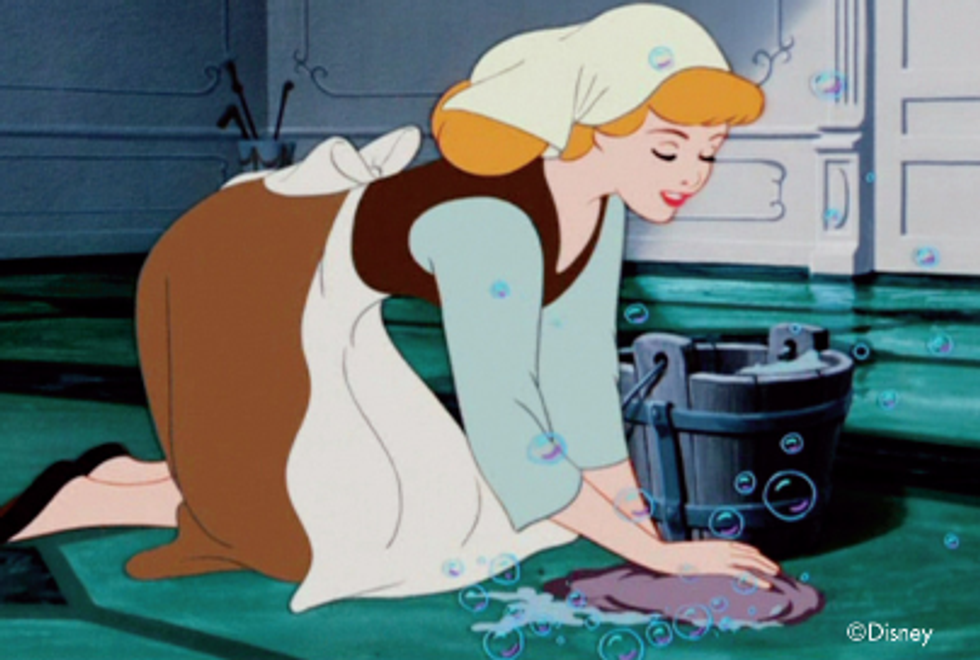
Scholar Lori Baker-Sperry goes in depth on this subject in her article, “The Production of Meaning through Peer Interaction: Children and Walt Disney’s Cinderella”, as she introduces the issue of gender inequality using the beloved story of Cinderella. Baker-Sperry explains how Cinderella is left to do all of the domestic housework, while all of the prominent male roles hold high titles like King, Prince, or Ambassador, stating that “The men have obvious social power; the women struggle to attain or maintain status on their own” (Sperry 718). Even the mice within the play showed signs of gender inequality, as one of the lady mice states to “leave the sewin’ to the women”, sending the message that this is what a woman is supposed to do in this society.
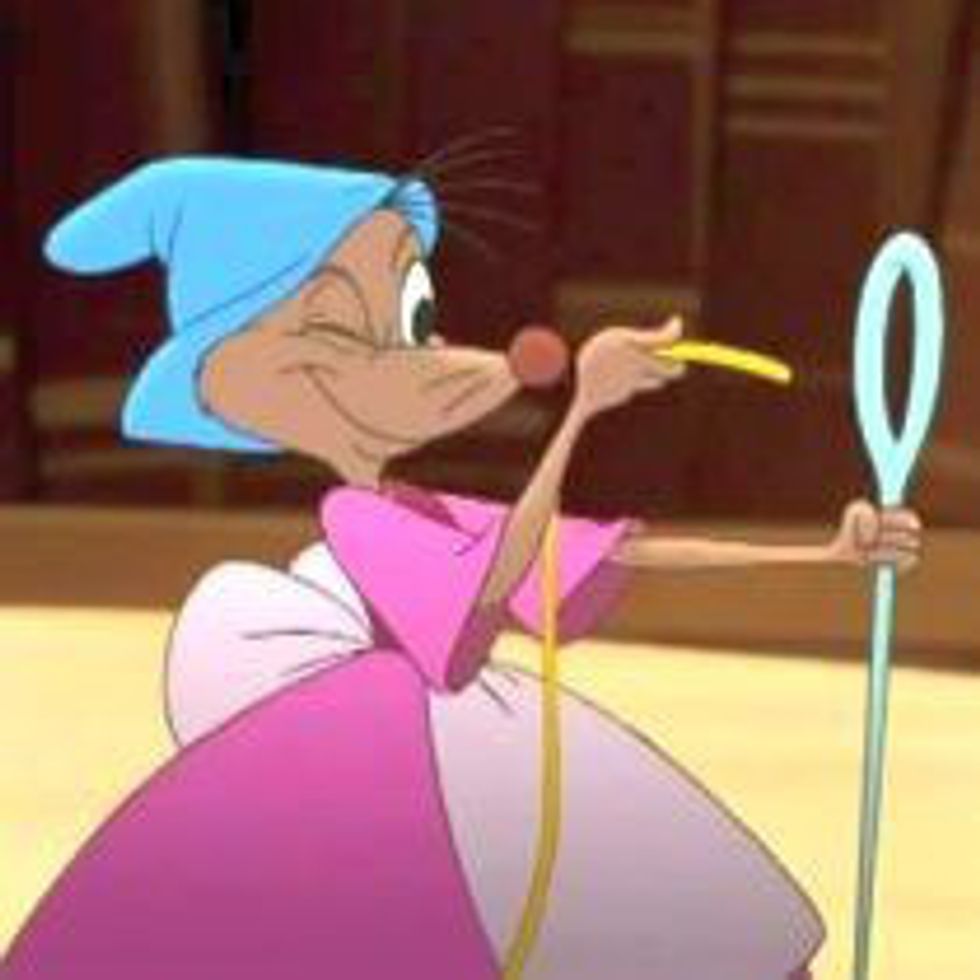
For some people this can seem like a very inappropriate lesson for their child to learn, since in many areas of today’s world, there is a generally accepted idea that men and women should be equal. While it is true that this film was made during a time when this sort of thinking was slightly more acceptable, it does not change the fact that young girls in the modern world look up to this princess every day, believing Cinderella’s life is the best thing to which they could possibly strive. It gives the understanding that a housecleaner or the wife of a prince is the best profession that they could grow up to attain.
Authors Dawn Elizabeth England, Lara Decartes, and Melissa A. Collier-Meek build on this idea of not only the influences that the Disney Princess franchise suggests to young girls on how they should act, but also how they can personally relate to each different princess from different backgrounds, in their combined article called “Gender Role portrayal and the Disney Princesses”. The women introduce an interesting array of hypotheses regarding the Disney Princess movies, the first of which being that the Princesses in these movies would take on stereotypically feminine roles and the second being that the Princes would take on stereotypically male roles. The final hypothesis is that these roles would change within the three different eras during which these movies are released.
These hypotheses all prove to be true, showing that the princess movies originally fit both the male and female stereotypes of their times, however, have slowly branched out to develop into the kind of princesses that mothers would want their daughters to look up to in today’s world. The women in the first era of movies, including Snow White, Sleeping Beauty, and Cinderella differed greatly from the women of the second era including Pocahontas, Mulan, and Jasmine, as the earlier princesses are displayed as weak and feminine, while the second round are more rebellious and heroic. Both of these eras differed still from the modern era of Princesses including the Princess and the Frog, and also Rapunzel from Tangled, as these women are a near perfect mixture of the two previous eras, leaning slightly towards the more rebellious side but maintaining femininity.
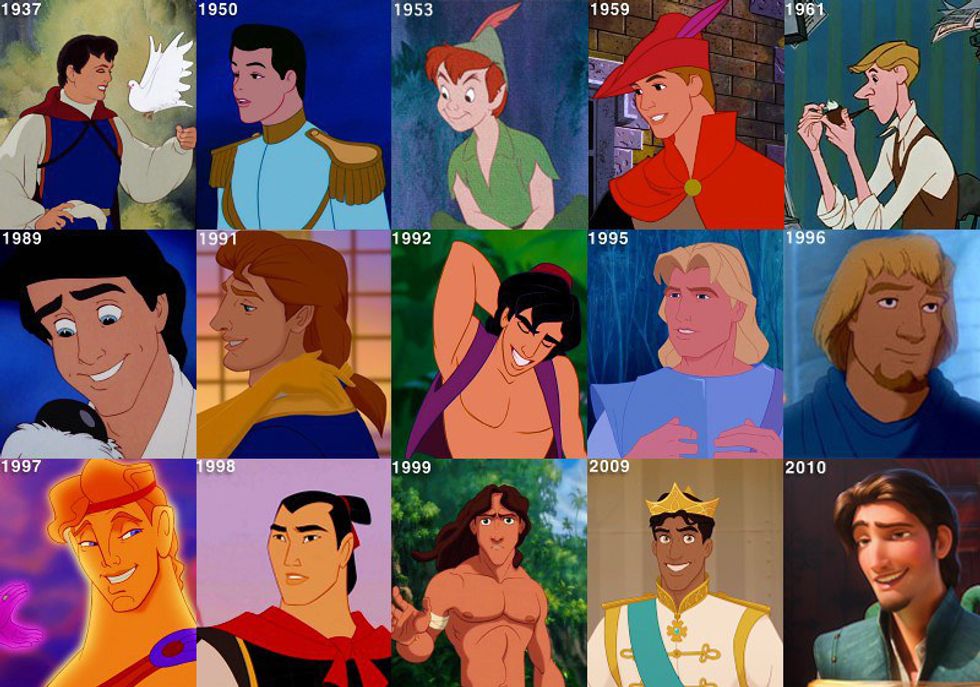
The prince charming roles are the ones that change the most dramatically, looking back to compare the perfect in every way, Prince Charming from Cinderella, to the disheveled and criminal male leads of Aladdin, or Eugene from Tangled. Disney movies are taking steps in the right direction with each new addition to their continuously growing legacy, and perhaps there will be even less inaccurate representations of race or gender in the future.
The best way to help change the way that these movies influence the children of the world is by educating their parents, and having them explain to the children that not everything they see is correct. Children deserve to see the world around them clearly, so that they may grow up with accurate beliefs. The Disney franchise is one of the longest running and most beloved experiences of the last hundred years, and may continue to be, so long as these inaccuracies and false stereotypes cease to wrongfully influence the minds of today’s children.
Further Reading
Baker-Sperry, Lori. “The Production of Meaning through Peer Interaction: Children and Walt Disney’s Cinderella” Springer Science + Business Media. 2007. Web. 27 Oct. 2013.
England, Dawn Elizabeth, Lara Decartes, and Melissa A. Collier-Meek. "Gender Role Portrayal and the Disney Princesses". Springer Science+Business Media, LLC . 2011. Web. 22 Oct. 2013.















