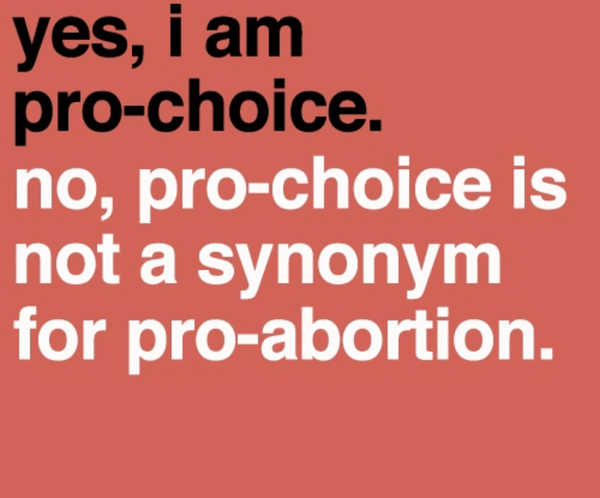

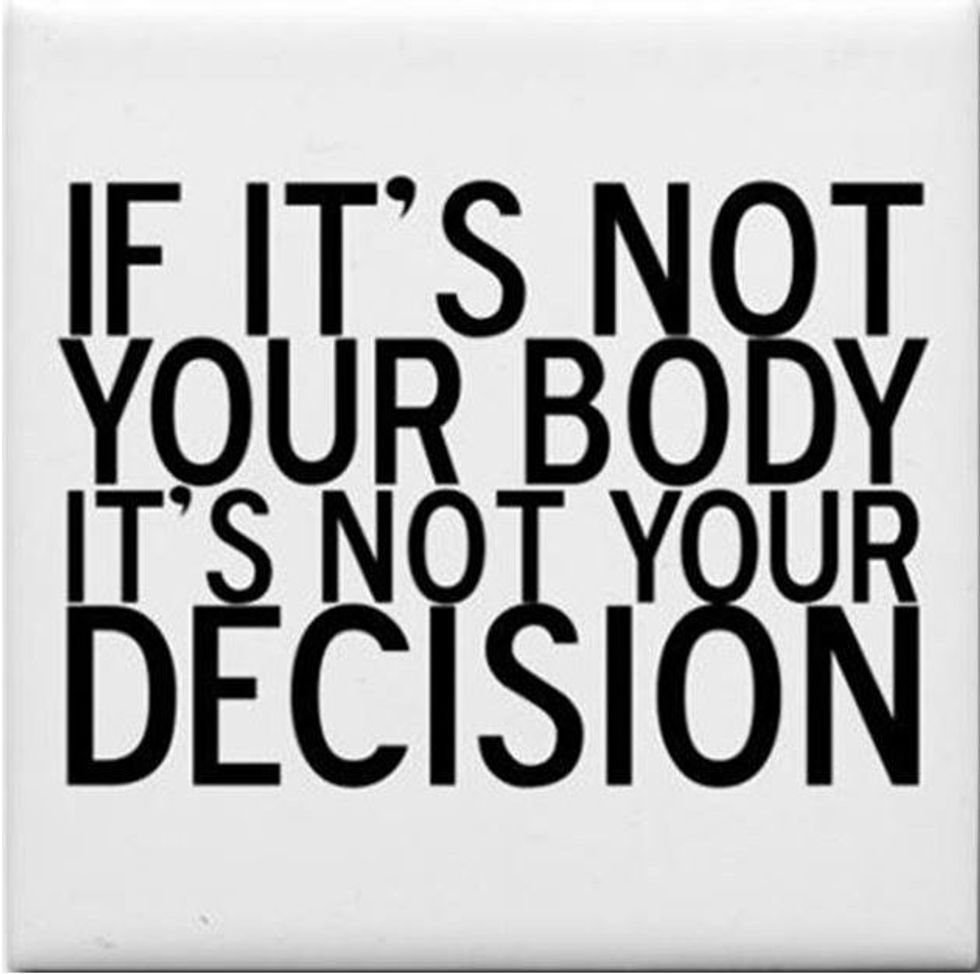
Right now, our country is divided on multiple controversial issues for which there may not be a right or wrong answer. Every issue is nuanced, and this is no exception. The pro-choice movement, or the abortion rights movement, is heavily focused on whether or not abortion, or the termination of a fetus, should be made legal throughout the United States. As a woman, I am pro-choice. I believe that I should be granted the right to make decisions regarding my own body without having to answer to anyone else’s political or religious views. It isn't a matter of disrespect; it's a matter of treating humans as humans. But recently it has come to my attention that women face obstacles to their reproductive rights in more ways than one.
Some people don’t want to have children. And for some of those people, tubal ligation, colloquially referred to as “getting your tubes tied,” is a preferred method of sterilization. Tubal ligation may also be considered by women who suffer from an extremely painful affliction called endometriosis, in which the endometrium (tissue lining) of the uterus grows outside of its respective organ, rather than within. Tubal ligation might sound scary, but it’s actually relatively safe. According to a 2008 review, the efficacy of tubal litigation is extremely efficient and poses very minimal risks to a woman’s health.
In this article by Monica Trombley, she recounts her efforts to receive a tubal procedure in New York. Like many, Trombley discusses her difficulty in finding a doctor who would grant her the procedure, despite being married to a man who was equally “child-free.” Trombley aptly describes the behavior of her doctors as “paternalistic” as she was refused on the pretense that she would regret her decisions later in life.
Trombley’s story is one of many in which women are patronized by their doctors, the very authority we place the utmost trust in, and turned away. Women are refused because of another person’s assumptions and looked down upon by their peers as though they are making a mistake or don't understand the ramifications of their decision. We preach that we have progressed in the world of women’s rights. We women can become who we want, we can excel in any profession now, so that’s equality, right? Yet we still find ourselves valued in society by our reproductive fitness, our ability and availability to breed. Society treats having children as an expectation, not a choice, and women like Monica Trombley suffer the effects of that.
Truthfully, I like to think that I might have children someday. But when and if I decide to, I don’t want it to be another qualification to check off for society to view me as a successful woman; I want it to be a decision I make for myself, my body, and my future.